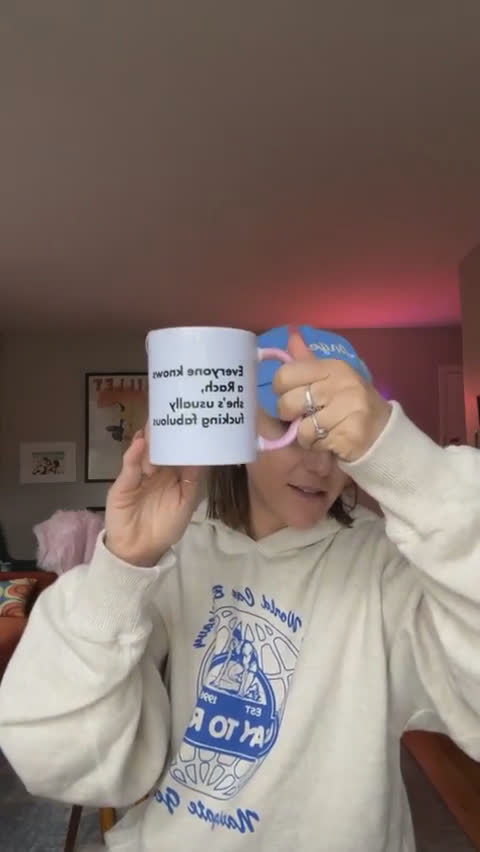
Rachel Havocost discusses coping with rejection, sharing personal experiences and practical strategies—like awareness of triggers and reminding oneself of worth—so viewers learn ways to navigate feelings that arise from being rejected.
Rachel Havocost is a mental health advocate and writer. She has struggled with mental illness since she was 15. Her goal is to destigmatize mental health.
Being rejected is part of dating. It's also part of life. Not everyone is gonna like us, love us, need us, or want what we have to offer. Rejection inherently can bring up a lot of feelings of insecurity. Here's how to cope with rejection.
When there is a fear of constant rejection or when it feels like we are constantly being rejected by everyone around us, this can often mean that we grew up in environments in childhood where we were criticized for literally every move we made. Countering belief work is a form of cognitive behavioral therapy.
It does not feel good to get rejected because it goes against everything that our nervous systems and our biology want, which is to connect. Allow yourself to feel that pain, because it's not a bad thing. I will see you here next Wednesday, 02:00 p. m. PST.
Happy Wednesday, Cadre Crew. I am so happy to be here with you today. If you are new here, my name is Rachel Havocost. I'm a mental health advocate and writer. I have struggled with mental illness since I was 15, have been in recovery for an eating disorder, but in therapy for suicidal depression. I got divorced in the pandemic, so I moved through a lot of grief, and my goal on this platform and everywhere that I show up is to destigmatize mental health and just talk about my experiences and to name some things that are sometimes hard to talk about.
So oftentimes when I go live, I like to share things that I'm presently working on, whether in therapy or on my own, because even though I've been through a lot of therapy and I'm incredibly balanced and stable and, well, I'm still a human and things still affect me. So today I'm talking about coping with rejection. This is something that I am absolutely still struggling with and navigating, especially as a single human being in my thirties. Being rejected is part of dating. It's also part of life.
Not everyone is gonna like us, love us, need us, or want, you know, what we have to offer, and that's okay. And, you know, navigating those moments of rejection are when we kind of get tested in those. Hey, Luke. In those scenarios where we might. Those fears of rejection or that insecurity comes up. So today I want to focus less on where fear of rejection comes from, because that's kind of a totally separate topic, and I want to focus more on what to do when that experience of being rejected or rejection comes up.
So I think it's really helpful to have awareness of sort of the source, because then we can identify in the moment when we're feeling rejection. Oh, this is maybe not about this particular experience that's happening now, but maybe it's triggering this old feeling I had or this old experience I had. So it's good to have that awareness, and sometimes it's really helpful to just have the skills to navigate, and then we can move into the analysis and sort of figuring out where this came from and sort of unpack that a little bit.
So rejection inherently can bring up a lot of feelings of insecurity. There's a lot of connection between experiencing rejection and then that bringing up a sense of I'm not good enough, especially if it's something or someone or an experience that we really want to be a part of. And if we're not, if we're not asked to or included in or rejected by that can create a sense of, oh, then that must mean I wasn't good enough. So oftentimes, the way that I have been taught to and the way the ways I've learned to cope with rejection really have to do with reminding myself of my worth, reminding myself that I am good enough, reminding myself that someone not liking me or not wanting to be with me or not wanting to work with me is not necessarily a sign that there's something wrong with me.
It might just be a sign that it's not a good fit. And I think sometimes both are true, right? So this is if you. If you've been following me or seeing my lives a lot, I really love and talk a lot about dialectics and holding two things to be true at once, because both can be true, right? If I'm rejected, perhaps that it's because it's not a goodness of fit, but perhaps it's also because maybe there's a part of me that is creating an experience that is negative for the person or the people that are rejecting me.
So it's also really valuable for us to look at ourselves objectively and go, how did I show up in this scenario? How did I show up in this space? How did I show up in this relationship? Were there things that I was doing, my actions or behaviors that perhaps created an unsafe environment or an unwanted or unhealthy environment? And what parts of me were rejected, or what parts of my old belief system are coming up around this rejection that maybe have nothing to do with the scenario and more to do with me?
So a great exercise that my therapist does with me when this happens is. So I'll give you an example. So I went on a date a few weeks ago and had a really good time. It's rare that I go on a date and think, I really wanna see this person again. And so I was really excited because I was like, oh, I like this person. I wanna go see, you know, I wanna go out on another date with them. And over the course of the following two weeks, I started to feel really insecure about whether or not he wanted to see me again, whether or not we were gonna go out again.
And I noticed myself engaging in symptoms of my eating disorder. I was overeating, I was binge eating. I was drinking a lot more alcohol than I normally do. I was isolating a little bit more. I started to experience a lot of body dysmorphia and feeling like I would look in the mirror and not recognize myself. And I was just noticing a lot of ramp up of behaviors that signaled to me, oh, this fear of rejection or not being good enough is increasing my symptoms in my mental health area. And so I knew.
I was like, okay, this means there's something about this that really does trigger an old wound that I need to take a look at. So I was working with my therapist, and she said, okay, well, let's. Let's not focus necessarily on what this other person is doing or not doing, because right now, the only data you have is what you have from the date you went on and the conversations you had. There's this much data, right. What else, you know, is that you're feeling a certain way about all this not knowing.
Right? And so she asked me, she said, when was when? When was the first time that you remember feeling this way? And I immediately knew. I immediately knew there was a time when I spent an afternoon with someone in high school that I was interested in, and we spent a long afternoon together. And after a long afternoon of a lot of not talking and a lot of silence, I said, or he said to me, you know, why don't we just go home? And I remember the thought in my head was, oh, I'm not interesting enough for him.
I'm not interesting enough for him. I'm not captivating his attention enough. I must not be interesting enough for this person. And that belief stuck with me to this day. As a 35 year old woman, I was 14 to this day. So 21 years later, if I experience rejection from somebody, my first thought is, I must not have been interesting enough, which is not the case 99% of the time. 99% of the time, it's, we don't share the same values, or we don't have the same life goals, or we want different things in life, or we're not in the same place in life, and it's bad timing, or we just generally don't get along because we're not.
You know, we don't. Our personalities don't mesh. Rarely is it that I'm not interesting enough. Thank you, Milo. Milo, like, yes, Rachel, you're not interesting enough. But my brain goes, oh, it must be because I wasn't interesting enough. It must be something about me not being captivating enough to keep this person's interest for a long enough time. And so it's very interesting. That's the first story that I thought of, because that's the belief that I carry with me around rejection. And so what that gave me an opportunity to do was, oh, we need to pause, because this mug.
Oh, it's gonna be backwards. But this mug was gifted to me, and it's my favorite mug ever. It says, everyone knows a rach. She's usually f****** fabulous. This is the perfect mug to be using while having this conversation. So she said, let's look at this belief of not being interesting enough, and let's. Let's focus on working on that, because you can't control what this other person is gonna do, whether they're gonna call you and ask you out or not. You can't know everything they're thinking and feeling all the time.
There's a lot of uncertainty there, right. What you can control is this belief that's coming up again and again about not being interesting enough. So if you are someone who also struggles with rejection, when you. I'm not gonna say if. I'm gonna say when, because rejection happens in life. And when it happens, I'm gonna invite you to and possibly challenge you to, because it's not gonna feel very good. I know. To ask yourself, what is the belief I have about what's going on? And when was. When was the.
When was the first time I remember feeling that way and doing some reflection on that? And then we get to do some work around this belief, right? So, now we get to do this sort of, like, countering belief work, which is, you know, sort of basic cognitive behavioral therapy, where we start to counter these. These automated thoughts or these automatic thoughts or beliefs that we have about ourselves that aren't necessarily true. So how can I combat this belief or this thought of I'm not interesting enough?
So I can. I can make a list of ways that I am interesting. I can make a list of things about me that are valuable, that don't have to do with being interesting. I can write mantras is about the fact that my presence in somebody's life does not have to be valued by how much I'm entertaining them, because there's so many other things I can offer. So by kind of looking at this moment of rejection and then asking yourself, what is the belief that I'm attaching to this experience? We start to then look at something that we can actually work with.
So, that's what I'm working on right now. And I'd love to know what you're working on right now. Rachel says, what if that rejection feels constant by everyone? That's a really good question. So, I'm not an expert on this. I can send you. There's a psychologist on Instagram. I'm gonna forget her name. I think it's just the ADHD doctor, but I'll send it to you. And she talks a lot about rejection sensitivity. And she talks a lot about this concept of everything feeling like a rejection all the time.
And oftentimes when that's an experience we have, there is, and I don't wanna diagnose you or, you know, make any generalizations, but oftentimes when there is a fear of constant rejection or when it feels like we are constantly being rejected by everyone around us, this can often mean that we grew up in environments in childhood where we were where nothing we did was ever right, nothing we did was ever good enough. We might have been criticized for literally every move we made which can make it feel like we're constantly on edge and hypervigilant, looking for, how can I make sure that I'm doing the right thing?
Because I don't want, like, it's almost like to walking on eggshells. And we start to interpret people's reactions of us through the lens of, I'm not going to do this. Right. So even if someone's, like, giving us, you know, giving us some facial expression after we say something, we're already primed to have a reaction, be that we didn't do something well enough or that we didn't do it right, so no matter what the facial expression is, we're going to read it as, why'd you do it that way? And so especially, yes, not overly, but especially in subtle ways.
So oftentimes when it's. When that experience we had in childhood is subtle, that's oftentimes when we get even more hypersensitive, because we're looking for subtle cues from people, which means we're reading into, like, tiny facial expressions or tiny hand gestures or a tone in somebody's voice, or if someone doesn't respond to a text right away, we might get into this, this hyper fixation on those subtle cues, looking for those moments of, oh, I'm being rejected. So there are ways to cope with that.
And, you know, I think this is why I'm such a fan of therapy, because, number one, I'm not a therapist. So I can, you know, I can share with you my understanding and wisdom around these concepts. I can share with you things that have worked for me. And, you know, it's such a personal experience to work through these things. And I think that therapy is really helpful because there's so many tools and skills that we can use to navigate these experiences we have and these lenses that we live looking through, like that we live our lives looking through that aren't necessarily ours, and they are not necessarily based on what's happening in the world around us.
I don't want to say they're not real because it's real because you're experiencing it. And if we can allow ourselves to shift those lenses, that we can start to see the world as safe, if we can start to see the world as a place where people aren't constantly rejecting us, like, that's a really wonderful thing. I get that. I just wanted to see what you thought. Yeah, I definitely. I mean, I definitely think that, you know, based on my education and, you know, the research I have done on specific symptoms of certain.
Of certain mental health diagnoses, which I don't love to categorize because I think we all experience them. It's just the. The DSM, which is the diet, the diagnostic statistic manual, which is kind of like the. The bible of all of the mental health diagnoses. It's a wonderful way to categorize things so that we can say, okay, if you have these kind of cluster of symptoms, these are some things that help with that particularly. So it's helpful to do that. And a lot of these symptoms overlap. So it's hard to say, like, oh, if you have this symptom, then it means you have this whatever, because that's just not how it works anyways, all that's to say is typically those symptoms of sort of feeling like everything or everyone around you is constantly rejecting you.
There is oftentimes a route to a lot of very subtle rejection in childhood or subtle criticism that's not necessarily in your face, but feels kind of constant and pervasive. So, yeah, it's definitely not cut and dry at all. I could go on a day long rant about diagnostics and the DSM, but I shall. Not at this moment, but maybe one day. Okay, so that is. That's kind of like the spiel I have about coping with rejection. The other thing I will say is, it is really, really hard if you struggle with rejection.
Like, if you struggle with experiencing rejection and coping with it. Well, I get it. Like, I have all the skills, and I've been in therapy for 19 years. I know how to cope with things. I know in my bones and my body for once in my life, because I did not always feel this way, that I am a good human being, that I have value on this earth, that I have a good personality, and that I'm likable and lovable. I also know that I'm not going to be everything for everyone, and that not everyone's going to like me.
And I truly am okay with that. And still, if I get rejected, I fall apart. I get really upset, I get panicky. I get emotional. I feel very flighty. And, like, it's hard for me to regulate myself. So it's still something that causes a reaction in my body because it's in our nature to want to be accepted. I did a whole talk on this padre had an in person summit in November, and I did a whole talk on this concept of belonging and how it's not just, like, this cute thing that we all want. It's an inherent survival mechanism.
It's how we know that we're gonna survive. And also, by the way, if you are in Charlotte in March, I will be at Cadre's doing another wellness event in March, March 8, and 9th in Charlotte, North Carolina, and I will be doing another talk there. So, milo giving me more. Cheers. Thanks, bud. So we'd love to see you there, but, yeah, this is really. It's hard. It does not feel good to get rejected because it goes against everything that our nervous systems and our biology want, which is to connect.
And. And so it can feel really painful. So also allow yourself to feel that pain, because it's not a bad thing. It's not shameful to feel upset if we're not wanted. It's, in fact, a very normal human reaction to be upset. So also, give yourself a lot of grace and compassion. There's nothing wrong with you. We're not supposed to be impervious to feeling rejected. I would never say, like, you've done great if you got rejected. And then you're like, I'm fine. Like, I'd be worried. So that's your birthday.
Okay, then. I won't forget. That's amazing. All right, my loves, I am going to drink my tea and head off for the rest of the afternoon. m.. PST. And I'm very happy you're here.
Reactions and comments are for members. Joining is free and takes a minute.