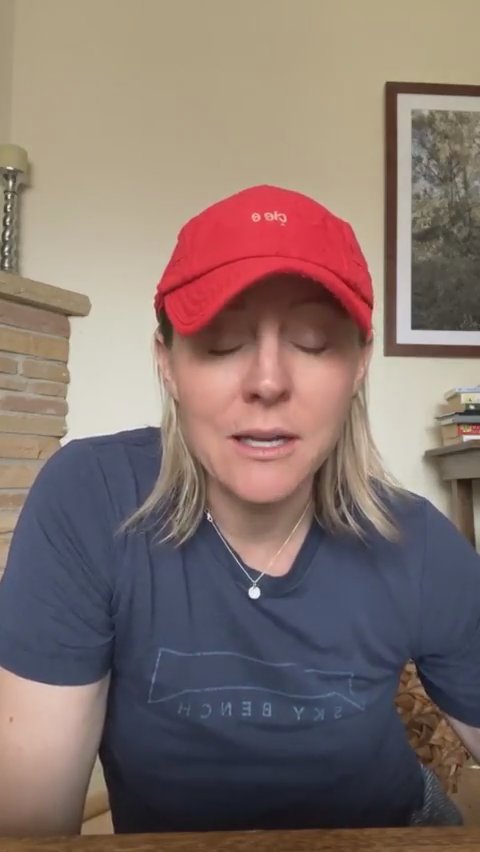
Being a caregiver can be hard to talk about with those who don’t live it. Join me to normalize all that comes with it - the good, the bad and most importantly, the real of it.
Shannon from Cadre talks about things we aren't supposed to talk about. She lives with CPTSD and parent a child with special needs. Talking about being a caregiver can be hard out in the world.
When you get a diagnosis or you are faced with something that you have not handled before, it can take you down this path of all those what ifs. There is only today. Whatever experience you're having today with that child, with that hard behavior, it is just today.
Jules: Is taking on that role of being that place of comfort for your child. We've got a whole day of caregiving content. Coming up, we've got the bronze metal life with Colleen Lindstrom. Mac, Minnesota Autism center is here to talk about navigating a diagnosis, part two.
Hi, everybody. Good morning. It is Shannon from Cadre. Happy caregiver day on Cadre. I am here today to talk about things we aren't supposed to talk about. Caregiver edition. So I'm going to give you guys a moment to join suffer. When I see you're here. I'm so glad. I'm excited to see you. Okay, so for those of you who don't know me, my name is Shannon. I'm a human who is not a clinician. I am not a mental health professional. I am a person who lives with CPTSD. I have generalized anxiety disorder, and I parent a child with special needs.
So my self appointed role here at Cadre is I'm here because I want to share my lived experience as a person who lives with all those things. To say what works for me. To say, hey, you're not alone. To just say all the things that people don't talk about. Because talking about being a caregiver can be hard out in the world. Okay, so today. Hi, JC. Good morning. Alright, guys, so today, here's what we're gonna talk about. We're gonna talk about what ifs, okay? We're gonna talk about what ifs. So all people in the world know what a what if is, right?
We can apply that to our regular life. Oh, my gosh. What if this happens? What if someone in my family gets cancer? What if, you know, I can't. Can't get the job I want to get? What if my car doesn't start when I need to get to work on time? Right? All the what ifs. So I'm going to talk about what ifs from the lens of a caregiver, which can be a little more intense, to put it lightly. Okay? So for those of you who take care of other people, and for me, I know I've shared before, my son has autism.
He's 14. And we have been through a lot of what ifs. And I think as you follow the life of your child, and particularly when you have that diagnosis, whether it is an autism diagnosis, whether it's any other kind of diagnosis, you start to say what if, right? When you get a diagnosis or you are faced with something that you have not handled before, it can take you down this path of all those what ifs, right? And so it's trying to understand how this new thing is going to. Is manifest in your life and what will it do.
And so I think that's something that we. I don't want to say. We've become comfortable with as caregivers because it's not ever comfortable. It's not comfortable to worry about what might happen next. It's not comfortable to sit in a, you know, to sit in a certain state in life and say, oh, my gosh, what's going to be 20 years from now? And I'm going through this right now in my own life. We had some behaviors with my son at school recently. It was the first time it happened. And my initial thought, as I get the email was, oh, my gosh, what if this is like the beginning of something?
What if this is step one in a story that I'm going to see on the news someday about my son being involved in x, right? And so part of that is his anxiety, right? And I live with that. So that is, that's normal for me. But I think as caregivers and something I've learned over time, and like I said, my son is 14, is we can make ourselves crazy with all the what ifs, right? Particularly when we have kids with special needs. And so we can look at them at two and say, what if they can never speak and we can look at them at seven and say, what if these outbursts never stop?
And we can look at them at 14 and say, what if my child can't live on his own and it can make you crazy? And so I want to offer just a couple of thoughts, things that have worked for me over time, things that I remind myself every day, if I'm being honest, I reminded myself yesterday as I go through some hard stuff, keep this in context, right? Don't go too far with these what ifs, because if I go too far, I'm going to hurt myself. And it's not true. Right. So I think there's a couple lessons here.
One is there is only today. So whatever experience you're having today with that child, with that diagnosis, with that hard behavior, it is just today. And as I say that right now, and I absorb that myself with my own child, I can feel my body start to calm down and I can feel myself say, okay, this is one day, this is one moment, right? And so reminding myself and taking that breath and saying, like, okay, this happened. We solved it. We have a team. And finding also what are all the good things that you find in that moment.
So, yes, saying, okay, we're in this moment and this thing happened and that is hard. And I'm breathing through it. And I could go down this path of all the things, but then also taking the time to notice and say, okay, what are the supports. I have. What are the people? Who are the people? What are the things? What are the things I have around me that actually were really positive in this moment of what if? So, for me, I was able to say, okay, yesterday, this thing happened, and I spiraled of, oh, my gosh, what is that going to mean for his life down the road?
And then I was also able to say, okay, and today he has a dad who could calm him down. He has a dad who could spend 90 minutes with him, de escalating him. That is a gift. Right? He has a teacher who was calm and kind and said, hey, buddy, we love you. We're here. We're going to figure it out together. He has friends he can call who can make him happy, and he can talk about Pokemon. And if you have a child with special interests, preferred topics, you know the value of having those things. Right?
And so I think it's reminding ourselves that, yes, all these moments feel freaking huge, and they are full of what ifs. And, of course, they're full of what ifs because they're scary and they're new and they're overwhelming. And also saying this what if. This moment is never forever. It's not forever. And I can tell you that your kids, your children, the people you love and take care of, they will evolve. They will. They will change, and they will evolve. And your ability to care for them will change, and it will evolve.
And there is comfort in knowing that it gets better. And if the getting better just means that it goes from a scale of ten to seven, that's better. Or if it goes from, my child was nonverbal to, you know, being able to communicate in ways that work for me, that is better. And so I just. I want us to reframe it, just to say that if we go down that what if path, it's gonna make us crazy. It always will, because we don't know. We have today, we have the supports we have in place today. We have each other.
We're here right now. I've seen a bunch of people join. We have Stephanie, we have Colleen, we have JC. We have people who support each other. And I can tell you right now, the people, the three people I just named are supporters in my life. I have shared with them hard things. They have shared with me their hard things. And we are there for each other to say right now, you are safe and you are supportive. Jules says my son has. Yep. ADHD shuts down, and you're the only person who can bring him back.
Yes. That is so hard, Jules, that is a part of caregiving that can be incredibly overwhelming. Is taking on that role of being that place of comfort for your child. Absolutely. I get it. I see you in that. I know that's a lot to carry, and you're doing an amazing job doing it. And so I just want you to hear that. And so I will also tell you, Jules, that might not always be the case. And so I want to give you that hope that as we come together as communities, as we come together as clinicians and parents and supporters and educators, there's a whole host of people out there who want to help us not be alone in doing this job.
So we can navigate these what ifs together, and we can come together and say, this is a moment in time, and we're going to take a breath, and I'm going to take a breath right now just because it's always good, right? So if you guys want to do it, too, I'm just going to do it. I think it's like a four count, so got to sometimes blow it out. If we can do that together, then we're gonna be okay. And I'll finish with this. As I was taking my son to school yesterday, after what had been a hard day the day before, I was anxious.
And I articulated to him, hey, buddy, I'm really anxious right now. And I know you can see that and feel that, and I wanna tell you, it's not you, it's me. And he said back to me, and this is the beauty of our children, and honestly, all the work we're doing with them and with each other. He said, you know, mom, dad said that when I was in elementary school, one of the things that helped me when I was upset was just to take some deep breaths. And so maybe you want to take a deep breath right now.
And I said, why? You know what? That is such a great idea. And I did it. And I was so proud of him because he was actually, you know, he's turning the tables and he's comforting me. But I think it allowed us both to go into that day with, like, we're going to be okay. And P's Wyatt child, it happens to me, too. It happens to all of us. So you guys are amazing. I'm so glad you're here. Thank you for being part of my community. Thank you for being a part of this community. We've got a whole day of caregiving content.
Coming up, we've got the bronze metal life with Colleen Lindstrom, who is funny and real. We've got Mac, Minnesota Autism center as our clinician partner. They are here today to talk about navigating a diagnosis, part two. So if you want to watch part one, you can go into the app and watch that first one. Minnesota Autism Center, Mac is what we call them. They are clinicians, and they bring a lens of both that clinical view, but then also the human view. Right? We've got Miss Shannon Paul, who is a comedian.
So she's all about like, hey, we gotta laugh during this chaos. All of these people here today to support you, please keep coming back. I love you. Thank you for being part of the special needs community and being a caregiver, and you're doing an amazing job. Have a great day, guys.
Reactions and comments are for members. Joining is free and takes a minute.