No one is doing anything wrong. What does that actually mean and how does it help?
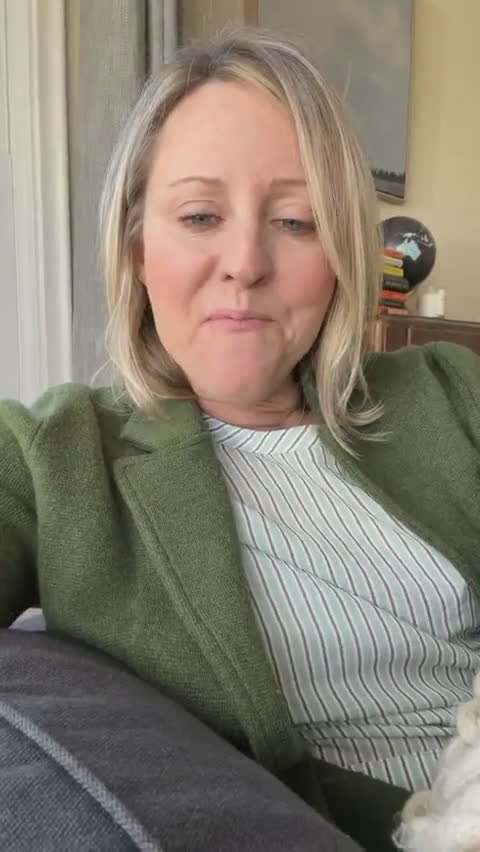
Cadre, hello, it is Shannon. I'm here again to talk on grief day about things we weren't supposed to talk about. And I'm going to talk family estrangement today. Hopefully you will join.
Shannon: Today is grief day on Cadre, and so we talk about all different kinds of grief. Shannon: I am here today to talk about family estrangement. She says no one is doing anything wrong by creating distance with someone in your family. Shannon says this may feel controversial, but it's true.
You're a valid human being, and you are loved and cared for. You can come here every week to Cadre. I hope you have a beautiful weekend. We will see you here next week.
Cadre, hello, it is Shannon. I am here again. I had a little bit today. I had a little bit of a technical issue, and I now am back. So, hello. I'm here again to talk on grief day about things we weren't supposed to talk about. And I'm going to talk family estrangement today. I'm going to give you guys a second to join. Hopefully you will. Hi, Anna. I see that you are here. I'm glad you're here. Hopefully my connection is good now. Okay, everybody, so welcome. Today is grief day on Cadre, and so we talk about all different kinds of grief.
So I am here today to talk about family estrangement. And family estrangement is one of those things that people really struggle to talk about. And for those of you who don't know me, I am Shannon. I am not a clinician. I am not a mental health professional. I'm a human who lives with generalized anxiety disorder. I parent a child with special needs. So I'm also on caregiver day, and I have CPTSD. And so that is essentially a different way of. Well, it's because of some childhood trauma that I have, which is why I'm going to talk about family estrangement.
Okay, so, as I just said, the word estrangement is. So I'm just gonna say. Yucky to say, right? I've used the analogy before. It's like when you're cleaning out your attic and you just, like, find all this dust and, like, all these things, and you know how you can find one thing and it can bring you all the way back to a different memory or a different thought? I feel like the word estrangement sort of has that sort of heft and weight to it. So what am I going to say today about estrangement and grief?
So, I'm going to say something that may feel controversial, particularly if there are some of you who are currently in the beginning stages of creating distance with someone in your family, or you're working through feelings at this moment. This is going to feel. Maybe it will make you angry. It might even make you say, like, I totally disagree with you, and that's so fine. And I think that I'm coming at it from the perspective of someone who has spent a long time working through this. And so when I speak about estrangement, I've found a place of peace with it for 90.
I'll say 90%. I'll say 85% of the time. So that's my lens. I just want to create that context. So what I'm going to say about estrangement today is that no one is doing anything wrong, and that means you're not doing anything wrong. I'm not doing anything wrong by creating distance or creating space and barriers and boundaries with people in my familial system. And that other person who is in that relationship with you or connected to you in that way, they're actually not intentionally doing anything wrong either.
So here's what I believe, and here's what I learned in my experience. We all have our story of what's happening, right? I could say my own story is my mother and I. And I could say, and then she did this, and then she was like this, and then it felt like this. And that is true. That is my experience, and that is a true experience for me. And it's 100% valid and real. And I am doing nothing wrong by feeling the way that I feel about it. Because if it is hindering my life, if it is causing chaos and grief inside of me, if it is doing things to me that keep me from being a healthy person, then it's not okay for me.
Right. But I think what I learned in my process of being estranged from my mom and for some context for you, I had a period of time where a bunch of things happened. She reacted in a way that was not okay to me, and I created a boundary, and I said, I'm not gonna speak with you. And that lasted for about three years. She's in my life in a limited way today. But what I will say to you is this. I also learned in my healing process. And even though those barriers exist today, they still exist. There are some barriers and boundaries put up.
I learned that it's actually not her fault, either. And I say that because she. I believe people do their best. I believe that no one is really born into this world not wanting to be good, not wanting to be healthy. Right? We all want love and connection. So I believe that she does the best that she can with the skills that she has, and there's a lot of parts that come into that. There is what she learned from her familial system. There's the culture that she grew up in. She's a boomer. Right. And there's certainly pieces at play that contribute to the way that she looks at the world.
There's lived experiences that she had, and all of those things are valid. They are valid. That was her experience, and it's so valid. And it also means that she then does not have the tools and the skills to interact with me in the way that I need to be healthy. And so that is not her fault. That is not her intentionally behaving in a way that she is trying to hurt me. But it also doesn't work for me. And so I think, for me, the grief in estrangement is knowing that that's true, because I can't change those things about her, and I can't change what I need either.
Right? I'm gonna need what I need. I'm a human that is emotional. I'm a human that needs all the things, just like you all need things, because you're all human, and we're all equally valid and valuable and worthy of receiving love and care. So I'm not here, and she is here, and vice versa, right? We're all the same in that human need for love and care. The fact that what we have with one another isn't tenable in a consistent day to day relationship is sad. And it's something that I grieve frequently.
And I can tell you it's gotten so much better over the years. But I can also tell you that I have peace when I frame it in my head of she's not doing anything wrong, she's doing the best she can, and I'm not doing anything wrong. I'm doing the best I can, and I don't know if that resonates with you. And like I said, I'm able to say that today because it's been a lot of work and time and effort to get here, and there are still times when I grieve it. Holidays are very hard. Mother's Day is horrible.
It just is. But I'm able to contextualize it in my mind and put some grace around it for both of us and just let it be a day. It doesn't have to be laden with a lot of wondering and sort of like, you know, beating myself up for what isn't. It's just reminding myself that I'm doing my best, she's doing her best, and neither one of us is doing anything wrong. So that is something that helps me with my grief around my family. Estrangement. I want to let you all know that you are not alone. If that is something that you are going through.
I want you to know that it is a really hard thing to talk about. And so that's okay, too. But I just want to let you know that you're not doing anything wrong. You're a valid human being, and you are loved and cared for, and you can come here every week to Cadre, and you will find more people like me who believe that too. So thank you, everybody for joining. I hope you have a beautiful weekend. We will see you here next week and you are valid and doing a great job at being you. We'll see you soon.
Reactions and comments are for members. Joining is free and takes a minute.