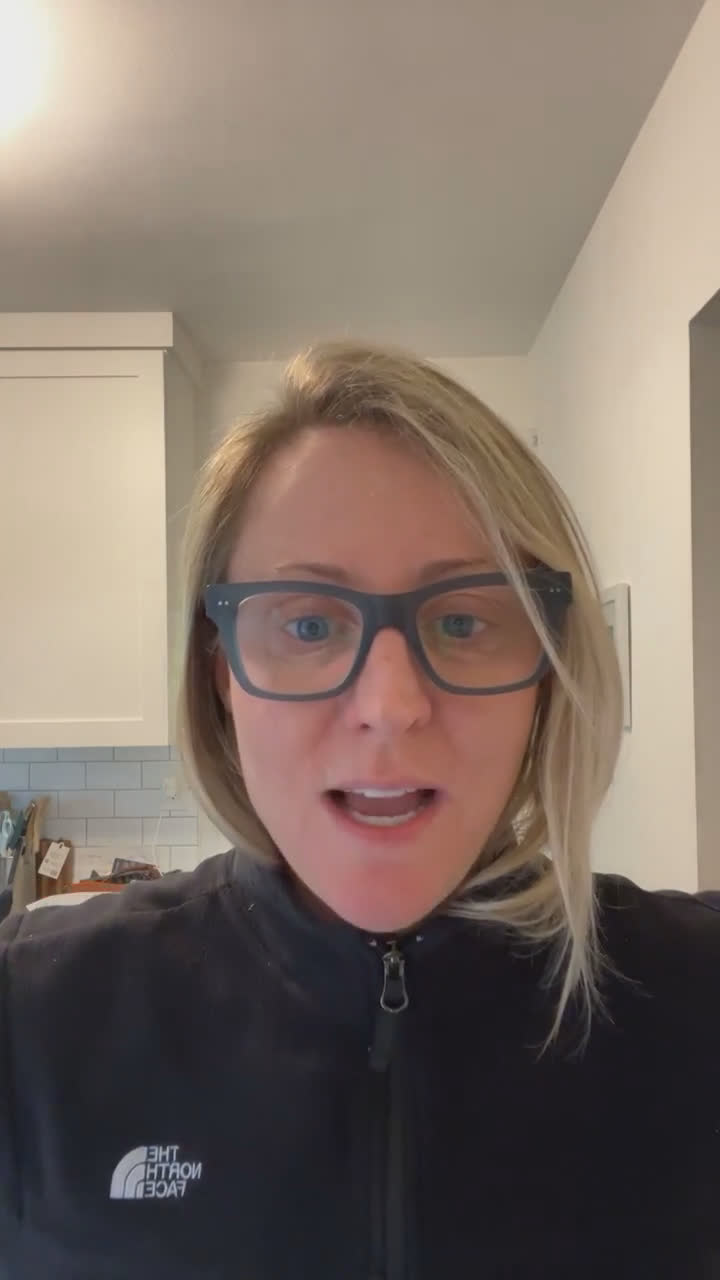
Join me to talk about the things that can be hard to talk about in culture, like what it means to the the caregiver of a child with autism.
Shannon: Happy Thursday. I am coming to you today from St. Paul, Minnesota. She is also a person who caregives a child with autism. For those of you who it may be your first time there. Welcome.
Today on Cadre Caregiver day, I'm going to talk about advocating for someone you love, advocating for the person that you care for. What I want to recognize about being a caregiver is that you can have those moments of advocacy.
And the part of caregiving that I want to talk about today is you leave that table. You still have to that advocacy, and that feeling of that advocacy goes with you. There's going to be feelings that sit like fear, like hope on both sides of the line that come with this process.
Colleen Lindstrom is coming up next. She's going to talk about being right in the middle of all of it as a sandwich generation. Have a best rest of your day and we'll see you soon.
Cadre, good morning. It is Shannon. Happy Thursday. Happy caregiver day on Cadre. I am coming to you today from St. Paul, Minnesota. For those of you who it may be your first time there. Welcome. I am so glad to see you. I am a couple minutes early this morning. I will wait for you all to join. So my story again, if it's your first time joining, I am Shannon. I'm actually part of the Cadre team. I am also a person who caregives a child with autism. My 14 year old son, Wyatt. I am a person who lives with generalized anxiety disorder.
And I also have something called CPTSD, which means that I have to work through interpersonal relationships with a lot of effort and intention. So I am here as a peer. I am not a mental health professional. I am not a clinician. I'm a human who has lived experience of parenting someone who has needs. Okay, so today on Cadre Caregiver day, I'm going to talk about advocating for someone you love, advocating for the person that you care for. Many of us here on Caregiver day, you might have a child with a disability.
You might also have a parent who is dealing with dementia. You might have someone in your life who has a long term health condition. And all of those qualify, excuse me, as situations where you will likely have to advocate for your person at some point. Anila, I love seeing you. I'm so glad you're here. For those of you who don't know Anila, she does a segment called leading with love, which is a lesson for us all on Wednesdays. Okay, so advocacy. So I'm gonna talk today about my experience with my son, who I quite in the middle of advocating for within the school system.
So yesterday I spent time with his care team and his dad and the principal and social worker, and I think eight of us who sat around a table together in service of better serving my son with autism. And today, what I want to recognize about being a caregiver is that you can have those moments of advocacy. Right? So we're all going to have those hard moments when you are sitting at the table. I have to let my dog in. So thanks for your patience. We're going to have those moments of advocacy that happen in those moments.
Right. So those tangible pieces and parts of conversation where you're sitting down and you are talking about a specific piece of their care. In my case, again, that's my son. And navigating what's happening in his, happening in his school right now. Right. He's having trouble and so I know that you all know. I know, Anila. I know that you speak wonder. Hello from Lake Erie. I know you are also caregivers. And so you have that moment, right? And you sit there and you talk about what we need to do differently in service of his needs.
And it can be data driven. Right, in that we know, like, okay, they're gonna need this service, and they're gonna need this support, but I'm also feeding my dog biscuits right now because he's driving me crazy. That's okay. So, you know, in a data driven perspective, we know, for example, that he might need a little bit more of this piece of care. And so I can sit there and his father can sit there, and we can break it down into these super tangible and quantifiable pieces of, if we can do this, we're going to get to this outcome.
Right? And so we can do that. And that is part of our caregiving job, is to do those. Those parts of it which are very much functional, practical. And the part of caregiving that I want to talk about today is you leave that table. Right? You leave that. That group of people where you tangibly try to create care for them, and you still have to that advocacy, and that feeling of that advocacy goes with you. So I left the table yesterday at, I want to say, 1115 1130. Right. The meeting started at ten.
It was 90 minutes of us talking about how to support myself. You guys, I'm so sorry. This is horrible. Gilbert, you need to go. All done. You guys, this is. I'm just so sorry. But this is reality, so you're gonna see it. Go lay down. Okay? Thank you, friends. So I left that table, and am I caregiving? In that moment, that practical caregiving, it was complete. Right? We sat there as professionals, as advocates, and we did the things we need to do in service of the person we're caring for. We had those conversations.
We broke down the behaviors, we used all the clinical and technical terms of the services he needs. And almost 24 hours later, I'm still sitting with the emotions of that act of advocacy, which are frustration, which are fear that my son's not being seen, which are worry, I guess, which is kind of like fear that today, I hope, is a better day for him, which is hope that we were able to see people rising to the occasion. His care team is really a great one, and there are parts of it that I don't love, as is going to be the case for anything.
Right. And so I think it's acknowledging that, like, you can have that piece, that you can have that plan. Right? Anila, you're saying it's easy to make the plan and then setting it in motion. Right? And it is easy. It is easy to point out the practical pieces that need to fall into place. And it is another thing to sit with the emotional repercussions of what it took or what it means to set that plan into action. And so I'm just. I want to recognize today for all of us who are doing this hard work day after day after day.
Speak wonder. I know you're doing it for your mom. I know, colleen, I see you here. You're doing it for your family members on both ends. Give yourself the grace and the peace and know that, like. And I'm self talking myself as I'm saying this and know that there's going to be emotional repercussions. There's going to be feelings that sit like fear, like hope on both sides of the line that come with this process, because it's not easy to execute it. It's not easy to put your faith in people. You don't know that well.
It's not easy to believe that someone out always has your person's best interests at heart, because that person is also human, and they come to the table with their own stuff, just like we all do. So sitting with those feelings, sitting with the knowing that you're going to go in and do all the right things might not always feel like that. It might be an amazing feeling, because you know that you are doing all you can. And it might be a heartbreaking feeling, because you know that no matter what you do, you still don't have control.
And at the end of the day, for me, I'll speak for myself. Giving up control for the person you love is hard. It's hard. And because there's always a good. And on the other side, there are people, Anila said, build that village. There are people who want to be a partier village. And so for me, speak wonder. You are part of that village, Anila. You are part of that village. Kjaline, you are part of that village. Right? And we are all building that village for each other where we can come and say, yep, we got each other.
We're gonna talk about these things. We're gonna know that this is something we all go through. And we're here. And so I'm here. I'm here for you. Thank you for being here for me as I sit in my feelings, and I'm sure you will sit in your feelings, too, in your caregiving journey. And so I appreciate you. Okay, friends, now I'm going to therapy to talk about my feelings with my therapist, because that's also what I do to cope. So thank you for being part of my day. I love seeing you all here. You're doing a fantastic job caregiving.
Colleen Lindstrom is coming up next, and she's going to talk about being right in the middle of all of it as a sandwich generation. So have a beautiful day. We will see you soon. I love the hearts, by the way. The new hearts that are added. Alec, shout out to you. How great. Thank you, Anila. Feelings are temporary. This is a moment in time and we're going to get through it together. Love you guys. Have a best rest of your day and we'll see you soon. Back here.
Reactions and comments are for members. Joining is free and takes a minute.