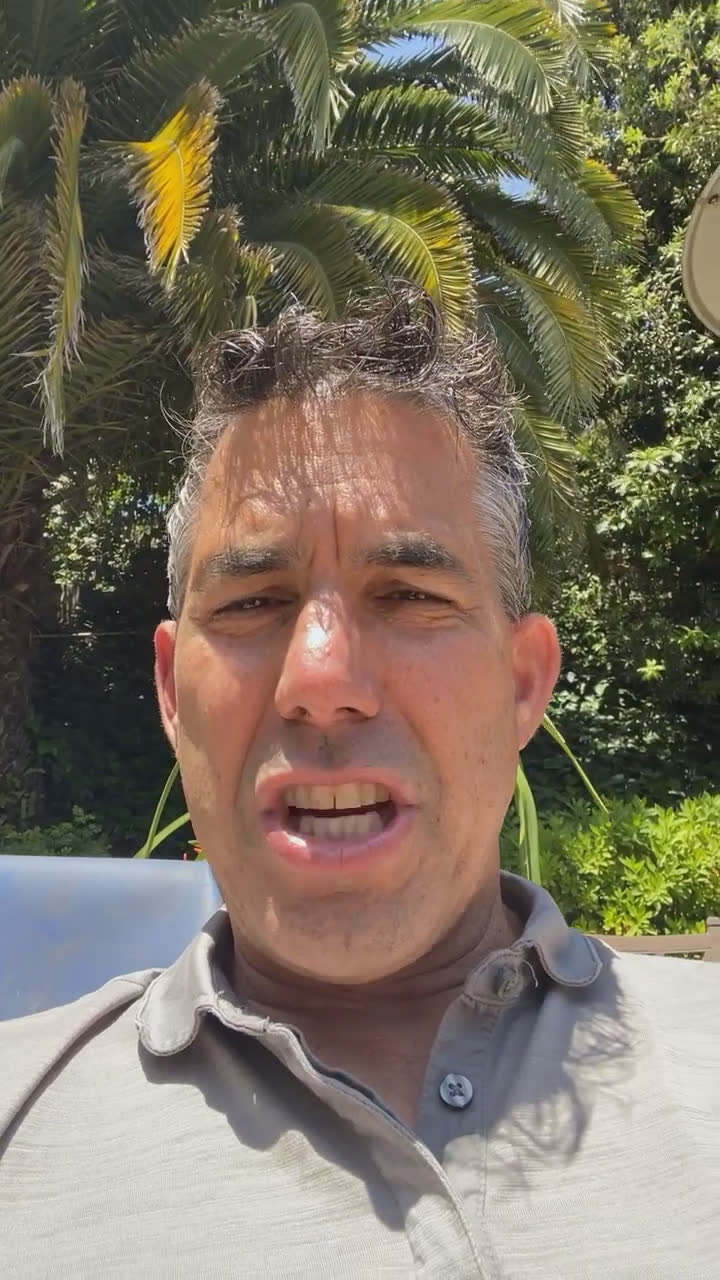
This live stream will be focused on allowing people to get to know me a little bit more by my professional accomplishments and the work that I have been able to contribute over the years. While somewhat facetiously calling it shameless plugs, I will be sharing my various publications, what I’ve gotten from them, what I hope they contribute and some of the other work and services that I provide.
Dan Griffin is coming in on his third live stream. His first book, a Man's Way through the twelve steps, was published in 2009. He wrote the first men's addiction trauma informed curriculum. Griffin's mission is to help men and loved ones improve the quality of their personal lives.
The first trauma informed curriculum for dads is coming out this year. Two women's curricula are in the process of being finalized and submitted to Wiley. These are the first of their kind because of how gender responsive and trauma informed they are.
All right, greetings, everyone in the quadrasphere. I'm Dan Griffin, coming in on my third live stream. And this one, it's called shameless plugs. And actually, it's not the easiest thing for me to do, but I also thought it would be a good way for people who are interested to get to know me and my work as a way to do that. So I'm just going to talk a little bit about the work that I've done over the almost two decades and share a little bit about those individual things and some of what I'm working on now.
And particularly for those of you who may be watching later, it's just an opportunity to kind of learn about me. So it's. Well, where exactly does it all start? I mean, I got into recovery at the age of 21 when I was a boy. Really a boy in a man's body and barely a man's body, I would say. But, you know, I just. I really didn't know what I was doing or how to live. And I got into twelve step recovery, and it kind of gave me this foundation, this thing. But what I noticed was all the men in the program were presenting themselves so differently than what I was used to a man being.
And this was 30 years ago, so I ended up doing a master's degree, and it was the first of its kind. First, I think I talked about this on my first day, but the first qualitative study of masculinity and alcoholics Anonymous, and I did it with friends, but it created this space for me to really think about my own journey as a man and other men's journeys as well. Thinking about what has helped me, what is helping me, and what I might be able to do to help others. Right? Because that's such a pivotal component of all of this, is, like, how can we be of service?
How can we take some of our darkest, most painful experiences and turn them into a catalyst to help others? And so, you know, in many ways, that's what I've tried to do. So again, this is called shameless plugs. So I'm gonna be true to the title. My first book right here, a Man's Way through the twelve steps, published by Hazelden in 2009. That was really my first experience being published. I had always wanted to be a writer and an author. It was an amazing experience in many ways. It was a big letdown because I had such high hopes for it.
I mean, it's done very well over the years. It's been out for 15 years. I've sold, you know, over 50,000 copies, and I'm very proud of it. But, like, the key for me with that book is I just believe there's so much more we can do as men to explore the intersection of our masculinity and the process of recovery and how those go together and how they can be kind of at opposites with one another. And so that's what that book is really about. And thinking, thinking that through. And so I wrote that book, and then I had the privilege and honor of being able to work with Doctor Stephanie Covington, who's really been a pioneer in women's work, women and trauma.
And I wrote with her this helping men recover and helping men recover was the very first men's addiction trauma informed curriculum. Right. So one of my areas of expertise is being trauma informed and truly trauma informed, not some of the watered down stuff that people are doing these days, calling trauma informed. And that's a whole other area of my work, actually. I do a training for organizations, I do a training for professionals that's called. So you think you're trauma informed. And it just kind of challenges some of the ideas out there about what is trauma informed and what I perceive and judge to be some pretty watered down versions, versions of being trauma informed.
The primary thing being that people who talk about trauma informed, a lot of the time, they're always just talking about the services that people are providing. And that is just like one fifth of what it means to be trauma informed. And that's a whole other conversation. And maybe we'll have that on a different live stream. So I did that curriculum and then I started. I left my job in Minnesota, at the Minnesota Supreme Court as the state drug court coordinator. I left that job to start my own business, doing trainings, public speaking, consulting in 2010.
And I've continued to operate that business. We've successfully remained open as a business. And the whole mission has been to help men and their loved ones to improve the quality of their personal as well as their professional lives. And the helping men recover curriculum has been quite popular. It's done very well. We've been able to train people all around the United States, as well as in Canada and even in Europe. And as it relates for here, you know, we have a workbook. That's what I just showed.
There's a criminal justice version, there's a community version. We've done trainings in jails and prisons, and it's been very, very fulfilling to be able to do that. Following the creation of helping men recover. When I did a man's way through the twelve steps, every guy that I interviewed for that book talked about relationships and how important relationships were to him. And I just thought, huh? Has anybody written a book about men and relationships in recovery? And I did my research, and nobody had.
So I went back to my first publisher, and they're like, nope, nobody's gonna read it. And I was like, oh, okay. Then a friend of mine who was published through another publisher, she turned me on to that publisher, and I sent them a proposal, and they were like, nope, men aren't gonna read it. I said, oh, okay, another publisher. Nope, men aren't gonna read it. And finally, a little bit of persistence, a little bit perseverance, right? I went to one more publisher and, hey, Luke, happy Saturday.
I went to one more publisher and I was like, okay, nobody's willing to publish this. And they said they would. They were a newer publisher and their central recovery press, and they have put out some really wonderful books in recent years. But they took a chance with me on this book right here. A man's way through relationships, learning to love and be loved. Do I wish I would have given it a different title? I do. I was kind of being defiant in thinking like, well, this is what it's really about.
So this is what I'm going to give it as a title. And the publisher went with me. But, you know, it could have been a different title, like why men suck at relationships and what we can do about it, or, you know, any number of things. But that's okay. You know, I'm learning. But the book has done pretty well. But more importantly, like, if you're in relationships, any kind of relationships, and you're having some difficulty, and especially if you're in recovery, but not just. I think that book can be very helpful.
And one of the lessons I learned from man's way through the twelve steps was to build a workbook like component into the book. And so I did that with the second book. And so at the end of every chapter, there's actual exercises that you can do and you can work on to work through them. And I always tell people, I'm like, look, if you get the book, you know you can read it. Absolutely. You know, I think it'll be very eye opening for you. If you do the exercises, it could be transformational for you.
So is that the end of my work? Well, that was in 2014. I have a very good friend, Doctor Alan Berger. He's a well known Hazelden author, and he and I wrote a book together. And we have just been, we've had a long time that we've been working on it and getting it edited and then re editing it and then reformatting it and doing lots of stuff, and then trying to find publisher who wants to publish it. But we may have found a publisher, but that's a book called what men would tell you if we weren't too busy watching tv.
And that book is written to women by two men of different generations about a little bit more of our inner lives and how we show up in relationships and what might be going on with us. And then at the end of every chapter, it invites women to sit down with the men in their lives and do some exercises together. It's actually a very good book. I'm very proud of it. But again, we need to find a publisher. Then the last that I'm going to say, and I can only show you one of them, right? It's right here.
It's called amazing dad's fatherhood curriculum. It is the first trauma informed curriculum for dads. Right? It comes out from Wiley, who published helping men recover. But there is amazing dads. There is healing men's pain. There is amazing moms, and there is healing women's pain. They are all trauma informed curricula. They are all the first of their kind, even though there are some other curricula out there. These are the first of their kind because of how gender responsive and trauma informed they are.
These are all curricula that programs, organizations, treatment centers, churches, groups can use. And in two of them, we partnered with doctor Sophia Murphy, who's done an amazing job of creating the two women's curricula. And we are actually in the process of finalizing both of those curricula and submitting them to Wiley. But Wiley has contracted with us with all four of those curricula, and all four are coming out this year. So I'm very, very proud of that. What's my point? Well, my point is, one, those are resources that are available to you in the work that you do.
Two, I think it gives me some credit in what I'm going to be talking about coming up in the future here on Cadre and the Cadresphere. And three, I think, you know, it really kind of lets you know, like, that's my passion. My passion is men and supporting men and being the best men, the best fathers, the best partners that we can be, and navigating all of these unseen impacts of gender conditioning that we very often just don't even realize are having a much greater influence on our behavior and our interactions and the way that we show up than we realize.
And, of course, with the women's work, you know, that opens up a door that, you know, in the last ten years for my business, we've never really done. And so I imagine I'll be inviting Sophia on to do some stuff with me, even on cadres. So that is a little bit about me. That's my, again, my shameless plugs episode. And I look forward to starting next month, which will be June of 2024, just for posterity's sake. Then I'm going to be doing my standard theme, kind of topic focused livestream each week.
Right. So more to come on that. But thanks so much, and I wish you all a very wonderful Saturday. Thank you.
Reactions and comments are for members. Joining is free and takes a minute.