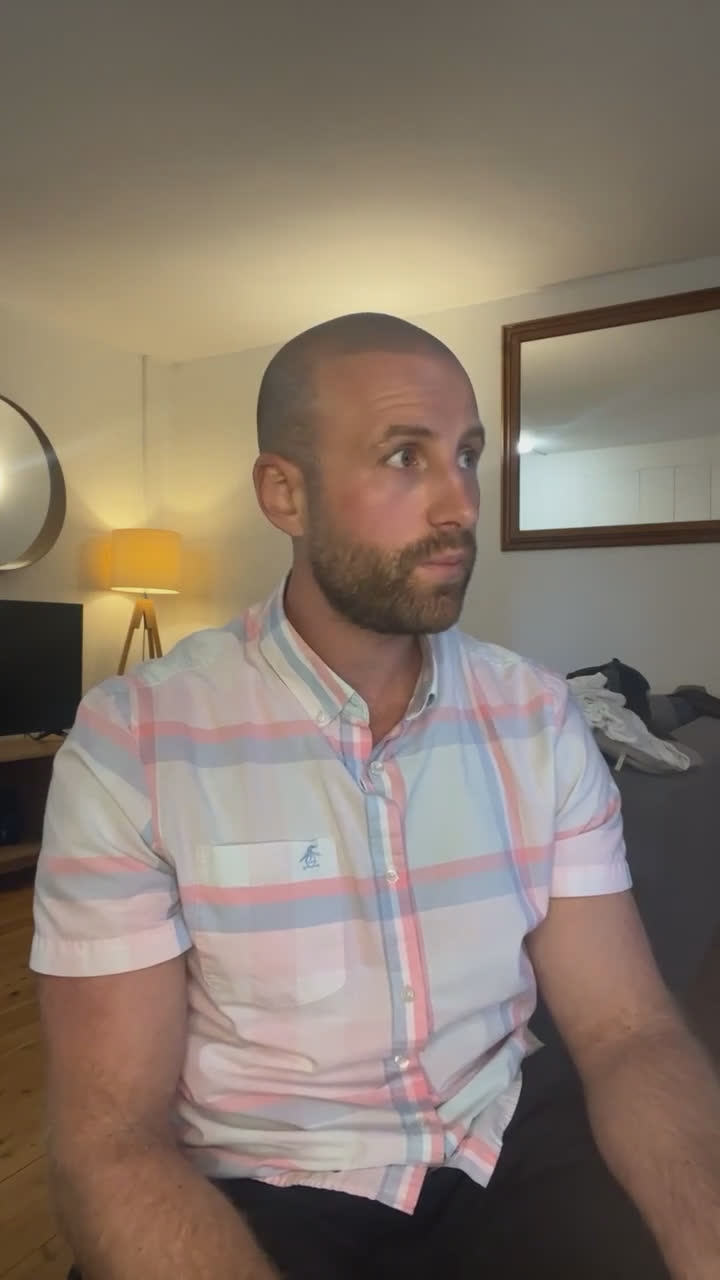
Welcome to another episode of my livestream, Mental Health Matters, where we discuss MATTERS around addiction and mental health because mental health MATTERS. Today we are doing out every-other-week, ask me anything episode, so feel free to to send me your questions or just join and participate!
Today we have another AMA ask me anything episode. Anything to do with mental health, addiction. As always, I prepared some pre written questions. Hopefully we'll get some people joining, maybe some of the regulars.
So first there's a couple questions. Some of these involving partners, ex partners. That is so common. And then we'll have some. Maybe we'll make that.
Jules: Give us an update on your life, on your situation. See if you have made any progress since. Would it be Saturday? When did I go live? It's on Thursday or Friday night. We'll see if anyone else joins as well.
First question. How do I get help for borderline personality disorder? It is a reaction to trauma. Not everyone with trauma has BPD, but pretty much everyone with BPD has trauma. It could be anything from self harm, suicidal ideation, substance use.
A lot of people who grow up with a mother, father, would be PD. Usually those risky behaviors stemming from the emotional, other symptoms, emotional dysregulation, that lead someone to get in the system. Maybe do a video on the worst tv movie therapist.
The gold standard is DBT, dialectical behavior therapy. Mindfulness and skills based. These individuals lack a sense of skills to deal with emotional dysregulation. It's really like a structured program of learning, of using skills.
We gave Jules an exercise called Benjamin Franklin method of making a decision. It's where you really analyze what's important. You kind of rank your different choices to pick which ones stay and which ones go. I'm excited to see what she does.
How can you help someone understand what you're going through? My hubby's not a feeling person and just doesn't understand primary and secondary trauma. In the book I'm writing about communication, we talk about different ways of having difficult conversations.
Another powerful one, too, is like writing a note. It's just about breaking some of those really ingrained relationship dynamics. Sometimes it takes a different type of conversation, a deeper conversation and a more vulnerable one.
So I have an ex partner with borderline personality disorder, and he won't leave me alone. What do I do? It just kind of depends. Again, I always recommend starting with the least invasive, intrusive option.
There's three levels. There's preventative frontline boundaries. Second is a reminder. Third is a final frontline boundary before you get into level two. If they cross that, then you want to maybe seek that order for protection.
This is gonna be my last one in Australia. Maybe when I'm back, we'll do some lives in the park by the river. I think I partied a little too hard this weekend. I've also been sick like 27 times this month. Alright folks, take it easy. We'll see you soon.
What's up, folks? Welcome to mental health matters. I'm Evan, your resident mental health and addiction therapist. Today we have another AMA ask me anything episode. Anything to do with mental health, addiction. Or you could ask me something else. I may not have a great answer for it, but you certainly could ask me anything. I don't want to false advertise it to say anything. Do I have to answer? Does it have to be good? Maybe not. Odd category, but yeah. So the beacon has gone out. Hopefully we'll get some people joining, maybe some of the regulars.
So that'll be exciting. Facilitate some good conversations. As always, I prepared some pre written questions. Not that I wrote the questions, but these are questions that came from. You all came from social media, followers, whatever. So we can go over some of those, I can answer some of those. And from there we can just see where the conversation happens. So let's go ahead. So first there's a couple questions. Some of these involving partners, ex partners. There we go, Jules. First regular to make it.
You win the prize on that one. So we do have some questions about. I just made that coffee really strong. Yikes. So, X's, partners, personality disorders. Of course. That is so common. So, so, so common. And then we'll have some. Yeah, we'll see what we go. Maybe we'll make that. We'll make that. Just the topic for today. Partners, mental health, personality disorders, all that good stuff. What's up, Jules? Tell me something good. What are you doing? Give us an update on your life, on your situation.
See if you have made any progress since. Would it be Saturday? When did I go live? It's on Thursday or Friday night. I'm so Saturday. So yeah, I want to hear your progress. We'll see if anyone else joins as well. First question. First. We'll start with this individual question, which is, how do I get help for borderline personality disorder? So first we have. Oh, okay. So first, borderline personality disorder, what is that? It is typically someone who has, let's say, you know, like an innate sensitivity and emotional sensitivity very often, right?
That's like the soil, you know, the seed then is trauma. And then the growth would be, you know, borderline personality disorder in this case. Not always the best way of describing it, but essentially it just means, you know, somebody who has certain traits. You know, you could pretty safely call it like a PTSD or trauma reaction. So it is a reaction to trauma. Not everyone with trauma has BPD, but pretty much everyone with BPD has trauma. Unless someone really has some of those predispositions but there's usually a social component as well, for they struggle with, like I said, emotional regulation.
Number two would be issues of attachment, fear of abandonment, which leads to a lot of problems in relationships, risky and harmful coping. Now, that is a big part of it, and I'll explain why. So that could be anything from self harm, suicidal ideation, substance use, getting in intense, unsafe relationships, but kind of things to, like, make you feel alive, if you will. Speaker wonder made it. We were wondering where you were. And so for that reason, a lot of people end up in the system, let's say.
So, like, within the mental health system, whether that's hospital, very often hospitals, psych hospitals. Number two is treatment centers, sometimes even legal. Sometimes they struggle with a lot of legal. It's usually those risky behaviors stemming from the emotional, other symptoms, emotional dysregulation, that lead someone to get in the system. So very often. Hello, I'm here so very often, you will see. I lost my train of thought. Yeah. So, you know, very often, us mental health professionals are gonna have a decent amount of experience with it, whether we realize it or not, because these folks end up in the system a lot.
Now, good news with that is they're seeking services or not really seeking services, but found themselves in a place where they're in services. And very often folks, like in this situation want to get help. So that's good. But it's really difficult. It's a really debilitating disorder, and for a while, there's a lot of stigma around it because some of the behaviors are so difficult. With the emotional dysregulation, attachment, risky behaviors, and with the emotional dysregulation, you get a lot of, like, anger.
Sometimes it can for not everybody, but sometimes it could look like manipulation. Right now, we say with BPD, it's like having a hole in your cup and constantly, frantically trying to fill that up just to feel okay. So in that desperation, you may do things that are not necessarily living up to your values, may be harmful to others. A lot of people who grow up with a mother, father, would be PD. Again, it's like a personality disorder, similar to something like narcissism, antisocial type. It is its own thing, but there's kind of that overlap.
They're in the same cluster B category of the ten personality disorders. Um, you know, but for someone to grow up with that, like, a lot of, a lot of damage could be done. Um, have you ever watched the Sopranos? I think they diagnosed Tony's mother with it. Tony Soprano's mom with BPD and the show. But, yeah, there's that. Um, well, I just thought of a good video idea. I was thinking of the Sopranos and how many bad therapists there are in tv and movies. So maybe do a video on the worst tv movie therapist.
Yeah, that'll be good. So then we have speaker wonder car jazz is here. What's up, car jazz? We know her pretty well. So with that. Right. It just really basically goes to say that it is a really difficult, intensive disorder. However, there are some good treatments there, and a lot of people, they go through something called the gold standard is DBT, dialectical behavior therapy. And with DBT, basically, it is a mindfulness based. Mindfulness and skills based. So, essentially what theory behind that is.
I think these individuals lack a sense of skills to deal with, cope with their emotional dysregulation, and help navigating life, relationships, coping skills to avoid substance use and that. So it's really like a structured program of learning, of using skills. It's difficult. There's a lot of accountability. It's not a lot of fluff, but people really find it helpful if they engage. And you can do it on an individual level. But the gold standard would be like three days a week for however many weeks and then kind of dropping down.
So you got that. Let's just check in with Jules here. Finish step one of the Benjamin Franklin. So that's awesome. And just need to do the rest. Okay, so that's awesome, Jules. I'm excited to hear part two and what happens there and see what you come up with. Because Jules, like many of us, likes to spread herself a little too thin, has too many jobs. And I think. Is that a point? Correct me if I'm wrong, where you see the need to cut out at least one of them, some of the people pleasing under that, that kind of thing.
So we gave her an exercise called Benjamin Franklin method of making a decision. Again, there's another name. I forget what it's called, but anyway, it's where you really analyze what's important. You like, you kind of rank your different choices to pick which ones stay and which ones go, and you like. It's kind of like a math. It's a simple math, but you could look it up. But it's a really good way to sort through the B's. That kind of goes in your mind and, you know, it's kind of like, do I? You know, sometimes when things are stuck in our mind, we can't see clearly.
So to put it on paper is great. So I'm excited to see what she does. Okay, so how can. So let's go to Jewel's question. How can you help someone understand what you're going through? My hubby's not a feeling person and just doesn't understand primary and secondary trauma. He just tells me to not do the job. Okay, so it sounds like, yeah, this is, again, related to, um. This is related to the job situation, right. Of maybe taking on too much. So, um, you know, he's maybe that more stereotypical man.
Don't. Don't feel. Just do it. Pull yourself up by your bootstraps. So I'm trying to think, like, you know, in the book I'm writing about communication, we talk about different ways of having difficult conversations. And, you know, like, just to kind of come up with something, you know, a couple ideas, is just, like, how to frame what you're going through. Now. You could be like. You start off with, like, an empathy towards it. Be like, yeah, you know, you're right in that it is important that I make a decision.
I could see how you think that it should be an easy decision based on, you know, so acknowledge whatever truth there is. Call that a disarming effect, but say, you know, I'm having, you know, difficulty making the decision for these reasons, you know, and you could talk about the trauma, like, you know, because of these difficult experiences I've had. You know, I have this pattern of, you know, and to just stop doing something, you know, is very difficult and emotionally wrenching or something. And, you know, so it is a little bit.
It's, you know, going to be more difficult for me. You know, you could relate it to maybe a struggle he's had or something, if he's like a recovering alcoholic, you know, or something. To say that, you know, it's something I want to do, that I'm going to do and that I'm working on. Just like, if you struggle with your eating or something else, it's just more difficult, especially based on what I've been through, you know, and to say, you know, I would just appreciate if you listened, understood, and gave me some grace and support about it and just know that I'm working on it.
And hopefully he responds positively to that and maybe frame it in a way where he could understand. Maybe I'll use that question because I want to put some examples in my book about just different, just the examples and narratives as well. So I know that would be something. Tell me what you think of that. Again, I just came up with it off the top of my head. Another powerful one, too, is like writing a note. I shouldn't write that down, too, because, like, I had a client do this recently. It was a bit of a different situation.
Well, actually very similar. So I had a client, severe, severe, severe childhood trauma, like, horrible abuse and really impacts her to stay. Now she has two kids. I mean, she's in a better spot. Luckily that she was able to leave her toxic partner. She was able to, you know, she actually reconnected with her, like, childhood best friend. They were really close to a guy, and then they actually started dating. How cute. So she's in, like, a much better place, but still struggles. And they were both dealing with their ex baby mama drama, baby daddy drama kind of thing.
And they were just having some miscommunication. Similar where their approach to dealing with their situations were not in agreement, where he wanted to be more confrontational. She's saying, look, you know, I don't. It's not helpful, that kind of thing. And so she was really struggling to have some of these conversations. And so I told her, like, all right, would you feel more comfortable writing a note? Like, write a note to him and just get what you want out on paper, you know, how you feel, some of the positive feelings and what you ask of him and actually explain.
Because she's never really felt unable to explain why these things were difficult or that she was even struggling with these things. I mean, her tendencies were so ingrained that she'd never talked with anybody about her problems. It's amazing. She's even in therapy. And so she never. And so for her, she would get choked up in the moment. So her writing a note, writing him a little note of saying, hey. And then another time, she did one, too. Similarly, being like, I'm struggling because she wasn't able to tell him, hey, I'm really struggling right now.
Here's why. I love you. You're so supportive, and I appreciate your support. I just want you to know that. And I'm working on it, you know, like, whatever. And, I mean, she said that, that, you know, so she was actually able to communicate then. Right now, hopefully, over time, you do that, you get more and more comfortable having those conversations with him. So the question is, you know, I don't know your husband. I don't know how supportive he is, you know, in this way. If he's just kind of always that stoic kind of guy, maybe not as emotionally warm and such, that's unfortunate if that's the case.
But, I mean, sometimes people may come off that way. But when you really kind of tell them how important something is to you, you know, and that maybe they do come around, whereas sometimes you just get into these dynamics and they don't. You don't really realize the gravity of how something impacts you. And so hopefully there is that, you know, warmness that he can tap into and maybe just difficult for him, and he could just do it in his own way, you know, outside of just the way he's been engaging with you on your struggle now.
So hopefully that little narrative could help as a starting point. But I think, you know, I think it's just about breaking some of those really ingrained relationship dynamics. And in order to do that, sometimes it takes a different type of conversation, a deeper conversation, a more vulnerable one, you know, and that's maybe where I would start. If they start getting to a place where. When they start getting to a place where that's not getting through to them, you know, then we're talking about very different conversations and a different choice of how much do you want to push on that and how much do you want to really express dissatisfaction in that area.
So there's that. Yeah, that's a great, really good question. Prompts a really good discussion, because I get a lot of questions like that. So that's the other one. Yeah. So maybe having that conversation or maybe writing a note, and I think because there is really a power in that, like a handwriting, you can be type two, I suppose. Like, for me, I probably have to type it because my handwriting is such crap. But handwritten note could be meaningful and doing that, too. Again, reiterating to express any appreciation or gratitude you have for him and to show empathy for his opinion or, you know, I understand where you're at, why you think that.
So those I find to be very well received to kind of get through that external shell of manliness. All right, let's see. Okay, so here's another one. So we've talked a little about BPD toxic ex partnerships. I'm gonna do one more question. Let's do the BPD one, because I got a couple others we could save for next time. X partner. So I have an ex partner with borderline personality disorder, and he won't leave me alone. What do I do? Right. So now we kind of. As we get into this place, we kind of get into safety territory.
We don't want to blame just like BPD, but again, we understand it through the symptoms, through the behaviors that come from it. Not everyone with BPD would go to this length but let's say it kind of gets to the point of harassment. They have such a deep attachment. They feel this abandonment. Maybe they even broke up with you and then out of fear and then kind of want to come back and you've moved on and it's really difficult and sad. So it just kind of depends. Again, I always recommend starting with, like, the least invasive, intrusive, looking for the right word, but the least forceful option.
Right? So, you know, maybe through text or phone conversation being like, look, I understand this is difficult for you. It's been hard for me as well. But personally, I need to move on, and that's going to mean cutting off contact for the foreseeable future. You know, if, you know, it's forever, you know, can be this indefinite. You know, you don't want to, like, poke them too hard, but, you know, you could do that too if you really want to take a stronger stance to say. But I find if you're just saying, like, indefinitely, you know, for the time being, how long?
Be like, what would you say to that? Say something like, you know, I don't. I don't know, but I will. But I'm asking that you do not reach out to me and I will reach out to you if I want to do that. You know, and that's pretty clear in and of itself. And it doesn't put this, like, forever. Who knows? Maybe they make a miraculous change and you meet them ten years later, they're doing well and you want to have a cup of coffee. Right? So nothing's forever. But I mean, pretty definite. You know, you can be pretty definitive in that not wanting to have contact.
So that would kind of be step one. And maybe there's no threats involved, right? So this is what I call setting a frontline boundary. I talk about this in my book, a frontline boundary, which is, you know, the least intrusive. So you're just basically. And I say there's three levels. There's preventative frontline boundaries. And that is like you would tell someone before, like, hey, this is where my boundary is. So you probably pass that point because they've already crossed the line. And then reminder, frontline boundary.
So the frontline boundary could also be like the first so that we could consider this frontline boundary where you give them that first message. Second is a reminder. And then third is like a final frontline boundary before you get into level two. Steadfast, we call those. So front line and ultimate boundaries and ultimate boundaries are lines that cannot be crossed. So we're going to get into that because in these cases, there may need to be ultimate boundaries. So that'd be level preventative, frontline boundaries.
And you sometimes, if it's a serious situation, you could skip past these levels, level two, you know, he breaks that contact, you know, maybe he sends an, you know, like, I know this is, I know that this is what you said and what you told me. I just, you know, blah, blah, blah. I want you to think that, you know, again, I understand you're hurt and you're coming from again, I'm asking to please not, you know, to not reach out. I will not be responding. Moving forward. Let's say he does it again.
You know, I would say at that point, if you're not worried for your safety, I mean, you got to be careful because you never know, you know, it is best to ignore, you know, and then maybe they send a whole barrage of messages, you kind of wait it out and they, a lot of times you're extincting and then they just give up, lose theme. But then if they start crossing lines, if they keep this up and it gets to stalking, harassment, if it gets to them showing up, then you have a serious problem. Then you may just want to go to the police or you could let them know, be like, look, if you reach any of these ways one more time, I will be reaching out to authorities, will be seeking a protective order.
If you are not, you know, please, you know, respect, you know, please respect these boundaries, or that's what I'm going to do moving forward. That's the final front line. That's not now that's like a more of an ultimate boundary. If they cross that, then you want to maybe seek that order for protection at that point. Because then if they do cross that line, straight to jail. Straight to jail. Maybe you've seen that episode of Parks and Rec, straight to jail. And it's not always easy to get it. So it's difficult because sometimes people I was dealing with one of the, dealing with this, with one of my friends where sometimes even though it's not safe, it's almost better that they go over the top because then you could get that order for protection or hopefully there's not that bad and they kind of lose steam or they eventually respect your boundaries and it's that middle ground that could be difficult, where they are kind of bad enough that it's really harassing, but not so bad that you can get an order for protection or no contact order or something like that.
But it is important because especially if there's like a power differential, physical strength, male, female kind of thing. You want to be really, really careful. And if you're in a fearful situation, it may be best to just right away set some of those ultimate boundaries. You could do it. It's okay to be. To be respectful, but also strong. So sometimes people, you know, kind of maybe recommend being a little too harsh, but sometimes, again, in these situations, if you can maybe kind of calm them down a little bit, you know, or just doing the right thing to be respectful of the person.
And, you know, kind of that. I know that you feel difficult. You know, this is hard for you, da da da da da. But at the same time, here's where I'm at, and this needs to be respected. I had a situation, actually, I had a situation just like, not just like that, but it was kind of from a professional standpoint where I had a former, I'll just say, for lack of better term employee who I had to let go of for some pretty significant issues. And they. We're actually also working at this other organization that works with my organization.
So actually, in some ways, they're also a professional colleague, despite having been working for me. So I kind of let it go and just kind of tried to have that cordial relation, different type of relationship, which was, like, going, okay, but, you know, kind of crossed into them, calling, sending harassing type messages, this kind of hot and cold kind of thing. And again, I didn't want to create a whole lot of undue drama, you know, so I kind of, you know, but kind of let it go a little bit. But then it got to a point where I had to, like, take off the kid gloves and really put my foot down and, you know, explain my concerns and what I'm asking for.
So part of the boundary setting process, this is what I'm asking for. And I kind of said, look, this, you know, if I'm hearing you, you know, talking ill or untruths about our program, if you're reaching out to me on my personal line or having clients reach out to me on my personal line and not following the procedures that I've asked the professional, you know, maintaining good professional boundaries, you know, and not bringing up the past of your anger and resentment towards me and my staff, if not, you know, I'm going to report to your supervisor, you know, and that actually, actually worked pretty well.
They were like, they kind of backed off because that whole time, again, I, like, you could argue maybe it wasn't best, but I was trying to, like, avoid conflict and I had my reasons for doing it, and I was trying to do it a little more diplomatically and trying to turn the other cheek not to create a big issue where things spill over. And it's more than it has to be. Hoping they would kind of come down and they kind of showed some signs of that and, like, being nice and. But it was just. It was very, just dysfunctional situation.
They were not emotionally in a good place. But, you know, my fear as well as they started crossing lines was that's going to affect their clients as well. You know, if you're not serving your clients or not offering certain supports based on your own personal grievances, that's not okay in our field. So, you know, that was an example of having to use that. And it's worked quite well so far. But again, as the lines get crossed and you continue to escalate, but you don't need to go to. You know, sometimes there's downsides of going to defcon ten before trying some of these other means.
I always say, like, making this up, def con. I don't know, just, like, doing these really harsh ultimate boundaries right away can actually. It could backfire in some ways, depending on the situation. Every situation is different. Um, so there's that. Anywho, uh, folks, it's been awesome. Jules, I look forward to hearing back. Sorry, I'm not. Maybe I should have gone to the beach again for this one. I didn't think about it. You all really enjoyed that. This is gonna be my last one in Australia. But maybe when I'm back, we'll do some lives in the park by the river.
It's also a calming environment. And I have this lamp, very calming lamp, so maybe that helped, too. But when am I going next? So I'll have to be going back to my original. So I may be off next week. I may be able to pop in, but then I'll be back in my old schedule, my american schedule of during the day. Maybe a little lunch break. So. Folks love it. You're awesome. You love the beach house. I'm wondering if you're still here. Well, hopefully my blatherings were helpful in some way. Yeah, it is actually kind of a nice day.
Should have done it. I'm sorry. Um, I don't know. Maybe I'll just, like, pop in randomly. I do get that a lot. Like, when I'm not doing a social media video, like, I can't, like, do us. I don't think I could do a social media video like this. And I like calmed, super calm demeanor. I'm always like, yeah, not very calming, but at least there I'm like a little more engaging. I don't know, but you know, in my voice right now, it's a little messed up. I think I partied a little too hard this weekend.
I don't drink, so it wasn't like too bad. But we were kind of at this like live dj event and I think too, you have to like, you know, it's so wild. You have to yell like Steve. Yeah. What? Yeah, you know, the music's going woo. So I think maybe it's that I've also been sick like 27 times this month, so a new sickness every day. Maybe two in one day by that math. Alright folks, take it easy, we'll see you soon. Bye.
Reactions and comments are for members. Joining is free and takes a minute.