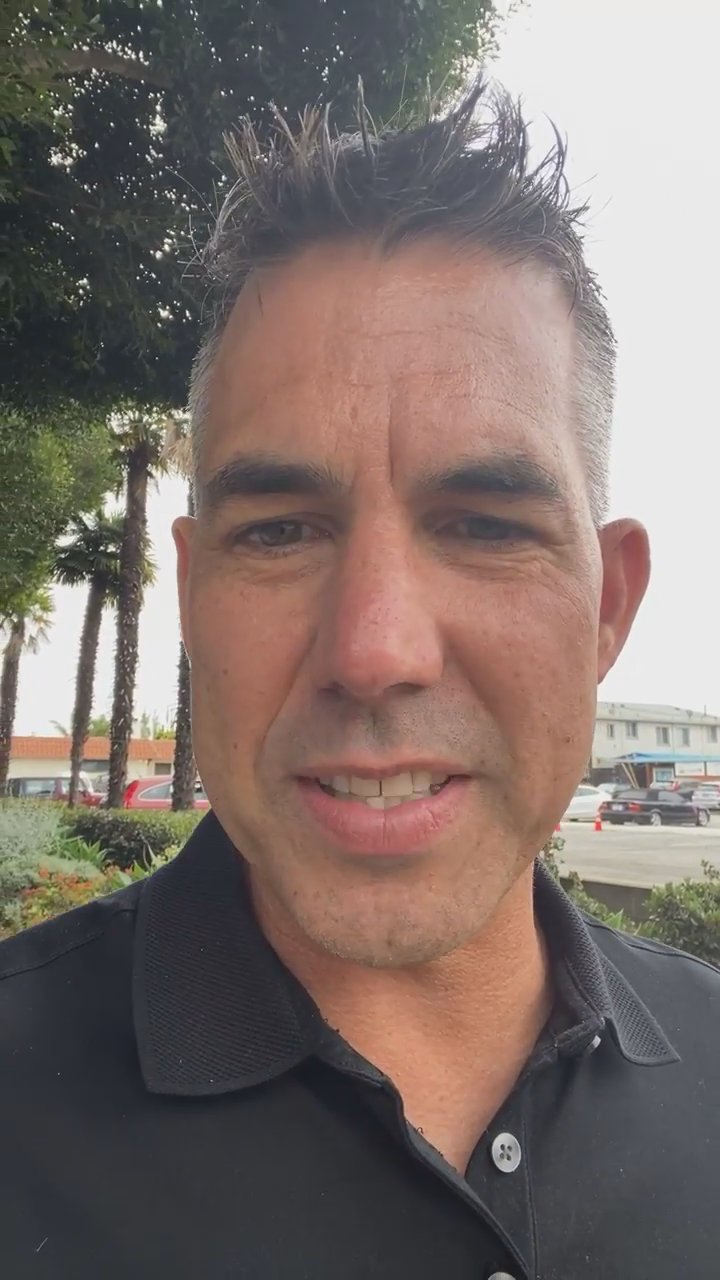
This is a new topic I’ll be covering every SECOND Saturday. Exploring what it means to be a father in the 21st century. I like to say that while the expectations for men as fathers have changed dramatically in this century, the guidance on how to meet those expectations has been minimal.
A funeral for a friend starts at 130 Pacific time. These are scheduled for every Saturday at 130. You know, I'm happy to be here as we explore, like, these different topics.
Every second Saturday of the month, Jarrett Bellini will talk about what it means to be a conscious father. Bellini: I didn't grow up with a father. He says he's always had a collective of men and women to help him be the father he wants to be. Bellini: 14 years in, I am a great dad.
All right, well, let's see here. I am in Santa Monica, and, you know, these are scheduled for every Saturday at 130, and that's no matter what's going on. And what's going on today is a funeral for a friend, and it starts at two, but this starts at 130 Pacific time, so I'm gonna go ahead and. And do it. You know, I'm happy to be here as we explore, like, these different topics. And, you know, this one, this idea of conscious fatherhood that I'll be talking about every second Saturday of the month really is very, very meaningful to me, and it's very, very important to me and personal to me.
Right. Because I'm a father of a 14 year old daughter who I love very, very much. And, you know, this idea of, what does it mean to be a conscious father? And as I was reflecting on this, one of the things I realized, hey, from beautiful Lake Erie, how are you? I, you know, I think it's really difficult to reflect on being the kind of father I want without in some way, kind of conjuring the father I had, right. Do I want to be like him? Do I want to not be like him? Are there certain things I want to do or not do?
And there's a great saying from attachment therapy, attachment philosophy, whatever you want to call it, but we repeat what we don't repair. Right? So I did not grow up with a father. He came from New Jersey. He was working class. He struggled with alcoholism. He struggled with a bad temper, and he was irish, and generations of trauma and the idea that he was there to be something other than a provider, and I'm not sure what else, that's not really something that he did. But, you know, my generation and the younger generations of fathers, like, we, like, we really want to show up.
It doesn't mean that we know how, but we really want to show up. And so what conscious fatherhood for me is all about is, it's like, okay, where do I need help? What am I doing? Like, at 14? But even when my daughter was one or two, I've always had a collective of men and even women, including my partner and spouse, to help me be the father I want to be. Like, I just don't believe parenting is something that we can do alone. I mean, you can, but why. Why not get feedback? Why not get advice? Why not ask people what they did when their child was this age or this age or, you know, notice, you know, the conscious part comes for me, has come for me from this perspective of, like, noticing, like, what is coming up for me at any given time?
And I laugh because, one. And I've told my daughter this, so I'm not, like, afraid of her seeing this, but, like, I didn't really want to be a father. I was so afraid of hurting a child. I was so afraid of continuing a cycle of abuse and violence that I just was, like, I didn't want to be a father. And my wife really wanted me to. Wanted us to have kids. And I had so many friends, especially because I was in recovery, who, like, they saw the best in me, and they were like, you'd be a great dad. And the truth is, like, 14 years in, I am a great dad.
Like, I'm a really good dad. I'm an imperfect dad. I've made a lot of mistakes. I'll continue to make mistakes, but I'm a really good dad. But I'm also a very conscious father. Right? Like, I am really conscious about how I show up with my daughter. I use the tools that I've learned in twelve step recovery, in how to interact with her and how to, like, really show up in the way that she needs, in the way that I want to. So it's the. It's the ability to apologize. It's the ability to laugh quickly with her.
Right. She'll laugh with me. When I start kind of taking on the role of my father, we call it channeling Owen because I start to. I get mean and bossy or to lay down the law is what my wife calls it. And it's like. But now it's like, we can laugh at that. Like, that's conscious fatherhood, right? That's the ability to laugh at ourselves but take responsibility. Like, it's one thing to just blow it off. But, like my daughter, I say this all the time, and this is so critical for me. My daughter is not afraid of me.
That is such a gift. That is such a gift. She loves me, she respects me, and she is not afraid of me. She knows and she can trust that I will respond to her behavior in a fair and loving way, even if it's firm. And that, to me, that's what I'll be talking about every second Saturday as I kind of delve into this topic and specific areas and the things that I've learned and that I've learned from others. And just as we celebrate, I mean, like, this is this father's month. I don't know, but it's certainly the month of Father's day.
And, you know, I think that's worth celebrating. And I think for a lot of fathers, you know, I think fathers are starting to feel more and more like we're important to our children's lives in a way that it didn't used to be. And we're starting to recognize as a society that fathers, mothers, parents, however it's configured like we all matter and how we show up matters and how we take care of ourselves matters. So I'll be talking about trauma and trauma triggers, and I'll be talking about our past, and I'll be talking about making peace with our finances, fathers and our parents.
And I'll be talking about little tips that I've learned, like layering down or gently or just the gift that I got very early of when I was with my daughter. And I realized, like, when she was two years old, she was very small, I was huge, and I'm loud. So what could I do? Well, if I just sat cross legged or got down on my knees, it was a totally different interaction with her. And those are the types of things that we're going to talk about, because that's what it means to be a conscious father.
It's not about doing it perfectly, it's about doing it consciously. So, thank you, speak wonder for joining and great to be here, and I wish you all a wonderful rest of your weekend, and take care. Bye.
Reactions and comments are for members. Joining is free and takes a minute.