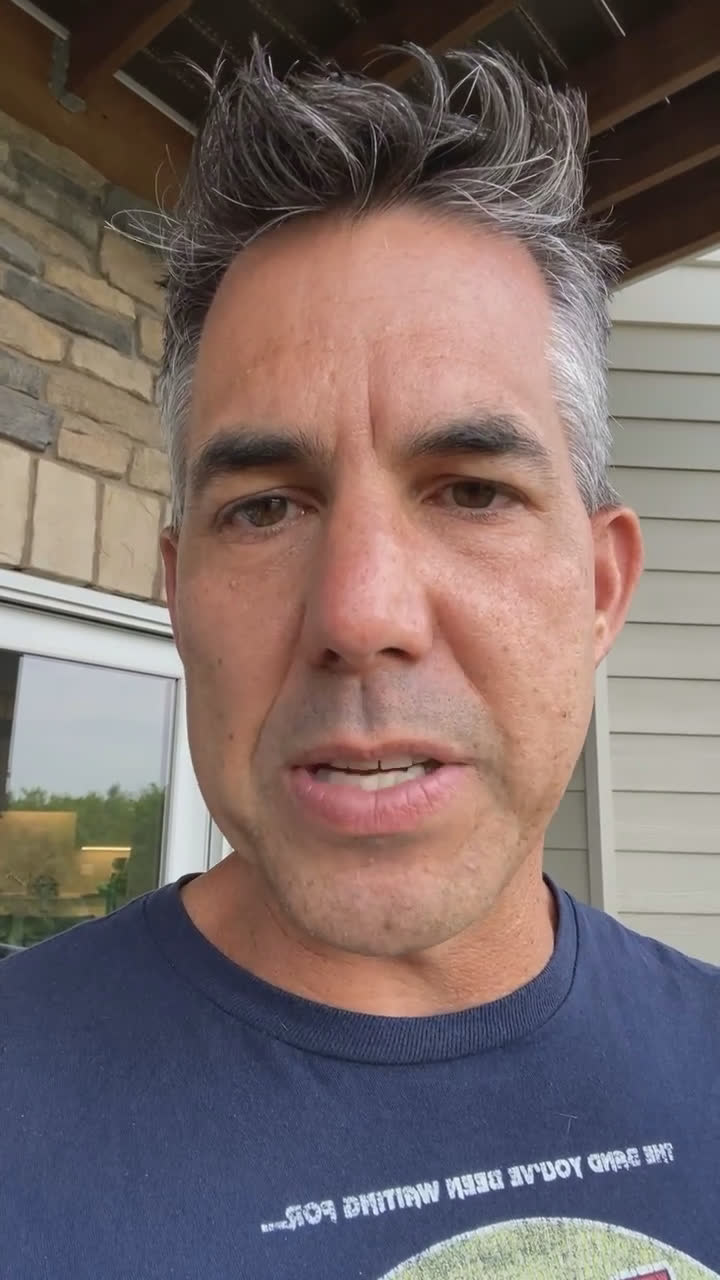
I had an amazing experience with my daughter at her volleyball tournament this week. I found a place to be empathic and lovingly honest. It’s a lot of what is missing in parenting today. And it’s taken me a long time to get there.
A 14-year-old girl was struggling at a volleyball tournament in Las Vegas. Dad spent 20 minutes with her, supporting her, loving her. What she needed was empathy. Would that have happened if he had been an jerk?
First goal is to listen and empathize. Not correct, not challenge, not criticize, not point out. If you're avoiding conflict and tough conversations with your children, there's an opportunity missing. That, to me, is conscious fatherhood.
Okay, here we are, day two in July on the Cadresphere. And coming to you live from Minnesota again. This time scrambling to get here on time after spending some time with my best friend and his family. Our families have known each other. Our kids are 14 and twelve, and they've known each other since they were born. And it's just such a wonderful thing to have that relationship, to have people in our lives, and for the kids to have that in their lives as well. So I'm gonna be quick. I'm on vacation.
But you know what? This is important to me to keep my commitment every week. And so this is week two. This is July. This is conscious fatherhood. What I talked about in the title is something connected to what happened earlier this week when I was in Las Vegas. And I was in Las Vegas with my daughter for her volleyball tournament. And it was a very powerful experience. We flew to Minnesota from Las Vegas. It's a national tournament in Las Vegas. And her team was doing okay, and she was doing okay.
But after one of the matches, she came off the court. She just came over to me. She put her head in my chest, and she was crying. Now, she's not the most emotional kid. And I knew exactly what this was about. I knew why this was happening, and I just comforted her. There was a part of me, right? And so I talk about the balance between, or the. Maybe even the middle ground between the a****** parent dad and the pushover. And it's not even just the pushover, but, like, the pushover, the helicopter parent, you know, the parent who has no backbone, no spine.
They just think all they have to do is just comfort their child, like, in a coddling sort of way. Right? So what's. What's in between that. Well, that was the interesting experience that I had. I was with her for 20 minutes as she cried, as I told her, I'm so sorry. And I know how much it hurts. And shared with her my perspective and some. Just a lot of empathy for what it's like to be a 14 year old on a team in the national tournament and not doing well and feeling like your team and even your coaches have iced you out, because that's what happened.
And I spent a good amount of time, probably 20 minutes, taking care of her, supporting her, loving her. And in that space. In that space, her performance didn't matter at all. But it wasn't the end of the tournament. It was the beginning of the tournament. And so there was, like, the question in my mind, right? So when she first came to me, what came up that I had to be really mindful of, very conscious of. Right. This is called conscious fatherhood. What I'd be conscious of is that old programming inside of me that wanted to point out what she had done wrong, that wanted to challenge her, criticize her, correct her.
And there was no value in that. No value whatsoever. Right in that moment. What she needed was empathy. Is that a skill, guys learned very well. No, I've had to. I've taken a long time, long time to grow that skill. So 20 minutes with her, just loving her, comforting her, just really trying to empathize with her situation. And then this is the critical part. And then at that point, when she felt heard, when she felt loved, when she felt comforted, I was able to also have an honest and open conversation about her performance.
Objectively. Objectively, she was not doing well. She was missing shots. She was making serious. Not serious, but she was making mistakes. And I didn't talk to her about it like that. But I did say I helped her see the perspective of the other teammates, and I did help her. I said, honey, you know I would never say anything to hurt you. And she said, yeah, I know. I said, okay, so then let's talk a little bit about your performance. And that's what we then did. Right? And I watched that kid fully, fully reintegrate from that experience, talk to her coaches, talk to her teammates, and have a great tournament.
And she still made mistakes. But she didn't leave in shame. She didn't leave with these narratives inside of her head that she had made up about her teammates and her coaches because she talked to them. She had the courage to do that. Now, did I do that? I didn't do that. I helped facilitate that. Would that have happened if I had been an a****** dad? If I had been one of those a****** dads? Like, you gotta play better, you know, like the breakfast club impression, you know, impression that Emilio Estevez does of his dad.
No. No. But would the lesson have also been lost, or at least the full lesson have been lost, if I had just left it with the empathy and the comfort and the love? Yeah, I think it would have. I think there's a balance, and I think it's greatly missing in our society today because people are so afraid of hurting their kids feelings. It's not about hurting their kids feelings. It's about being willing to tell them the truth, because that's objective truth. When you can say, hey, you hit it five times and you missed it four times, you can't argue with that, you can't argue it.
Now, some people might say, but she tried. Yeah, of course she did try. This is a national tournament with big stakes. So are you going to go to the person on the team who is one out of five or four out of five and five out of five. And so that's what I tried to help her to see. And then I also asked her to look at how does she want to show up the rest of the tournament? So that, to me, that's the balance, that's the space in between. That, to me, is conscious fatherhood. So if you're a dad watching this, I want you to think about every time your child comes to you, your first response, your first goal is to listen and empathize.
Not correct, not challenge, not criticize, not point out, not do any of that stuff. You can do that at some point, but the very first thing is to listen and empathize. And if you're one of those people who listens and empathizes and does all that stuff and thinks, oh, my gosh, I've got, you know, the most wonderful kids and parenting down and all that stuff, well, maybe, maybe. But if you're avoiding conflict and tough conversations with your children, if you are not helping them to experience the pain of defeat, failure and all of that, I think there's an opportunity missing.
That's been my experience. You know, 15 years in, I've worked really hard to get here. God knows I've got a long way to go. But I hold last week as an incredible victory not only for me, not only for my daughter, but for our relationship. So that to me, that's conscious fatherhood. And that's week two of.
Reactions and comments are for members. Joining is free and takes a minute.