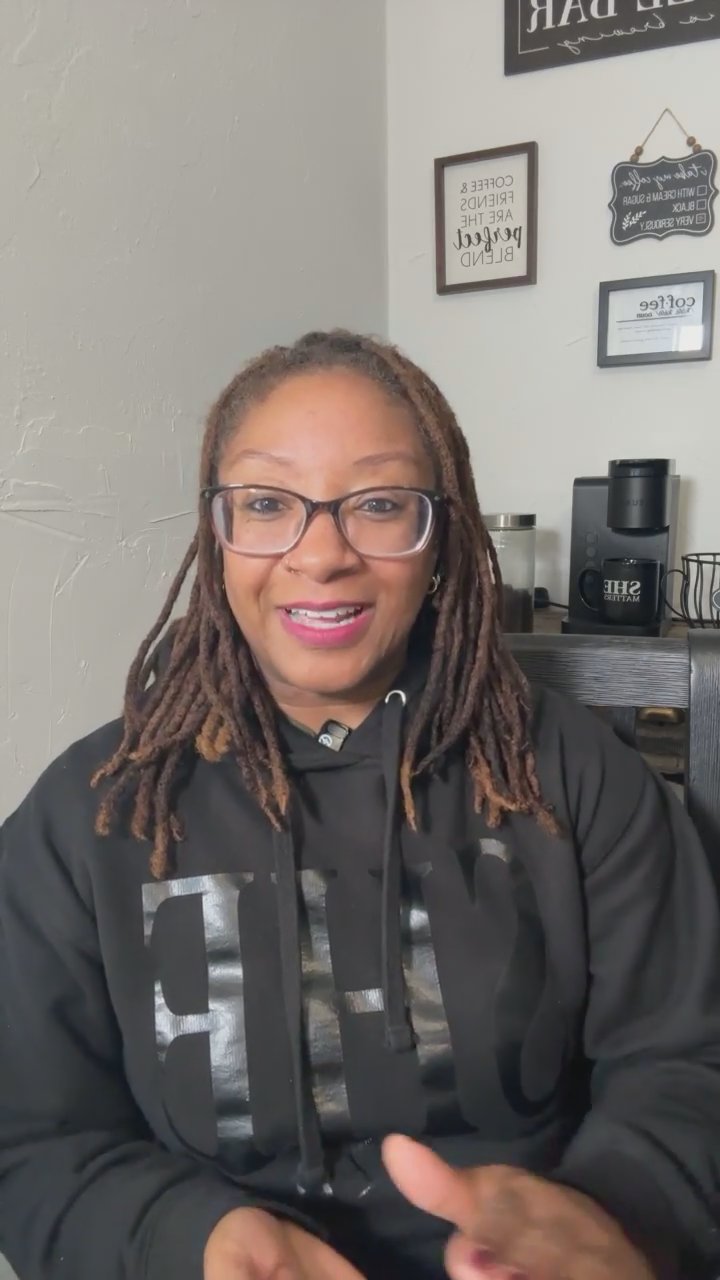
Kadre discusses Domestic Violence Awareness Month and outlines common reasons victims stay in abusive relationships—fear, shame, love, financial barriers and concerns for children or pets—while noting safe resources and supportive responses.
Kadre: Welcome to my coffee chat. I had a cappuccino. It was good. I'm trying to hide my mic today. It's right there, so hopefully you guys can hear me.
This is Domestic Violence Awareness Month. There are so many resources available online. Be aware if you are a victim of domestic violence. These websites are designed where you can view them safely and get the information that you need.
Typically, someone who is in an abusive relationship attempts seven times to leave that relationship. There are different reasons why someone might remain a victim of their toxic relationship. I just want to bring some truth into the situation.
There are many reasons why victims stay in abusive relationships. Fear, shame and low self esteem are some of the reasons. Another reason is that they have pets or there's children involved. There are sites that can help a victim who wants to leave also have a place for their pet to go.
The next reason why victims will stay in an abusive or toxic relationship is, and this sounds weird, right? But they really do love their abuser. The last reason that I'll go over today is the lack of money and resources. My challenge to you is to create a safe space for the victim to share their story.
Hey, Kadre, what's going on? I'm trying to hide my mic today. I don't know. It's right there, so hopefully you guys can hear me. Okay, for those of you who are watching the replay, welcome to my coffee chat. It is officially coffee time. I had a little head start, so my coffee is almost gone, but I will enjoy a little sip with y'all for a second. I had a cappuccino. It was good. All right, so today I want to give you guys a trigger warning again, but we will be talking about domestic violence again.
This is Domestic Violence Awareness Month. If you don't know, there are so many resources available online. Hello there. And so I want you to be aware if you are a victim of domestic violence. These websites are designed where you can view them safely and get the information that you need. But just be mindful, you know, if you are in a current abusive relationship, to make sure that you are in a safe space when you are either watching this video, for one, because I'm going to be giving some insight.
But also if you're looking at some websites that you have a safe space to do that so you can get the information that you need to get yourself the help. Now, today, I do want to focus more on what it can be like for someone. For yourself, I'll say that if you are a friend or family member of someone who is in an abusive relationship or just a toxic relationship, and I'm pretty sure you're always wondering, why are you still in this? You may have experienced friendships or family members where they just keep going back to the same person who was abusive.
They keep going back to a toxic relationship, and you might be confused, like, why would you do that? Why would you keep going back to someone who was hurting you? And to people who have never experienced domestic violence or who has never been trained on looking at the signs and how domestic violence really works, it can be really confusing and scary, and it can be really frustrating to witness someone go through that cycle over and over and over. And I just want to not necessarily normalize it, but just to bring some truth into the situation.
Typically, and this is also true for those who abuse substances, but typically, someone who is in an abusive relationship attempts seven times to leave that relationship. Seven times. So doesn't mean that every time that they go back that they wanted to go back. There are different reasons why someone might remain a victim of their toxic relationship or an abusive relationship. And that's what I'm going to talk about today is why victims stay the first thing, and there's so many reasons, but I'm just going to highlight a few.
The first thing that comes to mind is there's fear. Now, if they're in an abusive relationship, they are probably afraid to leave because they've been threatened by their abuser. If you leave, I'm going to insert any type of violence. I'm going to beat you, I'm going to hurt you, I'm going to hurt your family, I'm going to hurt your kids, I'm going to hurt your dog, whatever it is. There is a sense of control, power, control that is used to keep a victim in their place. And so the victim, your loved one, may be afraid to leave that abusive relationship.
The second reason that someone remains a victim is that they have shame. They might be ashamed of the choices that they made. They might be ashamed of the partner that they chose. They might be ashamed of how they even got there. You know, there are so many victims of violence and abuse that when you look at them from the outside, you would never guess that that's their situation. And so they're masking what they're really going through. And so they're ashamed with coming out and telling their truth.
And I can attest to that. I was a victim of violence and I was ashamed to tell my loved ones that I was experiencing that because I didn't want them to judge me for the situation. Although the person who was abusing me should have been the one that was judged. So keep that in mind. So fear and shame. The next reason why a victim might stay is they have developed low self esteem. Doesn't mean that they had low self esteem entering that relationship, but their self esteem may have plummeted because of the relationship that they're in now.
That is a result of the use of emotional abuse. Now abusers will use words and belittle someone, calling them stupid, calling them a punk or whatever, using some really nasty words to get the victim to feel like they're less than. And they will even say things like, no one's going to believe you anyway. So there's a lot of gaslighting that happens in domestic violence relationships or toxic relationships. And that gaslighting will get the victim to even consider, well, is this really happening to me or is this my fault?
And so their low self esteem will keep them in a place where they're not wanting to leave or they don't believe that they can or believe that they should leave the relationship. Another reason that victims stay in relationships that are toxic is they have pets or there's children involved. Now, an abuser will sometimes use children or the pet as something to play with. If you leave, I'm going to hurt the kids or I'm going to hurt the dog. Or they might use it as a reason. Well, you don't want your kids to grow up without a dad or a mom or whatever.
And sometimes pets are abused in domestic violence situations where the pet is used as a way to show that they're a threat, a way to show the victim, hey, if I'm doing this to your dog, I'm going to do this to you, too. Now, I will give you a resource to use. So if you know someone who's in this situation and they are not wanting to leave a violent relationship because of their pet, there is what's called the Purple Leash Project. And I don't know if they're all around the country, but there are sites that are available that can help a victim who wants to leave to also have a place for their pet to go.
And some of the. I will add this, too. Some domestic violence shelters don't allow pets for different reasons, which are legitimate reasons. And so that might be a reason why victim will stay because they don't have a place for their pet to go. So keep that in mind. And if that's you, like, if you're the loved one of someone who is a victim wanting to leave, maybe consider even if they can't stay with you, that you would be willing to keep their pet. All right. The next reason why victims will stay in an abusive or toxic relationship is, and this sounds weird, right?
But they're really in love. It's crazy to say that, right? But they really do love their abuser. Now, I want you to imagine a child who's being abused. I worked in child welfare for 12 years, and it was the story of every child that got to, you know, reached 18, they got out of the system. They always went back to their family. They always went back to the person that hurt them because they truly love that person. Same thing happens in adult relationships. You enter that relationship not knowing that that person is an abuser.
And sometimes it catches you by surprise, and you develop a true sense of love for that individual. And for someone on the outside, it can be confusing. Like, how could you love someone who's hurting you? Well, the love developed before they were hurt. And so it's hard to stop loving someone when you love someone unconditionally. So no matter what they do, no matter how they hurt me, I'm going to choose to love them. Or maybe there's an idea that the victim thinks, I can love them through this and they'll stop.
And we know that that's not true. But consider that might be a reason why this person is choosing to stay in this toxic relationship. They truly love their abuser. Now, I won't say it's your job to help them see the other side, but you can help as a loved one, you can help that victim recognize what love really is in a healthy sense of love. Okay? Another reason why victims might stay in a violent relationship is their immigration status. Now, I live near a military base, and I know that this happens often where there are couples who one person got married because they needed to stay in the US and sometimes before that marriage happens, there might be victims who are being abused and they're afraid to leave because they're being threatened by their abuser.
Well, I'm going to have you deported or I'm going to tell them who you really are. So they're using mental and emotional abuse and threatening them with their immigration status. Keep that in mind. That happens all around the world. It's not just something that happens in the US So if you ever see that, especially near military bases, just keep in mind that that could be a reason why they're staying in this toxic relationship. And the last reason that I'll go over today is the lack of money and resources.
Now consider someone who has been a victim of domestic violence for years. It's possible that their abuser kind of got them away from working. So maybe they said, well, I'll just take care of you or I'll take care of you and the kids. You don't have to work. And that seems like a great thing, especially for a single mom who's had to struggle and she finally gets someone who's, like, willing to take care of her and her kids, like, of course I'll stop working, no problem. But what that does if they're in abusive relationship is they get put in a position where they are.
They're in a position where it's harder for them to escape if they wanted to. They have no resources, they have no money saved up. They're not in control of their finances. And that becomes problematic when they decide it's time for them to leave. They may not leave because they literally can't. They have nowhere to go. They probably have been isolated over time. So they have no friends, no family. They don't know how to access different funds. There are resources available, but most Victims are not aware of the resources in their own community, and they may stay because they literally can't afford to leave.
Or even if they do leave, sometimes what happens is the abuser will call them and say, well, I'll pay that bill, or I'll get you a car if you just come back, or I will take care of this, whatever it is that they might need. And so that will give them another reason to go back to that toxic relationship. So, again, let me remind you, victims who want to leave attempt to leave domestic violence situations at least seven times. Seven times. So if you are a loved one of someone who is being victimized, who wants to leave, and maybe they don't know that they can, or if they should, and maybe they have left and gone back, just remember, start counting.
How many times have they tried? How many times have they expressed that they want to leave, but they didn't know? How many times have they tried to tell you what's going on in their relationship, but they are afraid or ashamed of all the details? So my challenge to you is to create a safe space for the victim to share their story, to be honest with you. And even if you're not in a position to physically help them, you can find resources for them if they're not able. So, again, they may want to find resources, but maybe they don't have a phone anymore.
Maybe the wifi is turned off. Maybe they're being monitored with everything that they're searching. So maybe you might be able to step in and help them get the resources that they need. So I know this is a lot. It can be triggering, but I just want you to be aware that as someone who loves someone who's a victim, that you are in a position where you can help them, even if it's just a little bit. Even it's just for a moment. If it's getting the resources, if it's just listening to them, if it's just validating their experience, you can make a difference.
Okay, I will continue these conversations the rest of this month because I do want to bring awareness to domestic violence, because if we talk about it, we can start to notice these patterns around us and we can stop the cycle. All right, I hope you guys have a wonderful day. And don't forget your coffee. Bye.
Reactions and comments are for members. Joining is free and takes a minute.