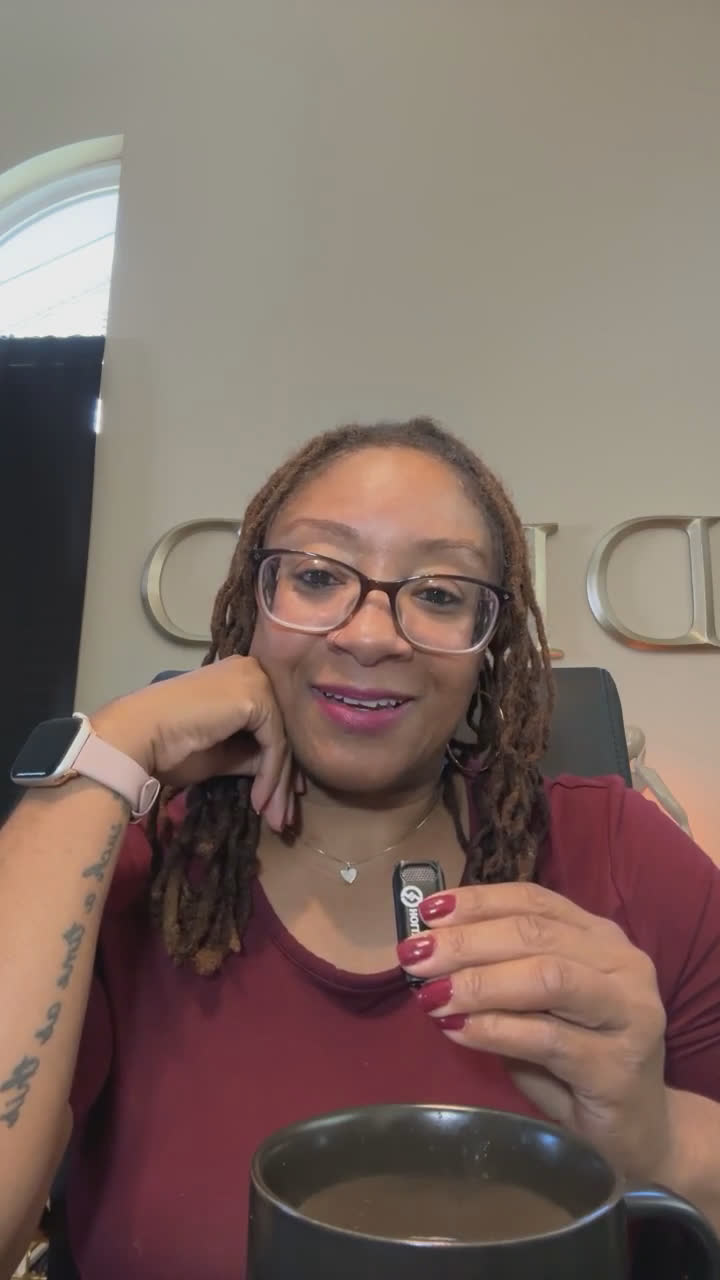
Host discusses supporting someone who denies they're in a toxic or violent intimate relationship, outlining why timing matters and how continued, action‑based love can help.
Cadre: I am a little bit late because I forgot to make my coffee for my coffee chat. It's just plain coffee with plain cream, no sugar, no flavor, nothing. I am running kind of back to back on things today, but it's not bad stuff.
It is Domestic Violence Awareness Month. Here's how you can help someone who might be in denial that they're in a toxic relationship. First thing is, you have to pay attention to the timing. We may stay stuck at a very early stage of change.
I think another thing that we can do to help someone who's in denial of being in a toxic relationship is just continue to love them. Love doesn't always require words. We can love people and show them what real love is by action.
Hey, Cadre. Y'all, please forgive me. I am a little bit late because I forgot to make my coffee for my coffee chat. So it's here. Can y'all see it? It's just plain coffee with plain cream, no sugar, no flavor, nothing. Just something simple today. I am running kind of back to back on things today, but it's not bad stuff. It's really good stuff. I have a lot of things coming up this week with different events. And last night. Hello there. Just want to share a little insight to my imposter syndrome.
So this evening I have to. I'm a guest lecturer at a university here in the St. Louis area. And I did not start the presentation like creating it until 10 o'clock last night. And I have to present this evening. So I was up till about, I think, two, am just kind of cranking it out, but I did it by the grace of God. So we'll see what happens. So that means that this morning I'm a little not rested like I need to be. So please forgive me for being a little late, but I hope you have your coffee with you.
I'm going to take a quick sip. Oh, that's good. All right. So it is still Domestic Violence Awareness Month, and this will be my last discussion on this for the month. I do want to thank everyone who was able to join me live with these discussions, but if you were able to watch the replays, I'd thank you for that as well. And hopefully some of the information that I've shared with you will be helpful for yourself or for someone that you might know who is struggling with intimate partner violence or domestic violence violence.
Or maybe you come across a stranger even where you can, you know, not be that bystander that just watches from a distance and doesn't do anything. But maybe you have some tools now that can. You can step in and help someone who's in need. But today, just kind of wrapping up the month of Domestic Violence Awareness Month, I do want to talk about how you can help someone who might be in denial that they're in a toxic relationship. And I may have spoken on this before. I think I did a video on this.
But this is something that it's hard to. It's hard to deal with when you're the person supporting someone who's in a toxic relationship. And if that resonates with you, please give me a heart. Drop me a coffee mug. In the chat here, I have been on both sides, so I have been a victim of violence, but I've also been the friend and supporter of someone who is trying to step away from a violent relationship or just a toxic relationship. And y'all know me, I've told you before, if you join any of my other coffee chats that I am not afraid to say, I have been through toxic relationships multiple.
And thank God I was able to learn tools to step away from that so I could help myself and find real love. But being the person who's supporting them, so being on the outside, it can be really confusing. Like, why would you, you know, if you're talking to your friend or your family member, you know, why would you want to stay with someone who's hurting you? Why would you want to stay with someone who's taking advantage of you? It doesn't make any sense. But here's some insight to that. The person who is struggling with a toxic relationship, they may stay in it for different reasons.
One, they may not know that they're in hi, Luke. They may not know that they are in a toxic relationship. They may believe that the experiences that they're having are normal or that they're indicators of love or indicators that that person wants to be in connection with them because they are engaging in toxic behaviors. And that's the way that they keep each other connected, even though it's toxic. And so when you're trying to call that out and tell that person, you know that that's toxic, you know that that's wrong, why are you still with this person?
Sometimes they will turn against you because they. They don't want to believe that what they're dealing with is toxic. And it's unfortunate. But you, as the supporter of this person that you love that's in this toxic relationship, that can be so frustrating when you're trying to help someone do better for themselves. And something I learned in child welfare, working in social work, is you can't work harder than your client. Now, same thing applies to your loved one. You can't work harder than your loved one when it comes to getting out of a toxic relationship.
You can't do the work for them. You can listen to them. You can call out the toxicity when you see it, when it's appropriate. But again, remember, if they're not ready to hear it, they're just going to tune you out. So how do you help someone deal with that? First thing is, you have to pay attention to the timing. Is it the right time to talk to them? Are they in a space where they can hear you? Are they in a space where they're ready to get out of that toxic relationship and you'll see that. You'll see the signs of that.
You might start to hear their language change of they're getting frustrated, or you might hear them talk about that they want to leave but they don't know how, or they feel stuck. You know, they might say some of those key phrases and that's an indicator that they're ready to change. Now, I don't know if you guys know, but there are stages of change and sometimes we don't move through those stages of change as quickly as we need to. Especially when it comes to being in a violent relationship or a toxic relationship.
We may stay stuck at a very early stage of change. And sometimes we need insight from someone who's wiser or someone who just loves us and can help us see things differently. And so you have to pay attention to the signs when that person is ready to hear you. Now, if you start to share things, maybe giving them insight and if you're being very direct with it, that might not be received very well in the beginning stages. Now I have experienced this on the other side where I've helped someone get out of a toxic relationship and the person was not able to hear me clearly and accept what I was saying until they started seeing the signs for themselves.
Until they decided, I don't want to be here anymore, I don't want to feel stuck anymore. And that process of them getting to that point took years. It took years for them to recognize I've been with the same person who just keeps hurting me over and over and over. And now I'm ready to do something about it. And I just want to encourage you if that's, if you're the supporter of that person, that loved one, make sure you are staying in a place where you are still available to them. Because I've shared before.
A lot of times what happens is people who are in toxic relationships or violent relationships, they lose the real connections that they need and they get isolated, either by choice or they get isolated because their partner is forcing them into isolation. And so they have no support. So one of the things that you can do this is, number two, is just be available when they're ready for that support. When they're ready to call you, be available. And it may be at the most odd time, it might be when you're not expecting it.
Like, it may not be like one of those middle of the night phone calls you get. It might just be you're out and you're talking about other things and then all Of a sudden, the conversation will shift into what they're dealing with and you have to be ready for that. So be mindful of where are you? Hi, Speak. Wonder where are you at with accepting the toxic language that might be shared with you about their toxic experiences? It's not easy to hear some of those things. It's not easy to hear when your friend or your loved one was abused or to hear that this person had to hide their relationship from you.
And I don't know if you guys have experienced that either. Some people will hide their toxic relationships out of shame, out of embarrassment, out of fear too. Like what's going to happen if I do tell people about it? And I've talked about that before. And so if you are in that space where you're ready to hear it, just be mindful that you might hear some stuff that you overlooked or you missed. So some of their experiences that they had, they may know, may have never talked to you about them. And so this may be the time that they just unleash it all and it's going to be like flowing like a river.
Okay? And so be prepared for that. And it may be an hour, two hour, three hour, four hour conversation. And you have to be ready for that when they're ready to share it with you. So just be mindful of where are you in a space of being able to hold that information that they're going to share with you. Okay? I think another thing that we can do to help someone who's in denial of being in a toxic relationship is just continue to love them. And I want to end with that. Love doesn't always require words.
We can love people and show them what real love is. By action, we can share our hearts with them. So what does that look like? Think about that for yourself. What does love look like to you? How have you experienced real love? And how can you show that to a person who's in denial of being in a toxic relationship to someone who is being told by their abuser, you know, they're being gaslit, so what they see is not real or what they hear is not real, that they're being told, nobody else loves you but me, and that's toxic, right?
So don't always feel like you have to have words to say. Just be there, show them through action. And sometimes the action is just, I'm available when you text me, I'm going to respond when you call me, I'm going to answer, I'm going to check on you, I'm going to bring you food. I'm going to invite you places. Even if you tell me no, that's showing love. I'm going to send you your favorite things. I'm going to remind you of some of the good times that we've had. I'm going to remind you of the good parts of who you are.
Because the truth, again, is, in a toxic relationship, an individual is being beat down emotionally and psychologically, and they don't even know who they are anymore. And that's why they're in denial, too, of being in a toxic relationship. So I'm going to end with that. So try to think of someone today in this week that you can show love to and consider maybe you've missed the signs that they're in a toxic relationship. So start paying attention, start watching. Start listening to some of the language they're sharing with you and choose to love them, even in silence.
Okay? All right, y'all. I hope y'all enjoy the rest of your day, and please get your coffee, and I will catch y'all next week. Bye.
Reactions and comments are for members. Joining is free and takes a minute.