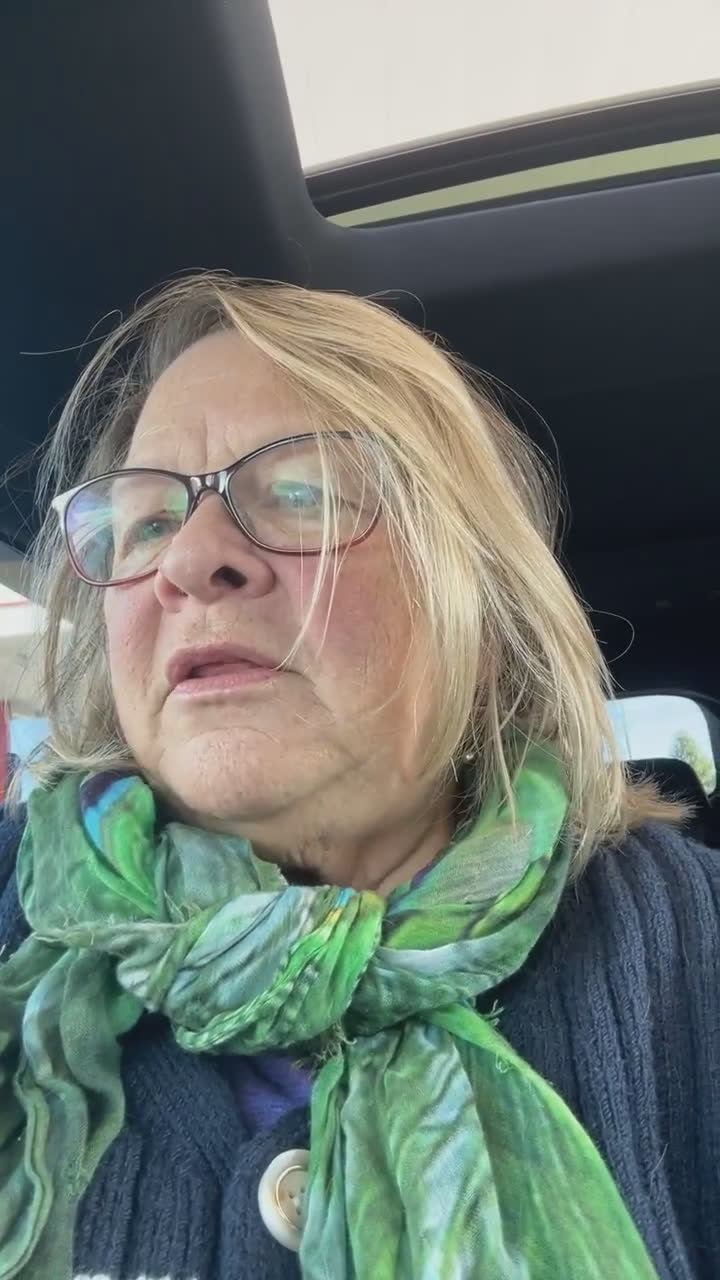
Kathy Joy is coming to you live from her car. Today's Cadre on caregiver day is pirates and poetry and paradox. It's a gorgeous day in Pennsylvania.
Today's Cadre features a poem about saying goodbye to September and welcome to October. We're losing our oral history. My favorite way a story is delivered is by a loved one or a friend or a Cadre person. Leaning together and sharing a Story on caregiver day.
I treasure storytelling in small groups and one on one. My mom has lots of stories. Next time you're like at a picnic or an event, encourage storytelling. Draw it out of the kids and the grownups. See you next week.
Okay, we're gonna try again. I rescheduled myself and I did a live, and I thought it was, like, legit, and it was really a very short one. If you went back on the replay or if you were watching live, then you saw a brief bit of my corgi Gracie, and then you heard me say, how do I flip this around? Anyway, kind of embarrassing, but I'm in good company because we all make mistakes and we just get up and try again. This is what I'm doing. So if you're watching, just like, pop in the comments, would you, please?
A lake that's near you that you love in the name of the lake, and if you want to, why you love that lake. What is unique about that? Because I'm going to talk about stories from Lake Erie on today's Cadre. And thank you for catching me about a half hour later than I usually come in. My name is Kathy Joy. My Cadre handle is Speak Wonder. Because I love poems and I love words and I love speaking wonder into the universe, and I love talking about all things harbors, harbor pilots. I live on a harbor, so on Lake Erie.
And today I'm coming to you live from my car. I think this is my first Cadre live on caregiver day when I'm in my car. So I've been running errands, just be bopping around. And I realized, or I remembered that country fair has really good WI fi. And so I'm parked in front of a country fair, food market and gas station. So you're going to hear ambiance sounds. Let me put my window down a little bit. It's a gorgeous day in Pennsylvania. Beautiful, sunny. I think our high will be 65. So it's a quintessential autumn day in the Northeast.
And today's Cadre on caregiver day is pirates and poetry and paradox. And I put my notes away. Let me see. I have just a few little notes. I wanted to come to you first with a poem. And it's written by a gal named Valerie who lives in Erie. Valerie Toes Last sunset in September. This is a gorgeous poem talking about basically saying goodbye to September and welcome to October. And just a lot of poignancy and beautiful imagery in this poem. Walk along a lonely beach on the last eve of September. Search the rocky shore for a stone, white and round, that fits snugly in your palm and worn smooth as silence by the endless roving of the waves.
Hold the rock tight in your hand. Let it warm to the touch of your skin. Walk to the ends of the beach where the rose gold sun leaves an amber path on the rippling dark waters. Plunge your stone into the surface. Get your whole hand wet with dripping lake water as the sun begins to sink. Heavy Whisper all your worries to the rock. Let it warm with the weight and depth of your burden. Let it glow and glitter with unshed tears as the gray twilight darkens and the light orb slips into the endless water.
Toss your rock in after it. Let them sink together. Let your chin no, how about lift? Lift your chin. Turn your back on the last sunset in September. Thank you, Valerie from Erie, for that poem that I got to read on Today's Cadre. And one of the lines I wanted to lift out and examine closer is whisper all your worries to the rock. Love that. Poems, pirates and Paradoxes we're losing our oral history. In today's time and age in which we live, we get our stories online. You know, TV has been around for a long time.
Different ways that stories are delivered. Books are timeless and treasured, so the story supply is endless. The vehicle that the stories come in is changing. And my favorite way a story is delivered is by a loved one or a friend or a Cadre person on on this Cadre sphere. Because stories told in real time, held by real people leaning together, laughing together, responding. There's something magical about that, and I wish there were more of it. So I'm ever so grateful for the Cadre, where we do hold each other's stories.
And I'm also grateful for something called the Moth. Perhaps you've heard of it. It's a podcast. I like Alyssa too, on Spotify, and the Moth has story slams all over the US Story slam is when you show up with a story in mind, but you can't bring notes to the stage. Oh, no, no, no. This is live and organic. You put your name in a hat and you may or may not be picked that night. Out of the hundreds of people, or maybe dozens, depending on the venue, you might be chosen to tell your story. And I think that's really terrific.
So story time. Maritime law dictates that you can't break the law when you're on the water. And so the Coast Guard regulates maritime law. And back when we were under prohibition in the United States, which was roughly from 1920 to 1933, about 13 years, give or take, there was a lot of smuggling over the water. Now this is a story I'm going to tell you just for the sake of telling a story. Leaning together and holding and sharing a Story on caregiver day. Because as we give care, we tell stories and we hear stories.
And I've got a good one. I think this is so interesting about Aries history is the fact that fishermen, once they realized there was wine and spirits to be had in Canada, where there was not Prohibition, they did something called rum running, which was basically boating a little over 100 miles over the lake to one of the islands off of Canada or to the Canadian border itself to the mainland and getting something called Canadian whiskey. That was the big ticket item. Put it in barrels. It was in barrels.
Put it in the boat and smuggle it back to the US via, in our case, the harbor of Lake Erie. Very dangerous. Not everybody made it out alive because they did really dumb things like, I mean, I think this is risky. They painted their boats black so they would not be seen by the Coast Guard. So here they are in the dark of night, a boat painted black, no lights. Problematic in the water, especially if a storm comes up. Lake Erie is notorious for being very shallow and therefore very choppy. Lots of waves when the winds kick up and the storms come.
So they smuggled this rum. Another writer, this writer is like, we don't know. You know, it's by Anonymous. This person writes, rum runners turned the lake into a watery highway for illegal booze during Prohibition. A watery highway, a means by which they could get illegal booze and bring it to the States. I tell you what, we have a checkered history of renegades and pirates. We do. If there's a way around something, Americans will find it. Fishing for midnight herring was the term that the boaters used, which was code for we're going to get illegal rum.
So they would get it. And then I also learned in doing a little bit of research about that history, about that time in Aries history and United States prohibition history, is that the rum runners, if they knew that someone was onto them, if there was, you know, the Coast Guard coming after them, they would throw those barrels over the side of the boat and let them sink. No problems. The barrels were sealed tightly and they'd go back for them and get them out of the water and still find a way. What is the paradox here?
The paradox to me is this other thing I read is that the US basically provided 80% of sales of Canadian whiskey during our prohibition. So we were helping the Canadian economy for some years by buying up their booze and spirits and whiskey and rum. Interesting. Anyway, that is the story of rum runners during Prohibition. Some local history from Lake Erie, and I wanted to share that because it's a story that I'm telling in real time and I'm telling it on the replay if you're tuning back in. And I treasure storytelling in small groups and one on one.
My mom, who I caregive and who is 92, has lots of stories. She repeats a lot of them, which I treasure because there's a new twist every time she tells it. My late grandfather told stories like none other because he embellished them and he made them just enough believable that you wanted to believe it, but you knew there was probably something that he added to make it more interesting. You know how they say the stories get bigger with the telling or the lies get bigger or the fish gets bigger? Everything gets bigger and better as you tell it.
And I think that's wonderful about sharing stories person to person in groups. Live storytelling. Next time you're like at a picnic or an event, encourage storytelling. Draw it out of the kids and the grownups. It's just such a wonderful thing. And it's my favorite thing when I'm with my mom, sitting with her, holding space and telling stories to each other. So I'm going. I don't know. A message just flashed on my phone. I don't know if we're still live. I hope so. This is my new favorite thing to do out of maps, so I'm going to say so long.
This is my second attempt at my Harbor Pilots Cadre presentation and love y'all. See you next week.
Reactions and comments are for members. Joining is free and takes a minute.