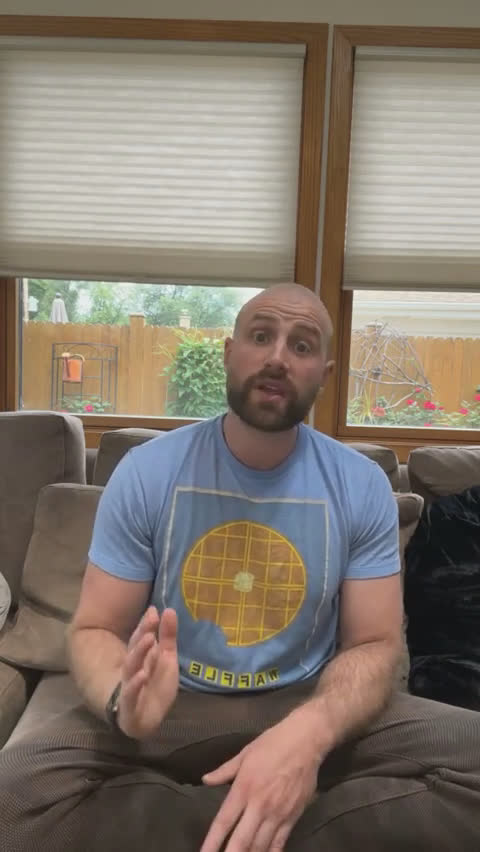
In this Livestream, I am going to share my experience a working as mental health and addiction therapist in regards to working with the LGBTQ population. I will share some interesting but telling facts about how being LGBTQ+ raises your risks for mental health and substance use disorders and why. I'll also share why there is some room for hope moving forward.
Evan: I'm going to talk about some of the relationship between mental health and addiction and the LGBTQ community. Even if you're not part of the community per se, I think you should watch this.
Evan: I didn't know my first LGBT friend was gay until a few years later. He worked at the first LGBTQ treatment center in Minnesota. He noticed that there were a lot of relapses in the community. He did a study anonymously to try to figure out why.
About 7 to 8% of the population fully identifies as LGBTQ. Many struggle with PTSD and childhood trauma. As we grow more accepting, more people are going to feel okay with coming out.
Around the world, the good news is that things are changing. Residents in 90% of all surveyed countries have become more accepting of homosexuality over the past 20 years. Positive attitude towards homosexuality and gay rights are generally greater among younger adults and women.
"I wish you a happy pride for all those out there that are allies. Keep being allies. Go to a pride fest. Tell the people in your life who are LGBTQ that you love them, support them, give them a big hug "
What up, Cadre family? It is Evan here, your resident mental health and addiction therapist, and I wanted to take this time to wish you all a happy pride. Now, a lot of you may not be part of the LGBTQ community. Neither am I, per se. I mean, I'm definitely an ally, but I think even if you're not part of the community per se, I think you should watch this, because I think either a. You probably have someone in your life that's LGBTQ, or you may just find this interesting, because I'm going to talk about some of the relationship between mental health and addiction and the LGBTQ community.
So, yeah, let's dive right into it. So back around. Let me just tell you my story a little bit with having experience with this community. I think the first friend I had who was LGBT was in college. And I don't know right away, just, like, personally, I just never had an issue with it. I know some people are raised differently, and it's part of their religion or their culture, and unfortunately, most cultures are not, by default, accepting even our more liberalized culture. But, yeah. So, to me, I just didn't have an issue with it, and so I became friends with him, and then I had another friend just call him Bob.
That's a horrible name just come up with off the bat there's anything wrong with being a bob, but it was a little maybe too generic here. Let's call him Hank. And so, yeah, Hank and I, we met through going to treatment together, of all things. I was about 20. He was about 18. And I didn't know he was gay. I mean, there was no sign. You know, he didn't act more effeminate, not that everyone does. But there was just, you know, no indicator whatsoever that he was gay. And I didn't find out till, like, a couple years later, because he really, outside of treatment when he got out, and even when he was in, he was struggling.
He was chronically relapsing. And then one day, we stayed in touch when he called me, said, hey, I'm in treatment in Minnesota, and I'm at this place called the Pride Institute. I'm like, huh, okay. And he said, evan, there's something I got to tell you. And I could tell he was, like, a little nervous. I'm like, what is it, man? You can tell me anything. And he said, I'm gay, and I'm like, good for you, man. Like, cool. You know, it took. Took a lot of strength for him to do that, so he became a good friend of mine, and when I ended up actually moving to Minnesota myself.
He introduced me to a lot of good friends that I still have today. Like, 15 years later. They're part of the lgbt community. So I really had gotten plugged in pretty deep to that community, more than your average hetero guy. But fast forward a little bit. Maybe a couple years. It was my senior year, and I had another friend who had actually worked at the same place where Hank went to treatment. And he. Yeah, so my friend, I needed an internship and a job, and she said, hey, maybe you could come work at pride.
And I'd always wanted to work in treatment setting. I knew I wanted to work in addiction eventually, so I got a job there. And, I mean, so this was the first LGBTQ treatment center, really first of its kind. I mean, it's been around as long as I have in life. So I think it started in the same year I was born, and there really hasn't been too many more treatments like it. There's a lot more programs that do specialize in LGBTQ. But I realized pretty quickly that compared to others who struggle with addiction, there was just some very unique issues that folks who were in that community struggled with.
And I noticed that through working there and being plugged into that culture, into that community, that there are a lot of relapses. And that's pretty typical for addiction treatment. It can be a chronically relapsing disease sometimes. And I was curious as to why that was. You know, I had some hypotheses, but I had to do this final senior report. And as part of that report, I decided to do, like a. Like a review or, like a study, you know, not a published study by any means. But I thought, you know what?
I have access to these patients charts, and I could see a bit of their. You know, I have access to their history. I have access to. To their assessments, to the things that they struggle with. And I thought I could anonymously go through and see some of the unique stressors that someone may have, stressors of the past, stressors of the present that someone may have to try to figure out why it was that a lot of these folks struggled, potentially more than just your average hetero person. So I went through the charts, and there were some things that I realized, and just off the bat, it was almost like 40% to 60% for all of these.
One who had a mental health disorder, probably more than 75% on that one, had some kind of diagnosed mental health disorder. Right? So that complicates things. It was mostly men, and for the men, there was probably about 30% of them were hiv positive. So that's another stressor. That's another unique thing to struggle with. Most of the men were addicted to meth. There's a huge, huge, huge epidemic in the gay community that's been going on since God knows how long of meth, and in that culture too, because over the years, you had to be underground, you couldn't be out.
So sex became like a very big part of that culture. And so, like, meth became a drug that would be used with that. So a very high percentage of them had sexual compulsivity issues as well. So another unique complicating factor. So 40% to 50% of them had sexual compulsivity. And meth is one of the most extreme drugs you could use with really high relapse rates. So that explains it as well. Alright, let's look at other things. PTSD and childhood trauma. A very high percent had PTSD and maybe like that 40% number, but I'm sure a lot of it went undiagnosed.
And for anyone I've met, very few people, especially the older you go, who grew up gay, who did not have trauma where there wasn't someone, you know, when you grow up in a society that is generally not accepting, there's going to be some psychological trauma that comes with that. So, you know, so you start to stack up all these things, right? And then you have, you know, things like homelessness. I'm sure I'm missing a lot of these other variables of things that folks without who are LGBTQ uniquely struggle with other than other populations.
You know, something like just in the general population, 40% to 60%, probably around maybe 30% to 40% of folks who are in that community struggle with addiction in general. Like, you know, that's like five times higher than your. The general population, right? And all that you could trace back to being in a society, being in a culture that is unaccepting of who you are. And when you come out, I found that generally you are going to be. Feel more happy, more free, but there's still, still a lot of that baggage.
Sometimes we call that internalized homophobia, that even obviously you're going to be accepting of being gay, lesbian, trans, whatever, but you still have that voice of the society in your mind and feeling that guilt and shame, especially those messages we receive when we're younger, are often more powerful than the ones we receive later. So that's a lot to hold onto, too. And still to this day, now that I am a full blown therapist. A very high percentage of my clients are LGBTQ, and I continue to see these things.
So you have all these complications. And so I just think it goes to show the importance of how society needs to change to be more accepting of folks, because at the end of the day, you can't help it. Right? We're all born with a certain sexuality, and so I think that gets missed quite a bit. And some of the folks that are less tolerant of it, or they think there's these false beliefs, that one could be indoctrinated into this because it's not necessarily a belief set. It's more of just biologically who you are.
I mean, you see this in the animal kingdom. This is throughout different cultures, there are varying levels of acceptance, mostly not accepting. But, I mean, you could go back and see in cultures where it was more accepting. So this is not anything new, but this is biological. So when we start to tell people that who they are on a biological level is not okay, you could see how that could be really stressful and impact your overall mental health and mental wellness. But, you know, so that's me being a downer a bit.
Right. But it's important to have realizations of this, and it's important for us to continue to understand and be able to develop more empathy when we better understand some of the unique struggles that these folks in our community are going through. Right. I mean, it's something like seven to 8% of the population fully identifies as LGBTQ. And among younger populations, that number is increasing. And, of course, now in the political discourse, there's a lot of controversy around that, and a lot of that is that as we grow more accepting, more people are going to feel okay with coming out.
You know? And another thing to understand as well, there's something called the Kinsey scale, and I believe it's one to seven. And, you know, I forget which way is which, but I think, like, a one is you're, like, fully heterosexual, and seven is you're almost exclusively attracted to the opposite sex. And a very high percentage of people, dare I say most, may not fall perfectly on one end of the spectrum or the other. Right. So you could be slightly over here, and most folks who are maybe slightly over aren't going to necessarily identify as LGBTQ.
But I think that's why you see more and more as it becomes acceptable, more people are okay with admitting, hey, yeah, maybe I'm not fully rigidly homosexual or heterosexual. And so that's why you're seeing a lot of those numbers go up. Not that people are being brainwashed, because, you know, most people who that. I'll ask them, like, okay, could you, on the drop of a dime, could you change your sexuality? And the answer is almost always going to be no. It's not something we have control over, just as we don't necessarily.
It's baked into our biology, into our genetics, and you can't change it. You can't help it. So why are we, you know, as long as it's not doing harm to others or yourself, and the harm that's usually done is the harm that is brought on by society. Right. So now that we've identified, you know, some of the unique issues that our LGBTQ brothers and sisters and non binary folks deal with, let's talk a little bit about where we're at right now as a society and specifically american culture. But, you know, around the world, the good news is that things are changing.
They've been changing pretty rapidly, especially over the last 1520 years. I mean, a liberal president, Barack Obama, towards the beginning of his presidency, explicitly said that he believed that he was against gay marriage, that it's between a man and a woman, and his ideas change. Or at least he probably believed that the whole time, but felt it would be politically disadvantageous to admit something like that. Now, let's look at some of the good news. Since 1960, the amount of countries that if homosexuality is illegal, went from 150 to 75.
So over the past about 70 years. And that'll probably increase at a faster pace. Right. So that's dropped to about half. So that's good news because in a lot of countries, it is still illegal and punchable. Even in some of our western countries, there were some pretty. And then, too, in the 1970s, up until the 1970s, in my field in mental health, it was looked at as a disorder. And a big part of the LGBTQ rights movements in the seventies, a big part of that was to remove that as a disorder, which they did.
And so the DSM three, the statistical manual where we used to diagnose psychiatric psychological disorders, it was removed. So let's see another statistic. Residents in 90% of all surveyed countries have become more accepting of homosexuality over the past 20 years. So that's huge. Right. That's a big change in a short period of time that people's views, maybe they haven't gone fully to one side or the other, but they've become at least more accepting, if not fully accepting. So, yeah. Positive attitude towards homosexuality and gay rights are generally greater among younger adults and women.
So like I was saying, more people are feeling comfortable to come out. And especially in Gen Z and younger, it's become so much more normalized than. I'm not the oldest guy on the planet. I'm in my thirties, and looking back when I was in high school, nobody came out as gay. But now when I work with youth, so many of them are identifying in that way. They just don't care. It's not stigmatized at that same level. So that's a very positive sign. Sign that things are changing in our society. The amount of youth identifying as LGBTQ, two to three times more than average generation.
So, yeah, around 5%, six, seven, and then now it's more like 15% are identifying that way, which is probably more in line with the actual population of folks who are further on one end or the other in the Kinsey scale or aren't. You know, they aren't a one or a seven, but they are slightly to the other side, but they're still feeling comfortable enough to identify that way. And that may change, too, because a lot of times I know that there's a lot of controversy, again with, you know, kids and is this them being indoctrinated?
And I think there's going to be maybe a certain percent. Maybe I'm wrong about that. But, you know, when you're a teen, you're starting to learn about who you are, and sometimes you're going to experience or you may be a little bit. You may be confused. And so there are probably a lot of people who may identify with that, and then maybe later in life won't. And then there's the opposite of people who don't. And maybe later in life, like how it's normally been, will become more self actualized in that area, and they will end up coming out later.
Right? So I think that, personally, that is okay, and it is normal, and it is healthy to be able to figure that out. And you don't have to declare what you are at age 14, because we actually know that sexuality fluctuates over time and not necessarily just do I like men or women or whatever. Our tastes, just like our taste for food, often change over time. But sexuality does change, and it can be fluid over time as well. So I think that's something important to understand. So, as recently as 2004, polls showed that the majority of Americans, 60%, opposed same sex marriage, while only 31% were in favor.
But according to the Pew research today, those numbers are reversed. 61% support same sex marriage, while 31% oppose it. So that's huge as well, that we have a complete shift, complete opposite shift, and how many people are accepting, and it is more people than not. So that's a positive sign as well. And so look, even though these things are positive, we still have a long, long way to go as a society to be more accepting of those in our community who do not identify as heterosexual because, you know, the reality, again, it's a biological reality.
And we can deny people who they are, especially since it is not doing harm to themselves or others. Right. And that's kind of the definition of sex positivity is being okay with the differences of others in that area. Another thing I forgot to mention at the beginning, like I said, coming from families who, a lot of folks coming from families where that's not okay. A big part of that is religion as well, people coming from a religious background. So a lot of folks who I work with grew up in these backgrounds where they were going to church and saying, you're going to h***.
So imagine trying to process that as a kid as you're coming out and realizing, I'm attracted to the same sex, yet that means I'm going to h***. So that could do a lot as well. So we're starting to see that change as well as religion. So we do. But that's still there and we still have a long way to go. And, you know, the, but the good news is the trend line is rising. And I'm really hoping and I'm positive or I'm feeling positive that will continue to go in that direction. There may be some blips.
Right now. We're seeing, again, a lot of kind of backlash as we're becoming more accepting. But again, I say the trend line is going up, right? So we may have these setbacks, but in general, the trend line is going to go up. Besides the setbacks, I'm pretty sure of that because that's what we've been seeing. So anyways, to my folks who are LGBTQ, I wish you a happy pride for all those out there that are allies. Keep being allies. Go to a pride fest. Tell the people in your life who are LGBTQ that you love them, support them, give them a big hug.
And for the rest of you all, you know, who maybe don't have that, let's continue to learn and continue to have empathy for folks who are not like us. But anyways, I just wanted to stop in and say that and check in with you all and wish everybody a happy pride month. And with that, I'm going to head out and we got a little countdown here in 5432. We'll see you.
Reactions and comments are for members. Joining is free and takes a minute.