Whether it is sex, drugs, abuse, dating and consent, or anything else it’s imperative that we don’t avoid tough conversations because of our children’s discomfort or especially ours.
Don't avoid having the hard conversations with your kids. Sometimes the hard conversation with our kids is like cleaning up our stuff. There's the conversations around sex. Do we talk about conflict with friends and how to navigate conflicts with friends. And if you want to raise kids who are mindful of those sorts of things, practice them.
Nobody wants to talk to their child about being sexually abused. I hope that there continues to be an open channel of communication with my daughter. It starts by rebuilding the trust and building the intimacy with your children. Don't give up on that possibility.
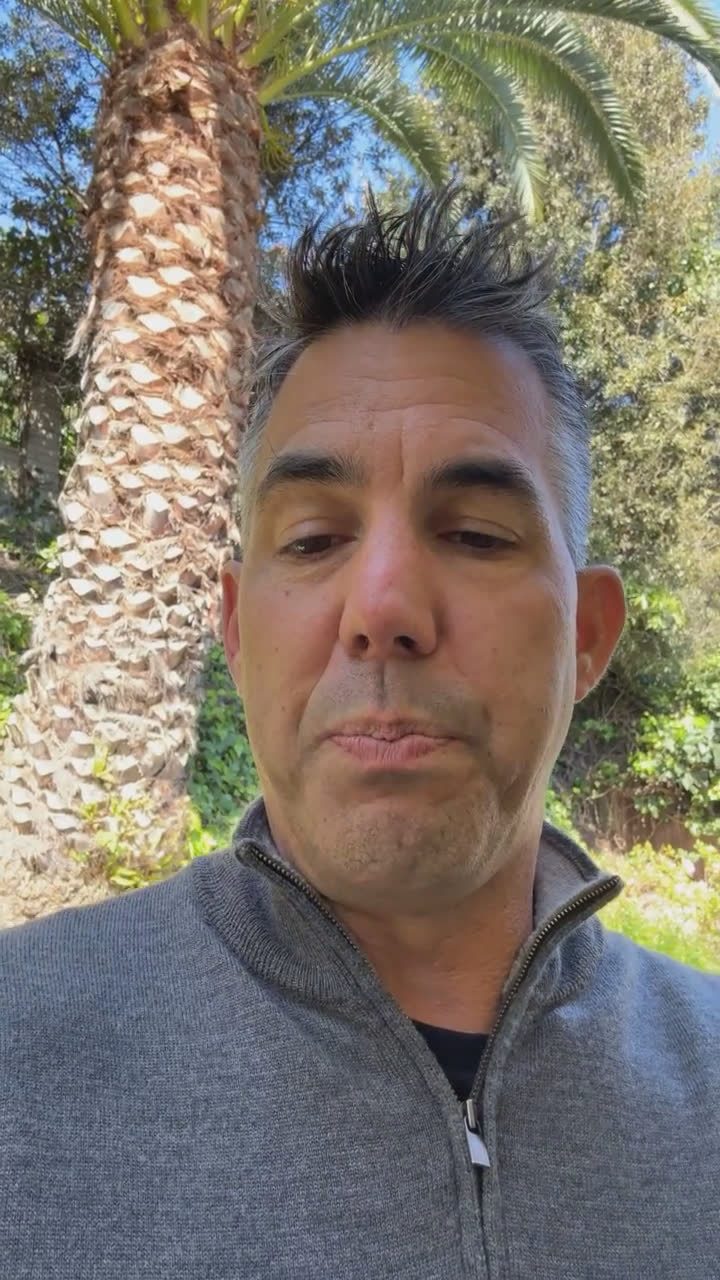
All right, well, I guess this is kind of my thing. You know, people have different things in their pictures and I guess mine is a giant palm tree. Hey, Cadre Universe, it is Saturday and it's week two. That means it's conscious fatherhood. And, you know, I just. So the thing today is don't avoid having the hard conversations. Like, what does it mean to have a hard conversation with our kids? Hi, Speak wonder. I'm not sure if I'm supposed to give shout outs, but I just did. So there you go. You're always so nice and show up.
So thank you for doing that. Don't avoid the hard conversations with our kids. So, like, what are the hard conversations? Well, sometimes the hard conversation with our kids is like cleaning up our stuff, right? Like a lot of our parents, they never cleaned up anything. Right? They never said they were sorry, they never said they made mistakes. They never said they shouldn't have done something. They never said they should have. They, they overreacted. So that's the kind of stuff we're supposed to do with our kids because that's what human beings do with each other.
And if you want to raise kids who are mindful of those sorts of things and practice them, you got to practice them with your kids. That's something our parents just didn't get, they didn't do, right? I'll speak for myself. My parents sure as h*** didn't do that. All right, so there's that. Those are the conversations that we have to have with our kids. But then there's like the hard conversations, right? And I'm going to tell you one of the amazing conversations that a good friend of mine had with his son.
And I think I talked about it last week, but it just, it is so powerful, it merits further conversation. But before that, there's other conversations, right? There's the conversations around sex. And I've got a 15 year old daughter. Does she want to talk to me about sex? She does not want to talk to me about sex. Is she going to talk to me about sexual. I don't know. But we've had conversations about different aspects. We had conversations when she was younger, we've had recent conversations and some of the conversations have been around consent and some of the conversations have been around.
They overlap also with drugs, right? Because it's that whole idea of like, you know, we just, we just want to make sure that we're talking to our daughter about the stuff that we need to talk about. And there's two reasons why we avoid conversations with our Kids, we think they don't want to talk to us or aren't going to talk to us, so we don't even give them a chance or we're uncomfortable with it. So we're uncomfortable talking to them about sex. So we don't talk to them about sex. And then what?
They have to find out about sex from each other and by themselves. My daughter's dating. She's 15. I don't care, you know, the degree to which she may or may not be having sex, but I also know, like, she's kissing her boyfriend. And I know that that creates little chemical deals in our brain and our body responds. And I want her to have had thoughtful conversations around these things. I also point her, for instance, to the show Sex Education on Netflix, which is amazing. And she and I were watching Big Mouth on Netflix for a little while, which was very interesting and super uncomfortable at times because it's such a very open show.
Right. So do I do it perfectly? Absolutely. I don't do it perfectly. Are there some conversations that I still have to have with my daughter or want to have with my daughter? Yes, there are. But do we talk about drugs? Do we talk about sex? Do we talk about conflict with friends and how to navigate conflicts with friends and what if. How it feels to feel apart from or insecure, anxiety or taking tests and all that stuff? Right. I mean, like, those are, those are some of the things. But the, the one I want to share with you is like, it's really, it's a really powerful one, and I'm not sure that it applies to most of us, but you just never know when it's going to apply to you.
So he's talking to a good friend and he was sharing with me. So he was sexually abused when he was a boy. Okay. Then at around 7 or 8, his son. He said at 7 or 8. His son's now 16. At 7 or 8, there was a point where, like, their kid just changed. Like his, his demeanor, the kid's personality, the almost love of life just changed. And they didn't really talk to him. They just noticed what was happening and they just tried to love him, but they didn't, they didn't, they didn't do anything. Fast forward, son has gotten into some really risky behaviors, gotten into alcohol and other drugs, is dealing with addiction.
They get him treatment, they take care of him. He's in recovery. He is going to a recovery high school. And then all of a sudden, he relapses after about six months. And one of the counselors from the high school says, you know, he's showing some kind of behaviors that seem to indicate, like, more than just using, you know, so, like, let's just, you know, see what's there. Maybe you just want to talk to him and just kind of just see if anything else is going on. So this guy talks to his son, and he just says, like, hey, man, I, I, I care about the relapse, but at the same time, I just want to make sure, like, everything's okay.
Like, I want to make sure that you're doing okay. And he says, honestly, I just have to tell you, it seems like I just, I want to know, like, if anything happened and even more specifically, I just want to know, like, when you were 7 or 8, you, you changed, and we should have asked you earlier, but did something happen? And his son was able to hear him, and his son was able to answer, and his son was able to tell the truth that he was raped by his friend's uncle. And I mean, it's just unbelievable, right?
Like, and I just, I, like, I think of it, my heart, in some ways, my heart breaks over that information. And then in other ways, my heart just explodes because it's a father sitting down with his son having this conversation and having this amazing. I mean, think of, like, what is going to change in their lives. More than likely, not guaranteed, but more than likely because the son is unburdened by this horrible secret that he felt so much shame around and that the father not only was able to talk to him, but can identify with it because he also was sexually abused.
So it's just like this super powerful story that's tangentially happening in my life because I'm close to him, but I think of that and I talked to him and I said, look, man, you didn't have to have that conversation, or you could have yelled at him for relapsing, and that would have shut him down. There were so many steps along the way that could have prevented this conversation from happening. And there are so many steps that you did well and Right. That allowed it to happen. And that's pretty amazing.
Like, that's a pretty amazing thing. And those are the tough conversations. Nobody wants to talk to their child about being sexually abused, but if the evidence is there, like, you know, all right, now, speak. Wonder is, like, making me laugh while I'm, while I'm doing this. Live in Los Angeles. I live in Culver City. Yes. I have, like, you know, babies crying and birds singing and it's sunny and I'M pretty blessed. I'll just simply leave it at that. But nobody wants to talk to their kid about being sexually abused and nobody wants to talk to their kid about some of the stuff that we don't want to have to have them deal with, but are not wanting to have them deal with.
It can't keep us from having the keep us from giving them the information and ensuring that they know that they can talk to us about those things. I hope that there continues to be an open channel of communication with my daughter. I hope there continues to be open channel of communication with our, within our whole family about these things and life. I'm not going to say life is going to get tougher for my daughter, but it's going to get more complicated, it's going to get more nuanced as it already has.
And in that, I want her to feel comfortable and safe and able to talk about anything. And I want us, her mom and I, to be able to talk to her about anything, to bring anything up. That's the gift of having the difficult conversations. And I'll just quote my friend, speak wonder. Yes, you have the tough conversations and it's always worth the effort. And that's the key, is it's always worth the effort. And if you haven't done it up until this point, if you don't have a super connected or intimate relationship with your children, it's not too late.
Don't give up on that possibility. Take steps, little steps. You know, if you don't have a super close relationship, that might not be the time to do a deep dive into their lives. It starts by rebuilding the trust and building the intimacy and building that connection and that foundation. When that foundation is there, they'll talk to you about anything. Because not only do they love us, they see us as a source of safety and protection and they want us to know these truths about their lives, much as they want to know the truths about our lives.
So all the best to our Cadre friends and I wish you a very wonderful week until I see you again.
Reactions and comments are for members. Joining is free and takes a minute.