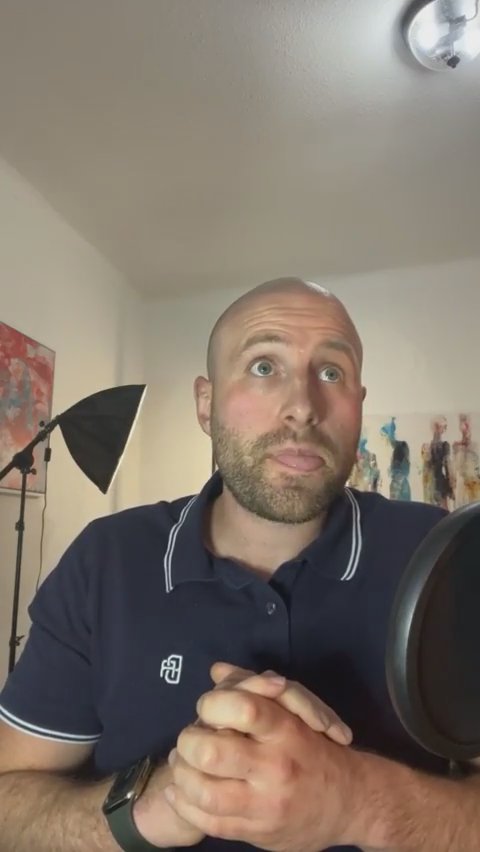
Today we will discuss a communication lesson on how we, as therapists, work with clients who are resistant to change or even combative. I believe these principles appropriately apply to anyone struggling in any relationship that has a stressful dynamic.
It's common knowledge that addiction is a disease, and that's a good thing. For so long, there has been stigma around addiction because of this element of choice. And that brings up a lot of interesting complexities.
Gabor mate: Addiction is not a disease. It's basically an attempt to get certain needs met, basically a response to trauma. Most of the people seeking help for substance abuse probably doesn't meet that model. And there's a lot of pushback on the more harm reduction side.
Sean says maybe some people use for fun liberally. The definition of a disease is sometimes could be pretty loose. Sometimes it resembles more of a defect of an organ that causes symptoms. Sometimes the best way to manage it is to stop completely.
Is addiction a disease? One, it depends how you define disease. In severe cases, it looks very much like that and follows very similar patterns. But is it helpful to look at it that way? Let me know what you think and what your opinion is.
What's up, Cadre fam? I'm back. Evan, your resident mental health and addiction therapist. And there's a topic I wanted to talk about today, and it may be a little controversial, so buckle on up. Anyways, I think it's pretty common knowledge that addiction is a disease, and that's a good thing. I'll say. Ultimately, in my opinion, that's a good thing, because for so long, there has been stigma around addiction because of this element of choice. And that's always the biggest argument that people have had against addiction.
Being a disease is the element of choice because someone can choose, right? You can choose whether or not you are going to drink, going to use a drug. And that brings up a lot of interesting complexities, and we'll talk about that in a bit on the choice argument. So the reason I'm bringing up this topic is I saw a quote from Gabor mate, and he's one of the number one thought leaders probably, in addiction right now. It's, like, impossible to not see his name. He was on pretty much every major podcast, all the biggest ones.
Joe Rogan and whoever else, right? His books have been best selling. He speaks literally every. He spoke at my high school. My mom went to see him. This guy's everywhere. I don't even think he has a home at this point. But he's a physician out of Vancouver. He wrote probably his most well known book, or at least the one that I can remember, is the realm of the hungry ghosts. And basically it's about his experience as a physician working in Vancouver with heroin addicts, folks living on the streets, and basically the, you know, if you're gonna break it all down, it's, you know, about trauma and the role of trauma in the lives of these folks who were like, some of the most hardcore addicts out there.
And so I saw a quote from him basically saying that addiction is not a disease. It's basically an attempt to get certain needs met, basically a response to trauma. I'm just kind of paraphrasing here, and I thought that was interesting. I'm like, oh, my God. You know, here's this huge thought leader going against the mainstream idea that addiction is a disease. And I've. I've commented on this before, and I think I have a little bit of a unique perspective. Right. And if we're going to break that down, my perspective is.
It is sometimes. So here I am, like, taking the middle road. Although even taking the middle road is a little more controversial because the narrative just states that addiction is a disease. Now, the issue I have with that is that what is addiction? Okay, like, we all have an idea of, like, what an alcoholic, what an addict may be, right? And for those who identify like that, we have an idea of what that is. We maybe know somebody. We see it on tv. And so with that being said, most of the people who come to me seeking help for substance abuse probably doesn't meet that model that you are just thinking, right.
Which is severity. Because with addiction, we. When I do an assessment and I diagnose addiction, right. It's on a spectrum. Right. So the technical diagnosis would be a substance use disorder, and that could be categorized into mild, moderate, severe. Right. And I have my own opinions on that, but I think it ultimately, it's not a bad way of doing it. So what I found, especially early on, because I thought all the assessments and everything I would be doing as an addiction professional would be for folks that are, like, needing inpatient treatment.
But I came to find it was completely the opposite, that most people, first of all, it's a lot of legal issues, people getting duis, a lot of people who are in these life circumstances. I saw a lot of it, especially during the pandemic, a lot of people reaching out because of their mostly alcohol use. Also a lot of cannabis, too. Right? So these folks, maybe their lives weren't falling apart, but they were just generally not happy, and it was an issue for them. Right. So by definition, they would meet the criteria for a use disorder, probably more mild or moderate.
And for these individuals, I don't really view it in that way. I don't really view them as having a disease, because probably so many of us have been there. Whenever I ask someone, it's like, think about a time in your life, maybe college, but a time in your life where you're maybe drinking more than what you think you should have or was having consequences in your life. And that doesn't mean it was necessarily a disease, right. You didn't have a chronic, chronically relapsing condition. That's one of the ways they would put it.
Right. A chronically relapsing brain disease that progresses over time. It's a progressive illness. That's not necessarily the case for these people. Right. They just needed to sort some stuff out and make some lifestyle changes, you know, work on some past issues, you know, work on coping skills for dealing with these stressful times. And, you know, then it maybe didn't become an issue they were in. Many of them were maybe able to go back to drinking in a controlled manner. Right. And that's kind of taboo.
It's like, well, if you're ending up in treatment or getting services, you should not drink at all, clearly. And there's a lot of pushback on the more harm reduction side of things. And here I am in the middle where I think both sides can get it wrong sometimes and both sides can get it right versus the other. Because sometimes for some people that are more severe, right, who would maybe have an addiction that resembles a disease more closely, those individuals probably wouldn't be great candidates to try to go back to drinking in a controlled way.
And if they were to do that, not that it hasn't happened, I'm sure it's happened plenty of times. It's just maybe not the norm. And those individuals typically need some time away from it, maybe three months, six months, and sort a lot of those things out. Right? Like at Bourmatha said, what are the reasons why you're using? What are you trying to cover up? What response to trauma or self healing are you trying to do? Figure that out, find other coping mechanisms, plug up those gaps so that when alcohol and drug, when they come back, whatever the site, they don't get ingrained in the same way that they were before.
They don't become a medication. I always say that the healthy relationship someone has the substances is. This is something I do once in a while for fun. Right. And anything above that. When. When you start to get to a place where you are using it as a means to self medicate, that's when it begins to be a problem, because then you get dependent on that medication. And especially with the substance that has a high dopamine response, a high reward response, you're just more likely to get hooked to it.
And then every substance has its own little side effects. You know, it's kind of, there's like the primary effect. Everything that feels good technically has, like some kind of dopamine, but everything, every drug, that's why you feel different, has a different type of rewarding effect. Like a stimulant makes you go up, a downer and you go down and, you know, so you become dependent. Your body becomes dependent on that substance. So again, it could really span the spectrum. So I don't necessarily.
So I don't necessarily think that you could easily put addiction in a box. You know, we call it chemical health now, and we do that for a reason, because everybody has a relationship to substances. And maybe your relationships, you just don't use them, right. Sean says maybe some people use for fun liberally. Yeah, exactly. It's like, well, I'm using it for fun when I wake up in the morning. I actually had a client today. You know, he and I were working on him. This guy would be a really good example, you know, because he's had struggled with substances on and off.
And when he came to me, he was in a place where he was smoking cannabis, weed, every single day throughout the day. And this is someone who holds himself to high standards, wants to excel professionally, but he knew he was using it as a form of self medication, and he would say, well, I'm also doing it for fun. But, yeah, it's like, you're doing it for fun every day. And today we were joking around, and he was like, right now he's not using. He went about a month. This is kind of funny. So we're like.
I'm like, hey, I'll challenge you to, like, go a month. And usually I'm kind of thinking like, okay, well, once you go a month, and maybe you'll renew your membership here and go another month or two. But he took it, like, really literally. He's like, okay, I did the month, and now I'm ready to go back again. I'm just like, oh, like, all right, if that's what you got to do. I was like, kind of told him, like, I was kind of hoping it was, like, a little trick and that you just, like, maybe would keep it going for a little while longer, especially with cannabis that stays in your system longer.
But, you know, I thought that was a little premature. Like I said before, sometimes if you want to go back and manage it, if you have any chance whatsoever, at least your best chance would be to stop completely, work on your stuff, get new coping skills, let your body reset, go back with a new set of rules and boundaries for yourself and see how that goes. He did that a little too soon, realized it didn't work, like, right away. He's like, this isn't working. I'm just going back to smoking every day.
Luckily, he got back on the horse, and he was talking today in our group, and he goes like. He's like, yeah, you know, I. You know, I had to do this three hour presentation. I got a lot of good stuff at work. I'm busy. He's like, I just know that I couldn't have done it if I had smoked last night or how I would this morning, where I'd smoke a bong or two, watch cartoons, watch SpongeBob, and then, like, go to work, and it's like, yeah, I mean, I love SpongeBob, don't get me wrong. But, you know, I don't know if that's for fun.
If you're doing it on a weekday first thing, I mean, it does sound fun, but, you know, too much of anything, you know, could be too much of a good thing, may backfire on you. A point of diminishing return. So again, would this be someone I say has a progressive disease, illness? I don't know. Maybe this dude would be somewhere in the middle of that. But a lot of it, you know, the definition of a disease is sometimes could be pretty loose. It's like the defect of an organ that causes symptoms. Right.
So at what point do you say that you have a defect of your brain? Now, I think if you have someone who's, like, going through severe withdrawals right now, it's affecting other areas. I was doing another assessment with someone today who would heavily drink for years and years, and when she would stop, she would have shakes and hallucinations. I mean, that sounds like a defect of the organ right there. And not only that, but alcoholic pancreatitis. I've had two people recently who are struggling, who had a history with alcoholic pancreatitis that has taken it pretty d*** far.
So at that point, if that person who's like chronically relapsing. So again, a couple of these folks would be like, yeah, this person is in that disease mode. Right. So the question is, at the end of the day, I don't know, maybe I put it to my famous helpful test, is labeling it a disease helpful? I think sometimes it is, sometimes it's not. Sometimes it resembles more of a disease. Now, early arguments and proponents. Well, if you really want to get early, we're talking like in the 17 hundreds where there was a famous physician, kind of founding father, you know, who viewed it as a disease.
Probably one of the first recording, you know, message or whatever. First time in recorded history we've seen someone refer to it that way. But, you know, fairly recently, maybe there was a movie that was made that's probably shown in every treatment center, but it was made by a physician who went through an addiction. And I'll just save you the 2 hours. It was a good documentary, but basically breaking down why he believed that addiction was a disease. And the first thing he did, he kind of did a steel man of the other side of the argument, basically giving the most generous view of the other side to say it's not a disease.
And he basically said, well, the best argument that it's not a disease is the fact that you have choice. Like what I was talking about at the beginning, you don't have to drink. And he said, cowboy walks into saloon, he's an alcoholic. He goes, he orders himself a shot of whiskey, drinks it, and then the guy next to him says, hey, I'm going to order another one for you. So this time he orders the shot of whiskey, gives it to the cowboy, and he pulls out his gun and says, if you drink this, I'm going to shoot you on the spot right now.
He said that the alcoholic may be like, Colin is bluff and he may drink it anyways, but likely that person would not. The stakes are too high. So that person does have a choice. That individual had proven that he did not have to drink, because if it was a disease, right, you don't have a choice, right? Like your blood pressure goes, you can't just like settle it down, right? So you're able to not drink. Now granted, once that gun goes down, he's going to be dream, he's going to make that choice.
So what then makes it a disease? Well, his argument is the phenomenon of craving. And this was talked about in the earliest literature of alcoholics anonymous. This idea of a bodily craving that is usually beyond the control of the willpower of that individual, no matter the consequences, may be less being shot. So basically what he's saying is that it is a disease because the individual who is suffering with alcoholism, addiction on a severe level, they have a craving and they cannot control the fact that they have a craving that other people don't.
That's his argument. Sounds good to me. That works for me. That is a pretty good argument. Another way of looking at it too is it's interesting, is the disease of alcoholism actually follows some pretty similar patterns when you compare it to other diseases, like for example, heart disease and diabetes. These are two classic ones, because these three diseases have very similar relapse rates. Now with diabetes, you can't necessarily, if you're body reacts with insulin, you know, isn't producing insulin or is insulin resistant, whatever.
I'm not a doctor, I know there's some insulin production thing happening there that that person can't control. Especially with type one, you can't really say they have much control. Or even if you get to that point of type two, you can't just like change it on a dime. Same with heart disease, right? So for those illnesses, like, right, there's usually a pretty big genetic component, but there's also a behavioral component, right? In the same way so in that example, addiction, the craving would be that component that may be genetic or you partook in behaviors that increased that phenomenon.
Now, with all of those, let's say the treatment plan would be behavioral based for heart disease, and diabetes would probably be a component of exercise and a healthy diet so that it can be managed. Right? And the same thing goes with addiction. When you make certain lifestyle changes, even doing therapy, going to meetings, even exercise, some of the same stuff, you're going to have less cravings and it's going to be more within your control whether you go back or not. And that really, again, spans the severity of addiction, just like it would for heart disease.
Right? And the relapse rates of all three of those are very similar when you put those diseases into remission. Right. So there's no longer symptoms that are having a negative impact on your life because you are not partaking in the substance use or you're not partaking in the activities for diabetes and heart disease that would lead to the problems that come with it. Right? So again, if we're just going to break it down, if we're going to boil this whole thing down, it's like, is addiction a disease?
One, it depends how you define disease. Two, yes, in severe cases, it looks very much like that and follows very similar patterns. Three, in some cases not. And that is because there are many levels of severity to addiction or addictive behaviors or substance use disorders, however you want to call it in the way they impact your life. And number four, doesn't matter, is it helpful to look at it as a disease? Then by all means, call it a disease. If it's not helpful for a particular individual, and it's better to look at it in a different way, maybe the way gabor mate or some others who would disagree with that, perhaps it's better not to for that individual.
So again, here I am stuck in the middle with you. But anyways, I hope you got something out of that. Let me know what you think and what your opinion is. Just keep it nice. Whenever we do anything controversial, just let's have a good convo. Anyway, I hope you got something out of that, folks. And until next time, I believe next week, we'll see you with another fun topic. Bye.
Reactions and comments are for members. Joining is free and takes a minute.