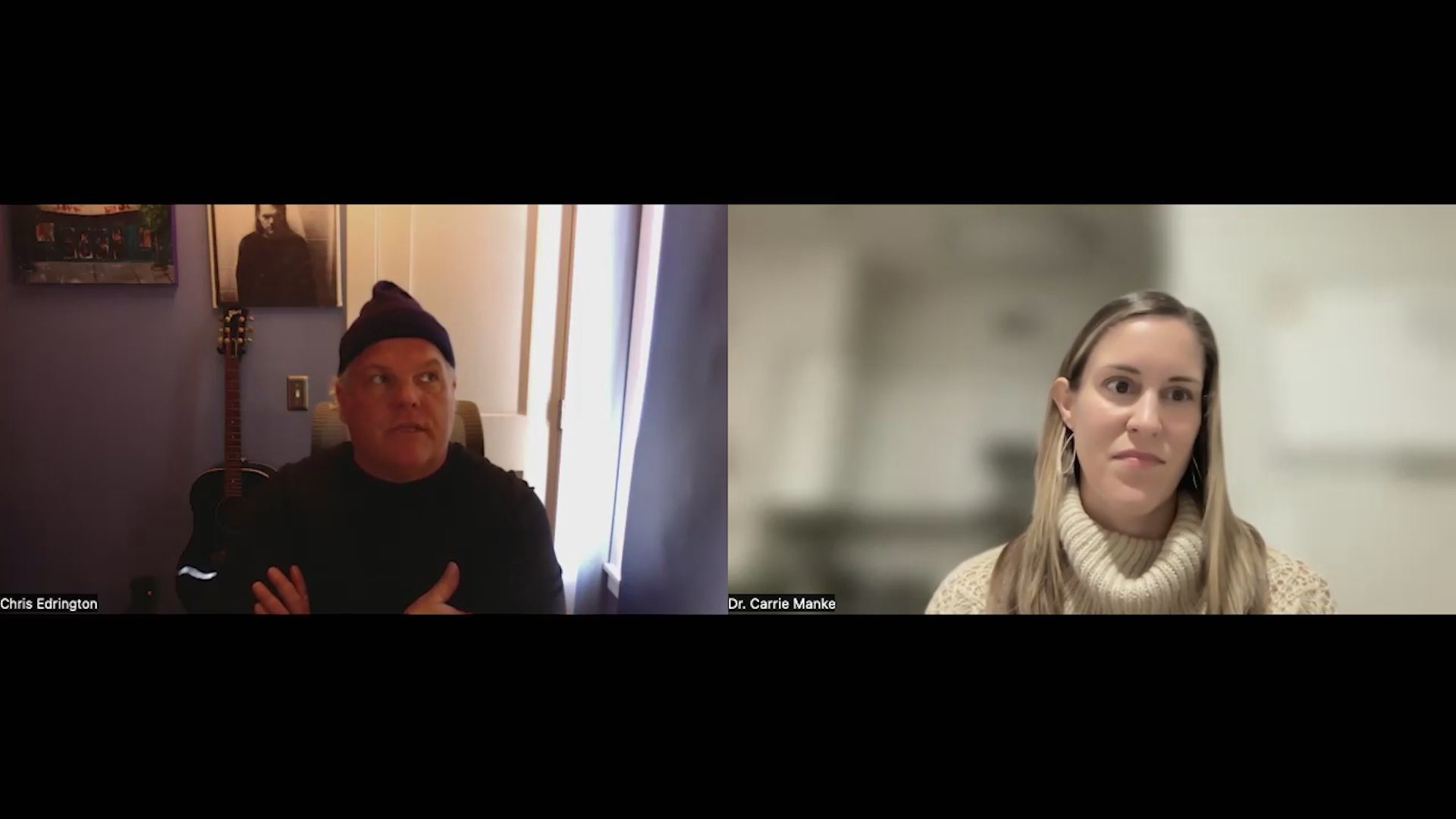
Creators Chris and Dr. Carrie share their expertises on early recovery and how to navigate relationships. They discuss the nuances of why relationships can your shift focus off the recovery process, reasons why people get into relationships in early recovery, advice to give someone who is starting a relationship in early recovery, and how to know when you are ready for a relationship.
We often give advice to our new clients about not getting into relationships and early recovery. If you jump into a relationship in your first year recovery, it's hard to pull your focus off of the relationship and back on your own recovery. Why do we lose their focus?
Chris: Why did you start using in the first place? He says some people replace their addiction with a love addiction. We're looking for that other person to meet a need that's not being met in ourselves. He says in early sobriety, people do different things in recovery to fill the space.
One of the things that we do at my program is you cannot start a new relationship. We say instead, give us the first two or three months to get you set up with a routine. Whatever insecurities and patterns you have are going to be revealed in a relationship.
In early recovery, people get super uncomfortable in those first months. Once you get past that honeymoon phase and you can no longer hold up the facade, then you start to see who the truly the person is. You have to show up and be the best version of yourself if you want to be in a healthy relationship.
When you're in the middle of recovery, especially the early portion, it's just like, how do I get through the day? And you don't have a lot of time to self reflect and do that self awareness. Whatever relationship you get into is going to be a for today or this week relationship.
When you get into the normal sort of arguments and problems in a relationship and you don't know how to deal, what do you do? They use. That's the reaction to everything, good or bad. It can spiral you bad and you can take steps back.
Early recovery is so key in early recovery is getting a different routine. The most effective thing I can do is to find some 22, 23 year old with three or four years of recovery and get them to meet. There's nothing more powerful for my clients, especially my 19 year old fentanyl addicts.
Hi, guys, it's Chris from Cadre. And today we have Doctor Carrie Menke. Did I say that right? Menke? Yes, Menke. Okay. And I asked her to help answer a question that I've had. So I'm a guy in recovery, 24 years, I own a bunch of sober houses and consult and speak about recovery. And I'm always looking for answers and ways to get people engaged and get their attention or remove obstacles. And because people, you know, starting out in recovery are honestly, there are, a lot of them are looking for a reason not to.
And I understand that. I did it myself. I didn't want to start either. So one of those issues is we often tell people, and I say we, I say people in recovery business or treatment centers or clinicians, I'm none of those. I'm just an old, experienced former heroin addict. But we often give advice to our new clients about not getting into relationships and early recovery. And if you've ever been to treatment or been in any kind of recovery, you've probably heard that at least once. And what I wanted to do with Carrie was dive a little bit deeper into why we ask you to do that or not do that, as opposed to what I've always said is we just lose your focus.
If you jump into a relationship in your first year recovery, it's hard to pull your focus off of the relationship and back on your own recovery. And that's generically the reason why we always recommend it. What I wanted Doctor Carey to do is give us a little bit more depth into, well, why do you lose your focus and why do people lose themselves in relationships? And especially in a time when you're of lot sort of vulnerable and trying to, I mean, really getting clean and sober, if you've been using for any length of time, is quite a process of transformation.
So you really do have to focus and you have to put some effort into it and it's not easy. And, you know, having somebody and something to distract you is very attractive. So, Doctor Carey, if I, if I said to you what would be a more complete way of explaining that to somebody, you're just going to lose your focus and I'm not going to get you to pay attention to your recovery because they always say, oh, I can do both at the same time. But that's not true. We literally just lose them. It's like relationship, no more recovery relationship.
It's just pulling you back. And we've been struggling with that for years. In fact, in my sober houses, we had rules before about dating really hard to manage that rule, especially when the dating apps popped up, because this is before that, too. It was me. My clients were like, I'm not dating. We're just hooking up. And so there were lots of context to this. I just want to get maybe a little bit of a more in depth way of explaining to people why we lose them. Why do we lose their focus? What happens when they get into a new relationship that they just disappear on us?
Yeah, I have a lot of thoughts on it. Chris, the one question I want you to answer for me before I go into this is, why did you start using in the first place? Are you asking me personally that? Yeah, that's a good question. I mean, I was in high tight after getting into recovery. I look back, and I can remember being very uncomfortable, being very unsettled. There was some. Not necessarily trauma, but a lot of unsettled stuff in my childhood with divorce and parents and stupid stuff. And then I wanted to be in the music scene.
I'm a guitar player, and I hung around, and it was around. And so just like anything else, I tried it like everyone else did, but it really seemed to grab me, and it really seemed to like. Like, I remember telling this old girlfriend from years ago that she was like, why do you do this stuff? It was heroin so much. And I was like, well, just think of it like, life is on this one really fast track, and every once in a while, I just get off the track and sit next on the side of the tracks and take a break and then get back on later.
And it's a stupid rationalization, but that's. That's it. I mean, you hear people say things like, oh, I never got the syllabus for life, or you guys all got the manual and I didn't get one. Why is it easier for everybody to go through life day to day? And I didn't realize it at the time, but in retrospect, after doing some work in recovery, I realized I was really anxious and unsettled a lot of the time. So it felt good. Yeah, yeah. Oh, yeah. Pacifier, blankie, whatever you want, a term you want to use, it was.
It was meeting a need that you didn't have met. Right. And that's the same reason we get into relationships, unhealthy relationships at the wrong times, is because we think it's going to fix something in ourselves. We. We're looking for that other person to meet a need that's not being met in ourselves. We probably don't love ourselves very much if we're abusing our bodies right in. And we think, well, if I can just get someone else to love me, then I'll feel like a whole person. It feels good. I mean, the early stages of relationship is fun, even if you're just hooking up, right?
It's fun. It's exciting. Oh, my God. Yeah. It's like brand new everything, right? Yeah. Yeah. It's the same concept as using of, like, you're doing this to get high. So some people actually replace their addiction to whatever substance with a love addiction because they have this tendency to fill the void when it's not being met because they don't know how to find that in themselves. And so they're like, well, I'll go out and I'll find that somewhere else. And so when you say that, they lose focus and they become distracted.
Some of them just literally have taken on a different addiction. It's like we're empty vessels and we just walk around in early sobriety, like, fill the hole, fill the hole. Fill the hole. Food, sex, relationships, money, status, job. People do different things in recovery to fill the space. What I really would like to be able to do, especially, like, my younger clients now that are coming into recovery, these 19 year olds, largely, it's fentanyl, and they don't have a whole lot of life experience, so they don't have a bunch of relationships they got into that they shouldn't have gotten into.
They may have any yet of any length. And so if they get into one now, they get a little sober, get three or four months clean, they start feeling healthy again, their libido comes back, and all of a sudden they're like, wow, this is great. And they have this added component of, well, I'm normal now because I want to be with this person, and now I can be in a relationship and I must be fixed, because now I'm. Now I can, or somebody actually likes me, and it's their first in a long time or maybe first relationship at all.
And so our old talking points of, hey, man, I need your focus over here. They're like, what? No way. This girl or this guy thinks I'm great and I'm going to do this. And literally, they'll just throw everything away for it in the beginning because they're just captured, you know? And even if that person that they're in relationship with is healthy, which I know a lot of times, in early recovery, you don't really have the best. You don't pick well, right? Well, they're better than the last one, they're sober longer than I am.
But even if that person were, like, a really good choice, you still don't know who you are without that substance. Three months is not long enough to really know who you are and figure out what you value and figure out, how do I do life without filling a void with a substance? And so you are not a healed person yet. And a lot of times, especially the kids that are getting into drugs at a young age, it's accessible, but they're trying to fix the emotional needs that are not being met. And so they probably have a lot of childhood trauma.
They've got some sort of experience in their life that has led them to filling a void with something that they know is bad for them. And so they're not a healed person yet after three months, four months, and they're not going to pick well. And so they're literally saying, okay, well, three months is great. I've been clean for three months now. I can pick a good partner. You still don't know who you are, and you still don't love yourself after three months, so you're not going to pick a good partner.
And that's exactly the experience we have. And sometimes they get picked, and because they got picked, they think, well, I must be great then. And I've got picked by somebody, right? And, oh, it just. Sometimes it just turns into, like, a giant disaster very quickly. I mean, everybody gets drunk and everybody gets pregnant, and it just becomes a total disaster. When I talk to people who come in that are already in relationships and often enmeshed, not so healthy relationships, it's also a challenge to get them to set it aside.
Right. A lot of the people in there, if their family doesn't like the other person they're in a relationship with, they'll often, the family will put the problem on that person and say, well, if you could just get out of this relationship, you could probably get sober. Right? So there's so many different discussion points or access points to this topic when you're talking to somebody in early recovery. One of the things that we do at my program is you cannot start a new relationship. If you come in and you're not in one, you can't start one right now.
That doesn't mean we can prevent you from hooking up on Tinder or something. What I'm talking about is more like, okay, we haven't seen you. You haven't been hanging out. You've only been here for the required times. Where have you been? Oh, there's this new relationship. And then the discussion is rather, it used to be years ago in my sober house would be like, you can't be in a relationship. You got to stop. What happened is I just had a bunch of people lying to me because they wouldn't stop. Right.
And we set them up to lie, which is almost worse. Right. So now you have this dynamic in the sober house of people lying about where they've been for part of their week. And we're always talking about this transparent, honest lifestyle you have to have if you want to stay sober. So it was a setup. So I changed the rules. I was like I said, we're not going to say you can never date in your first year of recovery or first six months at the sober house or whatever it is, although there are some houses here in Minnesota that still have that rule.
We say instead, give us the first two or three months to get you set up with a routine so that your meetings and your sponsor and your job, maybe you're in an outpatient, whatever your recovery sort of schedule routine looks like. And then that includes a lot of times a simple job, not a crazy job. And a lot of these other pieces of advice we give people, including stay out of relationships, we try to give them a stable routine. If you can do that routine for a while, it will give you something back.
It is the medicine of having a smart routine and you'll feel better. And so we say, okay, let us help you build this routine. And then if you're going to have the relationship and anything that takes you out of that routine, we're going to say, hey, where'd you go? We lost you because you're not with us anymore. And in the sober living homes, a lot of the women and the men stick together and they kind of go to meetings together and they socialize together. And then someone will get in a relationship and they're going, right.
So the way that we do it now is to try to say, rather than chase people around and say, get out of that relationship, because that doesn't work. I mean, you're saying they're using it like a drug. They're not going to give it up that easily. We try to get them to, I try to get them to say, I will do my routine and I'll see this person when I can. And that's kind of a grown up approach to relationships, which not a lot of people in early recovery are sort of able to do. But that's where we're at today.
That's the current way I look at this, there's just, it's so helpful to have more context around these big points we talk about with people in recovery instead of these old platitudes and lines that we can use. Oh, stay out of relationships for your first year. Right. Which is really it that nobody gives any context to why. Yeah. You know, I've been thinking of adding a disclaimer to my coaching clients because I coach a lot of women that have had a pattern of bad relationships. Almost like a pattern of using the wrong men or, you know, a love addiction, maybe, but as, like, you cannot date when you're working with me because I've been working with one client and she's not making any progress because she keeps dating.
And I keep reminding her, if you are not the healthiest version of you right now, first of all, in any, let's say you are a super healthy person all around, right? You're like, overall wellness is just really, really high. Whatever insecurities and unhealthy patterns you have in your life, they are going to be revealed in a relationship. Just any relationship, right? Like, but especially an intimate relationship, they are going to be revealed because that person is going to get to know you and is going to get to know every flaw that you have that you can hide from everybody else.
And so then they get manifested and enlarged. So if you have not done the work to heal who you are at the core, like the reason why you use your insecurities, you know, your trauma from childhood, whatever it may be that is going to come up in a relationship. And so I see in working with the coaching clients that I work with, they struggle with codependency of like, well, I'm going to chase him if he doesn't, you know, hard enough. I'm like, okay, remember your worth and your value. Why are you chasing him?
But like, they, they cannot do the inner work when they've got someone else making, pulling out the bad qualities in them until they've healed those parts of them. And so it's the same thing, I think, for early recovery. If, like, if you have not done the inner work to heal the reasons why you started using in the first place and all the trauma that you've been through, it's going to be manifested in a relationship and that relationship isn't to be healthy anyways. That's really helpful because I think we do talk with the residents often about what's coming out.
And I like to say in early recovery, I tell people they get super uncomfortable in those first months and I say well, you know, the evil spirits are working their way out of your system in this first year and they're going to come up to the, it's like a detox of your spirit, right? And the things are going to come up and you're going to realize that, you know, you're not such a secure person or that you have fears or resentments about this or that. And if you do the twelve step work, you know, that fourth and fifth step, which is really about like looking at the person you used to be and the behaviors and maybe you don't want to be that person anymore, but you have to look at it and be like, okay, if I want to be this person, I got to look at who I was or am so I can get from here to there and you get cracked, you know, and you go, we used to call it shrink bombs.
You know, everyone has a therapist in early recovery and you can go hang out with your friends and be like, man, I got shrink bomb. Today. My shrink cracked open. This thing about, you know, today I got bombed. And then I guess this is cool because what you're saying is then those things, I don't want to call them deficiencies, but those elements of your issues, so to speak, just get put under the bright lights in a relationship, which maybe, I don't know if I write about this, I'm asking you if that's what should happen in a relationship so that you get the real, so that when you're in a relationship, you're giving each other the actual real person without, without all the facade, right?
And you can't. Not ready for that. A lot of people aren't. They're just not ready for that, right? I mean, the early part of a relationship, you're on your best behavior, right? And you don't really get to know the person yet. But once you get past that honeymoon phase and you can no longer hold up the facade, then you start to see who the truly the person is and it's so much effort to put on the best version of yourself. And so that might be another reason I just thought of why people in early recovery all of a sudden get super distracted because they're like, no, I can put on my best behavior for this person because we all do that in relationships anyways.
But it takes so much energy and you're focusing on like, I'm going to be the best boyfriend, best girlfriend I can be. I'm going to show up, I'm going to shower them with affection, all this stuff. And like, takes a lot of energy. That's not who you really are. Maybe. But then once you can, once you drop that facade and you start to really showcase your true colors, that's when you realize, oh, crap, I still got some things to work on, and so do they. And, like, I mean, I was talking to someone earlier today who said, you know, one of the hardest things in a relationship is you have to choose to be the best version of yourself every single day.
Not, not, I'm going to make them be a better person. You have to show up and be the best version of yourself if you want to be in a healthy relationship. And if you are not a healthy person yet, you've got some things you got to work through and go get shrink bombed, then you got to go through that work, right? And I don't think a lot of people, I think, you know, coming off of drugs and alcohol, depending on the severity of it. For me, it was nine years of heroin use. I mean, I didn't have any.
I had a lot of uncovering to do. I had just had a lot of waiting to do just for my own brain chemistry to come back. I remember I was standing in this parking lot of a grocery store. I was almost two years sober, and I was talking to some person in recovery I saw in the parking lot. And, you know, they said something to me about, hey, I saw you when you came in. I remember when you got here, this person had been here a lot, and this whole town is full of sober people. So it's almost like one giant, you know, misfit toys.
Like the mis toys, the island of misfit toys in Rudolph, the red nosed radio, like where all the broken toys are in St. Paul, Minnesota. And this person said something to me about, you know, I saw when you came in, and you look a lot better. You're, you know, you have an energy or something. And I was almost two years sober, and I was standing in the parking lot, and I was like, I have changed. I've been sort of focused, busy. I was broke. I needed to. I had a job. I didn't have any money. I was focused on sort of catching up in my life and not recognizing that, wow, I did feel completely different and better.
There's so, it's such a, it's such a hard thing to do to get clean if you've been buried under drugs and alcohol. And it doesn't matter if you've been, you know, drinking red wine for 20 years in your fancy apartment or you've been shooting drugs in New York City in the corner like I did. And, you know, it's the same process once you get to a certain point. In fact, my peers that I got sober with, I don't remember the substance of choice for most of them. I just know that it's not there anymore.
But back to specifically the relationship thing, it's very difficult to get anybody who has gotten that attention from somebody, probably an AA meeting or met somebody in the community, and they want to date them and they think they're great, and it's so hard to get them back. And so that's why we try to stop it as quickly as we can. But I don't think we have a lot of great language that's going to resonate with, say, like, a 20 year old girl who's like, meet some guy at a meeting or some other girl at a meeting, and they're just like, oh, my God, she thinks I'm great, or he thinks I'm great.
I mean, we have such a hard time getting. Pulling their focus back and not starting in the first place is actually the best, the best, best thing to do. Yeah. I'm wondering if you were to ask this question, what they would say, and I know some kids think they're, like, invincible and they're overly confident. Oh, yeah. Which is the challenge. But, like, do you feel like you are the best girlfriend or the best boyfriend for them right now? Like, what do you have to offer? What do you have to offer them?
Yeah. Which is demeaning a little bit, but very true. It is. Yeah. We would joke about that and say, oh, dude, what do you have to offer? You know, you're just a baby here in terms of your maturity. Right. Well, and, like, you burst. You were saying when that person talked to you and you were two years sober, the level of self awareness that you had developed in those two years was profound. And it you kind of stopping and saying, yeah, I have changed a lot. But, like, when you're in the middle of the recovery, especially the early portion, it's just like, how do I get through the day?
How do we just not use today? And you don't have a lot of time to self reflect and do that self awareness and even necessarily see the progress you've made, which is why, and I'm just surmising why, I'm guessing you get, you know, medallion and coin to be like, no, look how far you've made it. You need to celebrate this success because you're just kind of like, I'm just trying to survive it right? Now. And so you really can't be present in a relationship. You really can't, like, think into the future in those moments because you're just, like, trying to get through today or this week.
And so whatever relationship you get into is going to be a for today or this week relationship. Like, they definitely, most of them don't last very long. Yeah. Because you're just, you don't have that awareness. You know, I have this great story I always tell about this particular kid. I don't even remember his name, but it was years ago at my first over house. And, you know, we have this house meeting every week, and we would sit on the back porch and people would smoke cigarettes and talk. And that just that camaraderie thing gets really thick sometimes in the house, and you really start to trust people and you tell people the truth about yourself.
And this guy came home one day and he told the guys, he's like, guys, I met my soulmate at a meeting today, and everyone's rolling their eyes. This is no joke. He said, and her name is angel. And he said, I think it means something. And I was like, oh, God, this is going to be great. And so, of course, we all grilled him and jumped on him, like, you can't do this. You shouldn't do this. This is why. And of course, he moves out or says, I'm going to move in with her. And this is nuts, but it's 100% true.
He said, chris, look, she lives above an AA meeting. She lives in an apartment where there's an AA meeting in the basement in the bottom floor of this building. And I said, oh, okay. So you guys are going to be more sober because it's going to osmosis, it's going to generate, it's going to come up through the floor, and you're going to be more sober because of the proximity to an A meeting. And sure enough, within I don't know how many weeks it was, I can't remember, angel threw everything he owned out the window of their apartment onto the sidewalk, and he called and said, you guys gotta.
We scooped him back up and brought him back to the sober house. It wasn't even a couple of weeks, but it's such a perfect example of how taken he was right by this person it's meant to be. Your name is angel. And, you know, God told me to have this relationship, and he was, he was stronger than any drug, I think, he'd ever done that pull. But if there was any value for it, it was the other guys who saw that happen. Right. Because I've been brow beating them about not doing this for so long, and I'm like, look, that's what happens, right.
And they got out pretty easily. Most of the time that ends up in using because. And this is the other thing I wanted you to talk a little bit about, because if you're not really that present and aware of your own self awareness and you get into the normal sort of arguments and problems in a relationship and you don't know how to deal, what do you do? What do addicts do when they stub their toe? They use. Right. That's the reaction to everything, good or bad, and that takes a lot of time to get away from.
Right. Because that's what, you know, I get upset or I get this or I get that. That's what I do. I get extra money. I buy more drugs. Yeah. You can't handle the normal stuff that would happen in a relationship anyway. Right, right. And, you know, the first few weeks, few months might be all just fun and exciting, and then when something comes crashing down, it could set you back. My, my friend went to a mothers against drunk driving presentation, and they said the. The statistics for repeat DUI offenders, okay, because most people who have a DUI have more than one.
But, like, 90% of the people who have a second or a third DUI, like, knew they were consciously going out to. They were literally driving with alcohol on board. But that was their only option at the moment because they had, like, a fight with their girlfriend, a fight with their spouse. Like, it was a relationship based reason for why they decided to drink and drive again, because they're pretty aware of, like, I don't want to make this same mistake again. It's a big deal when you get a second or a third.
But it was a relationship reason why they fled the scene, fled their home of, like, I mean, that doesn't necessarily mean that they struggle with alcohol use, but maybe you do. But, like, that was literally how they ended up with their second or third DUI because of a relationship thing that happened. And so you're spot on in saying, like, you. You cannot, like, you'll the. I guess the detrimental effect that can happen when then that relationship is not all just fun and roses and you have, like, your first tiff argument, you know, whatever.
Like, it can. It can spiral you bad and you can take steps back. I don't. That's a thing in recovery, but, like, I would. Well, the problem is that you still have that attachment to. I have this thing I can do when I get stressed out or I get upset and it's an automatic thing. Oh, I drink or I use. That's the first thing I do, right? I remember when I was in New York City, and I met my girlfriend at the subway, and we used to. She was really short and small, and she would get elbowed a lot on the subway because she was so short.
So we would meet at a certain car in a subway on the f train in New York City so that I could go with her and would hang out with her. And my mother had passed away, and I got a call from my brother. I was at work, and then I called her, and she left work, and I left work, and we met up at the subway like we always do, and we were going to go home, and she was like, well, aren't you going to go cop? I was like, she goes, well, I figured you'd just go buy drugs because that's what you do when s*** happens in your life.
And I was like, oh, yeah. Like I'd forgotten a doctor's appointment or something. Aren't you going to go to the dentist? You're supposed to be at the. I was like, oh, yeah, it was. That was her perspective for me, right? How long had you been, were you still actively using? Were you trying to get sober? Like, where were you? No, I was just a full on junkie in those New York City days. That's what I did every single day. In fact, you know, this is pre cell phone day. So in New York City, when you go to buy drugs on the corner in the nineties, you'd line up and there were these bodegas or different stoops, and you would go, and the dealer was on the street.
And so I would be at this same place every day after work or before work. And this is crazy, but it would turn out, it was almost like, turned out to be like, what now is the Starbucks line? I would see the same people every day in that dope line. And we'd be like, hey, how are you? You know, like, you see your friend or this person you see every day at your coffee shop, but we'd be in the line for the dope dealer in the East Village in New York. And I remember seeing some girls that I recognized, and three or four of us would be there the same every day.
So there's so many things we could go on and on and on about that, but the last thing I would bring up is maybe some language about what are the signs or the language for somebody who is ready or more ready, let's just put it that way. Because if I do have people and I do have alumni in my program and I do sponsor people at a time and I do consult with families, people who have some sober time, it's also a good thing to be able to say, hey, man, you are ready. Go do this. If you got this opportunity, take that job or go in that relationship, we could, you know, it's be good to have a little bit of language around that as well.
You know, that's a tough one because I feel like you could argue you're never, you're never ready, unfortunately, for a relationship, especially a healthy one. But I think when you can. I think when you can do what you did with that routine. So, like, I'll go back and then I'll go forward. But you were saying how, like that day, your routine got disrupted when you found out that your family member passed away and so you had a routine of going and getting in line to get your drugs every single day.
And like, one of the things you said is so key in early recovery is getting a different routine. So I think when your coping mechanism is no longer the immediate thought of, I'm going to go use, I'm going to go drink, and you can deal with the daily stressors, you can deal with setbacks, you can deal with not something necessarily needing to be catastrophic happen, but like, can you get into a car accident? Can you have your boss yell at you at work? Can you have something like that happen and have a healthy coping mechanism that you turn to?
Then you might be ready because you now know how to deal with daily stressors, you know how to deal with. That makes a lot of sense. That's super helpful because we always joke that in early recovery when someone takes your peanut butter or steps on your toe, you want to call the FBI because you're just so out of everything, is so out of perspective about how to react to anything. That's really good advice. I think I'm going to use that with some of my people because we do. This is the thing that's so crazy about being in the recovery businesses.
We're always talking about the problems and what works and trying to help. Not a lot of look at this one that is working and look how great that is. There's nothing more powerful for my clients, especially my 19 year old fentanyl addicts whose using career is not even two years long. And they scared their parents to death and they got sent to treatment and they don't have this perspective of a whole life lived that fell apart. They don't have that yet. So I can't say to them, well, didn't you used to have a life with friends and things to do and, you know, cars and trips and stuff?
And they're like, no, I don't have anything. I'm 19. Right? The most effective thing I can do is to find some 22, 23 year old with three or four years of recovery and get them to meet. And if I can get them to see that and get to know people like that and exposure to people, they seem like they have a different way of looking at the world, and it's attractive, right? I get these young guys to be like, why do you look so comfortable? Why do you have a great relationship and a great job? And, wow, how do I get that right?
That's the power of those inexperienced users. And then maybe that's sort of like the ideal sponsorship, right? You get someone who's just ahead of you, has a similar story and can say, no, I tried that. Didn't work for me. Yeah, I tried that, too. Didn't work for me. I tried this instead. Right? Yeah. There's nothing more powerful than somebody put it one time to me, like, the most effective thing we have to throw at the disease of addiction is another addict or another alcoholic, and that's the basis of aa.
But it's deeper than that. I'm obsessed with what works. I'm obsessed with anything that can get progress to people, or I can help my clients with progress, especially these new, young fentanyl addicts, because that added component of the fentanyl is incredibly dangerous. I mean, I was using street heroin for basically the decade of the nineties, and everyone I knew was terrified that we were going to die from that. And this fentanyl thing is ten times worse than that. Ten times more dangerous, 100 times more dangerous.
Well, I'm like, it's just such a. An early age to be using something so dangerous, and you think you're so invincible at that age. But I love how you're saying, like, find someone who's done it, who's. It's worked, because that's going to speak the most to somebody who's going through it of, like, I've done this, haven't done that, but, like, to be honest and be there, you know, their kind of hope and vision for what they can become as well. Yeah, it's hope. You can't manufacture willingness, but you can throw a bunch of hope at it and try to get some willingness out of it.
Yeah. Well, we could go on and on and on and on with all the subjects. We should do another one of these, and I'll pick another topic that's related, and then you can help us dive deeper into the right to the language. That was super helpful, Carrie. Thanks so much. I'm glad I learned so much from you too, Chris. I know I don't speak right when it comes to, like, this space, and I'm probably using the wrong terms, but. Yeah, but it's better because it's more authentic, right? We hear the lingo from my world all the time, right in this coming outside.
That's why I tell all my clients to get a therapist. And if they'll come to me and if I'm trying to get something out of them, and they'll say, well, why can't I have this relationship? And I'm like, well, could you please go tell your therapist every relationship you've ever been in and then ask them if you think you're ready to be in one. How about that? So hear it from them because they have letters behind their name, and maybe you'll take it more seriously. But we do the best we can in the social model world here, so.
But let's do this again. I'll come up with another. Maybe we can do a whole bunch of these on different topics. Okay, sounds good. Thanks.
Reactions and comments are for members. Joining is free and takes a minute.