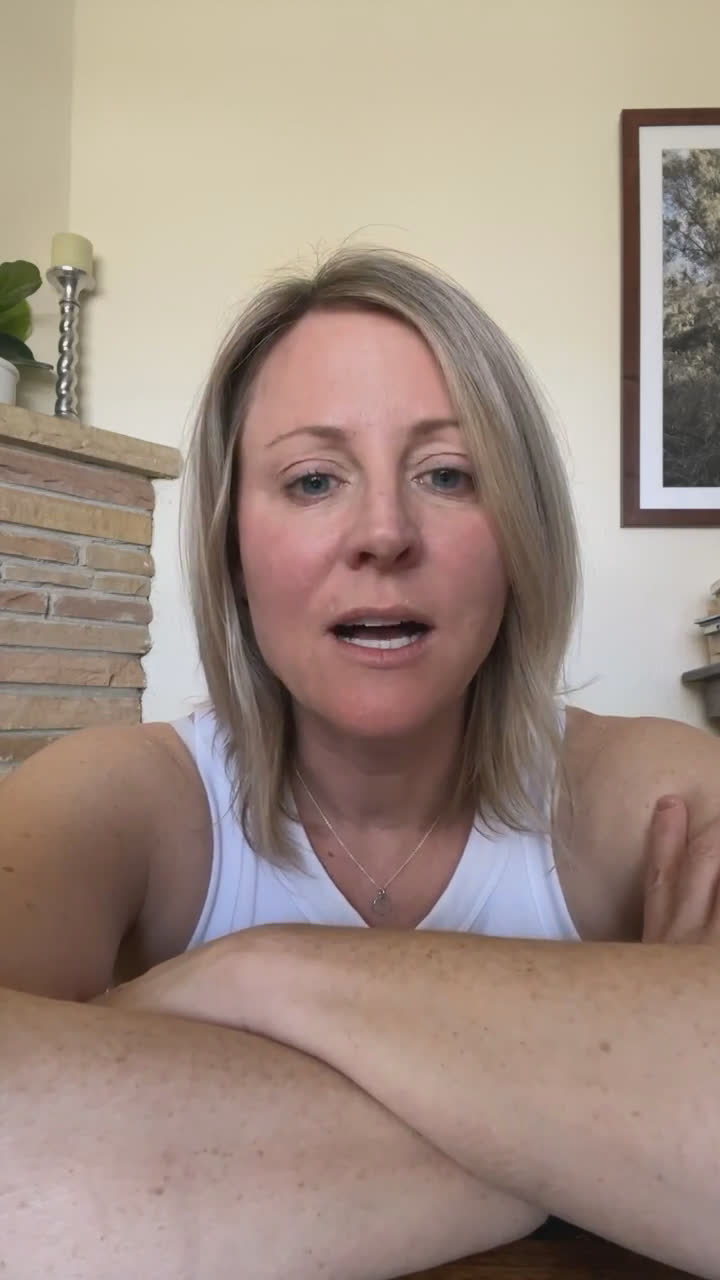
Join to me to talk about the hard parts of challenging family systems so we can feel less alone. This week: Does it have to be all or nothing?
Cadre. Happy Friday. I don't know the date. It doesn't matter. It is Friday.
Welcome to grief day on Cadre. Shannon is a human being who lives with CPTSD, anxiety, and I parent a child with special needs. So my son has autism. My job is to be a human who shares my lived experience. If it's resonant with any of you, you feel less alone.
When I talk about living with CPTSD, that is something that is connected to my familial system. I spent about eight years in therapy working on that piece of my life. In that time, I learned some skills that I'm going to start to share with you next week.
Two wins in family estrangement that I've had in the last couple weeks. I was able to have an experience with my brother that felt like a positive family experience. The other thing that happened is I actually spoke to my parents yesterday. Where the grief comes in is that it can be tiring.
In the next four to six weeks, I'm going to talk about the things that I started to do when it came to family, my familial relationships. There's five steps that I realized I was taking. And those steps have allowed me to today to have a little peace. Animeo is coming up later today to discuss her grief journey.
Cadre. Hi, friends. Happy Friday. It is Friday. I don't know the date. That's okay. It doesn't matter. Welcome to grief day on Cadre. I am Shannon. I am here today, for those of you who don't know me, to talk about things that we aren't supposed to talk about, which really means that we are talking about topics that can be really hard to discuss in culture because there can be shame or fear or different things associated with them. So, for those of you who haven't met me, I'm going to give you guys a minute to come on.
For those of you who haven't met me, again, my name is Shannon. I am not a clinician. I am not a mental health professional. I am a human being who lives with CPTSD, anxiety, and I parent a child with special needs. So my son has autism. And so my job, my self appointed job here on Cadre is to be a human who shares my lived experience, and in this case, particularly with family estrangement and grief, so that if it's resonant with any of you, you feel less alone. You know, you're not the only one going through this.
So I'm going to do a couple of things today. The first thing I'm going to do is I'm going to talk about what I've talked about before in the last couple of weeks, which is, I just recently had a family trip, and as a result of that family trip, I was around some people in my family system where I was trying to sort of write a new narrative. So I wanted to share. I want to share the outcome of that. If that's something, if you're interested in going back to my two lives, certainly watch that, but it will be relevant no matter what.
And then I also want to share today. So when I talk about living with CPTSD, that is something that is connected to my familial system. So CPTSD is complex post traumatic stress disorder, which essentially means that it is connected to other humans, right. So there was ongoing trauma for a long time in my life, in my family system, that affected sort how I interact with those people and actually truly who I am as a human. So I spent about eight years in therapy working on that piece of my life. And in that time, I learned some skills that I'm going to start to share with you next week and the following week, and I call it how to stop living in survival mode.
There's actually a prerecorded series of it here on Cadre already. If you want to check it out. But it's the internal work that I did. Again, it's not clinical, is not certified by anyone, but it is my work as a human that I took from the therapy that I did with my therapist. So I'm going to share that with you next week. What I'm going to share with you now is two, I'm going to call it wins in family estrangement that I've had in the last couple weeks as a result of the work that I did with my therapist and the things I'm going to share with you next week.
So two wins. So if any of you have complicated family systems, if any of you have created space or distance between people in your family, you know that it is complicated. You know that it never ends. You know that it is sort of like a big. I don't want to call it this, but it sometimes feels like a big soap opera that can happen all the time. Right? So for me, again, I went on this family trip, and I saw my brother, and what I talked about in my last two lives was I had a fairly traumatic experience in Portland about eight years ago in the very same setting that I revisited last week with my kids on spring break.
And so as I went into that trip, I was really anxious. I was afraid that I was going to be triggered by the sights, the sounds, right, just even the house we were in. And I have been back there since, and there's obviously been great things and it's improved, but it was definitely in my mind. So last week, what I spoke about was really intentionally going into that time and saying, okay, I have a chance to do this differently. I have a chance to use the skills that, that I have created in my time during therapy, and I can get to a different outcome.
And so I did. Right. And so what happened when I was there is I was able to have an experience with my brother that felt like a positive family experience. And so I know today is grief day, and I know that that's not an example of grief. I think I'm grateful for this positive family experience. Where the grief comes in is that while I am so grateful and I'm so happy, when I think about all the work it took to get there and when I think about all the internal work I had to do to just have it be positive, that's where my grief comes in, because it can be tiring.
Right? You can be just feel fatigued by it. And I think sometimes it feels not fair. And again, that is where that grief comes in. And you're just like, ugh, I hate that. This is my experience. So that is one example. The other thing that happened is I actually spoke to my parents yesterday, which I hadn't done for quite a long time. And in the course of that conversation, my stepfather said, we haven't talked in a long time. And because of the skills that, again, I had developed over those eight years, I was able to say calmly, why do you think that is?
What do you think it is? Why do you think we're not talking? And it opened a door to a conversation that was really helpful and happy in that we were communicating. And it still really highlighted all the challenges that exist. And so that part, for me is sad. And so while I am so grateful for this step forward and this time we spent together, it's also, again, really highlighted to me that, wow, this is where we are. And no matter how many skills I might have, we're still at this sort of stuck place.
And I think that is where the grief piece can come in. And the only thing in my experience that you can do in those moments, right, there's plenty of skills work you can do as a human. But in those moments, I think it's very much about just saying, it's okay that this is sad, it's okay that this feels bad. It's okay that this isn't what you want it to be because it's just the truth. And so give yourself that space, that time, that acknowledgement that it's hard. And don't try to wipe it away or push it away or do anything with it because of the truth of it is it might just be hard.
And that is grief. That is grief. It is hard. It sucks. Sometimes I want to bang my, you know, I want to bang my hands on the floor, like, have a little tantrum like a child because it sucks. And you're doing everything you can on your end to make it be better. So the last thing I'm going to say today is in the next four to six weeks, I'm going to talk about the things that I started to do when it came to family, my familial relationships. There's five steps that I realized I was taking. There was five steps in my healing, my journey.
And the first one was to notice that something was wrong. The second one is to say it out loud. So those are hard ones. Saying it out loud, I think, is the hardest one. At least for me it was. But I'll start to go through them in the coming weeks because what I will say is that those steps have allowed me to today when I'm in those conversations with my brother, when I'm in those conversations with my parents to have a little peace, to say this is so sad and I am in a grief. I am grieving this right now.
I am so sad that I'm here and I know that I am showing up in support of myself. I know I am being aligned with my own values and I know that I'm doing all I can to make this situation what I wish it would be. And so that's a little bit of solace in all that grief. And again, you know, I'm here because nobody talks about this. Nobody says, I don't talk to my family and it makes me sad. You know, nobody says, I don't know what to do about this. And so I just want you to know if you're watching this today, that you are not alone in that.
I don't know what to do half the time. I know I can do my work and I also know I'm just going to grieve. And so I just want you to hear that. And if you're ever in that moment where you feel like something is wrong with you, nothing is wrong with you, you're a human. So I just want you to sit with that and know that that's the truth. So I hope you all have a fantastic weekend. Animeo is coming up later today to talk about her grief journey and thank you for being a part of this Cadre sphere. Thank you for being a human who shows up for other humans like me.
Reactions and comments are for members. Joining is free and takes a minute.