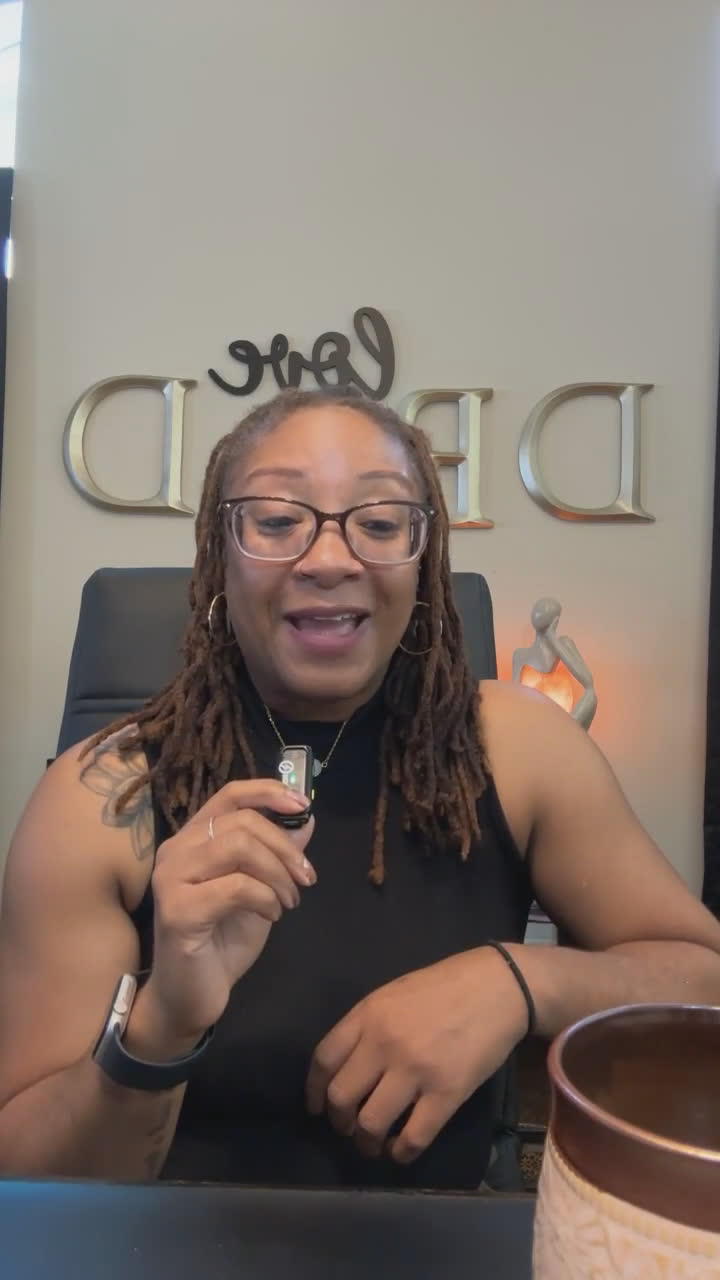
Dr. D summarizes a purple one training on domestic violence and bystander action, explaining that abuse can occur beyond romantic partners and offering strategies like calling attention, creating distractions, and connecting people to local resources.
Cadres doctor D. attended a training about domestic violence and what it means to be a bystander. Domestic violence can occur not just in romantic relationships. It can happen with anyone in the household. We have to speak up.
When you see violence or when you see that someone is being hurt, you have to speak up. A suggestion would be to call attention to the situation. What you can do is just call attention or create a distraction.
Being a bystander can include when you have a friend or a family member or a coworker who's experiencing abuse at home. The best thing you can do is believe them. Seek out domestic violence resources in your community.
Hi, cadres doctor D. I'm back with my coffee chat. I do have coffee today, and let me recap. Okay, let me move this out of the way. Did y'all know Sunday was national coffee day? Of course I knew, because, you know, I love coffee. But if you didn't get a chance to celebrate, I want you to go out and get your cups today. Tell them I sent you. Just kidding. But I have just a few things that I would like to recap of, some things that I've learned and an experience I had yesterday. So I do want to welcome those who are joining me through the replay.
Make sure you comment in the chat and let me know where you are located, where you're tuning in from. I think it's really cool how we connect from different spaces in the world. And I do want to thank you for joining me today. Today. Let's see. Yesterday. Rewind. Yesterday I attended a training. It's called the purple one training, and it's about domestic violence and what it means to be a bystander and what you can do as a bystander to help those who are in toxic relationships or in an abusive relationship to help them find survival.
And I attended this training with my son, which was interesting because he wants to be a mental health coach to help those who have experienced bullying. And bullying is a form of violence because bullying can happen different ways, not just through, you know, pushing and shoving, but it can happen through social media, can happen in all kinds of settings, not just in person, but abuse happens the same way. Hi. Speak wonder. And speak wonder. I tuned into one of your lives and I just. It was really cool to see you live.
So thank you for joining me today. But, yeah, so I'm talking about the purple one training, and this is a training that is available. And I'm not sure exactly what states have this so far. I think it's something that's new that recently got launched to empower the community to become aware of what does domestic violence look like, what does abuse look like, and to recognize someone who is a victim of that. And one of the terms that they mentioned in the training was the difference of being a victim versus a survivor.
And we have to bring attention to individuals who are trapped in the cycle of abuse and trapped in the cycle of violence that have to literally escape situations. And you probably know someone or you have known someone who has experienced violence in their relationship or in their home. And just to give you just a little bit of detail about domestic violence, and I won't go into too much. But domestic violence can occur not just in romantic relationships. It can happen with anyone in the household.
So whether that is, you know, mom and dad, it can be a parent and child. It can be child versus parent. That's more likely for domestic violence. And then it can also occur with other household members. Whether it's someone that's sleeping on your couch engages in violence with you or another family member that's in the home, maybe an aunt, uncle, grandparent, whoever. When there's violence in the home with household members, that is domestic violence. One thing to keep in mind, too, violence is something.
Domestic violence is something that often is not talked about. We know it happens. You may hear things in your community, you may hear noises. You may see a mom who is walking around with bruises or trying to cover up bruises with different clothing. You may see kids that are neglected because of abuse. And unfortunately, when that happens, many people don't say anything. No one likes to speak up. Maybe we've been taught by society or by our families that it's not your business, don't get involved.
And with this training, it's something I've already ascribed to, is that we have to speak up. And that's my challenge for you guys today. When you see violence or when you see that someone is being hurt, you have to speak up. Now, there are ways to do that where you can keep yourself safe and keep the person safe, because what could happen, let's say you see a couple arguing in public, if you step up and you try to intervene in that moment, sometimes the person who's a victim in that situation may turn against you, trying to help them because they have to align with their abuser in order to keep themselves safe later when you're not present.
So a suggestion would be to call attention to the situation, especially, you know, checking your surroundings. Are you going to be safe doing that? Do you have backup? Maybe you're in the store. You can get a manager, or you can contact the police yourself if you don't want to intervene individually. But what you can do is just call attention or create a distraction. Maybe you're in the grocery store and you see somebody arguing or see someone that's hurt or could be potentially hurt, and you create a distraction just by dropping a glass on the floor.
Everyone's going to stop and look, right? And what that does, it can create a moment where that person can escape if they need to, or it just creates a moment where the abuse stops for a little bit. And that's better than continuing the cycle of abuse in that moment. It's scary, though, being a bystander. And so that's one thing I want to highlight, is the experience of a bystander when there is abuse. Now, being a bystander does not mean that you're just. It doesn't only mean that you're in a public setting and you're watching this from a distance with people that you don't know.
Being a bystander can also include when you have a friend or a family member or a coworker who's experiencing abuse at home and you have an idea that it's happening, or maybe that person has shared something intimate with you, not knowing if you're gonna help and you don't do anything, you're a bystander at that point. So consider if you've had those moments when someone has shared something that maybe even sounds unbelievable. Sometimes people go through so much abuse, different types of abuse, that it sounds like a movie.
It's like that can't happen. There's no way. But keep in mind, individuals who are considered abusers are very charismatic. They're very charming. And so the person that is actually the abuser in the situation, they may not seem like they would do anything like that. So when a victim or a survivor is sharing with you, hey, this is happening to me, best thing you can do is believe them. You can hear their story, even if you don't know how to help in that moment. Just giving them the space to share what's going on with them sometimes can change things for them.
It can give them hope. A lot of times, victims of abuse are they're hurt mentally, emotionally, they're being beaten psychologically. And sometimes they don't trust themselves anymore. Maybe they're being gaslit by their abuser and they're meant to feel low. And so anything that they think is the truth, they're going through the cycle of, is this really happening to me? Or maybe I'm the problem. Maybe I'm the reason why it's happening to me. So if they're in a space where you're the bystander and they're sharing their story with you, give them the space.
Listen to them, and believe them. Believe their story. And if you don't know how to help, well, that's what the purple one training is all about, is empowering you as a bystander to learn the resources that are in your community. There are domestic violence resources all around us, but we don't know a lot of times, because they have to be hidden they have to be kept in secret because they have to have a safe space for victims to run to when they're trying to escape their abuser. So I challenge you.
Seek out those organizations in your community. There might be someone at a local college that is going to have a brochure or maybe at a doctor's office. You never know. You know, there are domestic violence resources in different spaces that you would not think of because they're in places where victims might be. The grocery store, counselors offices, churches, even churches can get involved in this as well. So if you are interested in that, I want you to check out. I don't know the exact website, but if you just Google purple one training, you will find the website that tells you more about what this resource is all about, what the training is about, and you can even apply to be a safe space for victims.
Now, that doesn't mean that you are a safe space for them to run to if they're trying to escape. What it means is that you're a safe space where you will have information and resources available to people who are considered victims, who want to be survivors, who want to escape their situation. So there's a lot more I can say about this. Domestic violence is one of my pillars in my research, and it is very near and dear to me. I am not ashamed to say that I have been a victim of domestic violence and I'm a survivor.
And I am really open and honest about my situation because I don't fit the statistics when it comes to people who have been abused. You know, typically statistics will show that most victims have grown up in a household where there was violence or they've witnessed violence at some point. And that was not my story. I did not grow up in a household with violence. I did not witness violence in my family, my immediate family or extended family. I did not witness violence in my community. And so when it happened to me, I'm like, what is going on?
I was even in a position where I was working in child welfare at the time, and I was the person who was helping others escape situations like that. So when it happened to me, I'm like, what in the world? How did this happen to me? And that just shows you domestic violence can happen to anyone. It can happen to anyone at any time. And sometimes it's happening in your home and you don't even know it because a lot of times people who are victims or survivors, they don't talk about their story because they aren't believed.
So I'll go back to that again, as you being a bystander, if you have someone who is sharing their story with you, believe them. Okay, that's all I got for you today. I might revisit this because I really love this topic. I'm very passionate about domestic violence prevention and being able to share the stories of victims, because there are so many victims who lost their life to domestic violence. So those of us who are still survivors, we have to speak up. And if you're a survivor, I applaud you, and I encourage you to share your story.
But I hope you guys have a wonderful day. If you're watching the replay, please let me know what you think. And if you are able to check in and check out the purple one training, let me know how that goes for you. I hope you enjoy it, but you all have a great day. Bye.
Reactions and comments are for members. Joining is free and takes a minute.