Life is incredibly short. Marriage is incredibly long. So said a very wise man. But seriously with all of the challenges that we experience in our relationships and all of the childhood wounds that flare up it’s always best to play the long game.
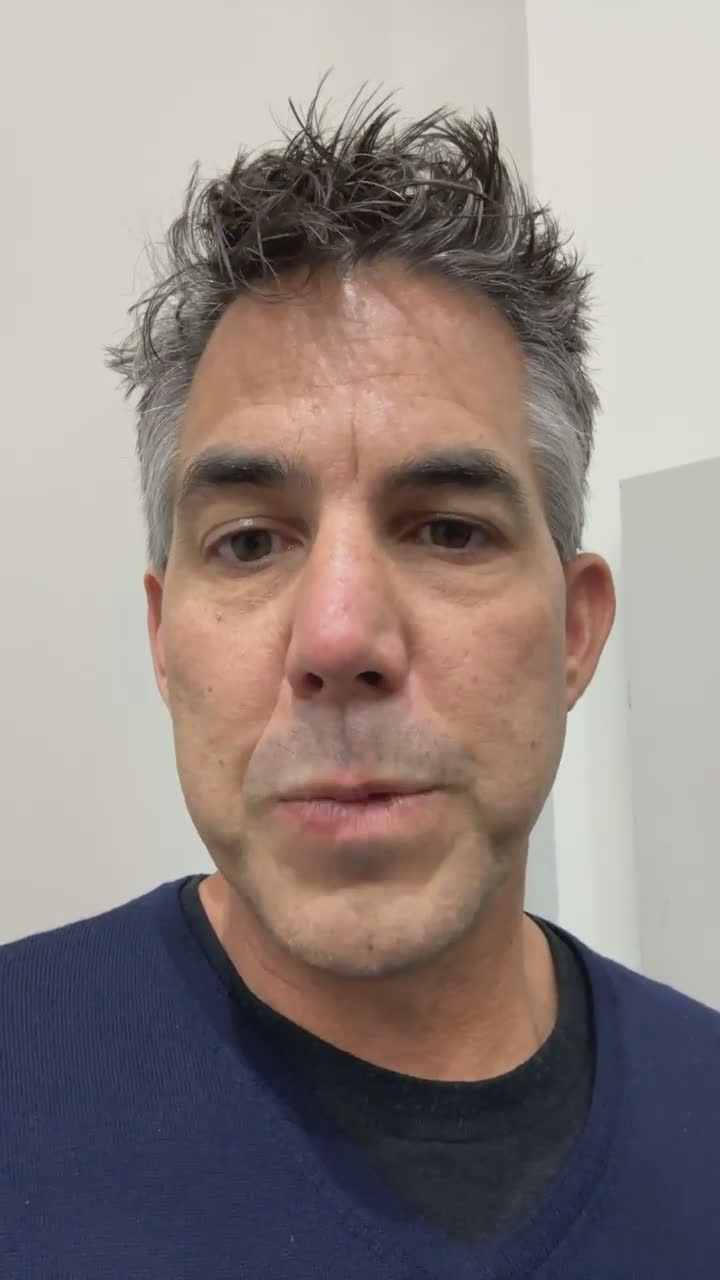
This is a first for me. Tried to find a somewhat quiet spot. Maybe that's my own edge to push a little vulnerability there.
This week's episode is called the Long Game. It focuses on conscious coupling, conscious couplehood. The first question is from Al Anon: Does it need to be said? Second question: Is I in a place to say it? The gift is in not saying it, but in sharing it.
All right, here we are. You know where I am. I could, like, show you the volleyball matches happening in the background. So this is a first for me. Tried to find a somewhat quiet spot. And of course, I maybe could have done this in front of other people. Maybe that's my own edge to push a little vulnerability there. But. Hello, conscious fear. And we are on week three, right? So that means conscious coupling, conscious couplehood, and that is a big one. Had some serious challenges in my relationship this week.
Some of it old stuff, some of it my stuff, some of it her stuff, and, you know, the. The challenge, right? So. So the title of this one is called the Long Game, right? And whether it's a committed relationship or marriage, whatever, I mean, if you're. If you're in a relationship and the intention is to be in that relationship for a long period of time, such as marriage, like, then the question is, like, how do you. How do you show up? Like, how do you respond to all of the constant. And it's constant a lot of the time, right?
All of the constant interactions that we have with each other where we could say something or not say something, where we could be kind or not be kind, where we could react or not react. And I'm doing this book study, and in the book study, I use some of the wisdom from Al Anon in aca, but I'm also applying it to my marriage, right? And I've got good friends who are helping me with that. But, like, the first question is from the Al Anon thing. Does it need to be said? First question, second question, does it need to be said by me?
And then the third question, does it need to be said right now? Great, great. Rule of thumb for any relationship, does it need to be said? No. Okay, then we're done. Does it need to be said? It does. Does it need to be said by me? Of course it does. Does it need to be said right now? Probably not. That's the clincher, right? Does it need to be said right now? Am I in a place to say it? So then the next part, right, connected to that is, who's talking? Who is talking? Is it the child, the wounded child?
Is it the defiant teenager? Is it the critical parent? Or is it the loving parent? And if I am not interacting with my spouse from the loving parent from a mature place, then it definitely doesn't need to be said. That doesn't mean I don't say it, make mistakes all the time, but it's a great way to do it. So, like, what's the long game that I'm talking about. Well, the long game is just that we can spend our relationships reacting. We can spend our relationships saying things that we regret, and we can spend our, our relationships speaking out of our wounded children, which happens all of the time, and making it about our partner.
All that does is tear away at the foundation of the relationship. All that does is impact the love and the trust and the want to be kind to each other that is there. And so for me, I'm working. I certainly haven't mastered this. I certainly am trying to stay still, learn this over and over, but I am learning how to ask that question, for instance. And again, I like to use real life examples and from my own life, right? This week, my wife and I, like, some old stuff came up, and it came up in a pretty ugly way.
And it was like, bam, right in our face, right? Some kind of flared up in our face. I was hurt. I felt sad. I felt hurt. The plus, right, is that I didn't go to anger like I used to do all the time. Instead, I just stayed with the hurt and the sadness, which really sucks, by the way. I stayed with the hurt and the sadness. And then I started writing an email to her. Oh, and I was like, convinced, right? I was convinced that she needed to read that. So I wrote it out, which I always recommend, frankly.
I always recommend. Doesn't matter what space you're in, if you have something to say to your spouse, write it out. Say it. The gift is in not sending it. The gift is in not sharing it. The gift is in figuring out what's the best way to share it or if to share it.
Reactions and comments are for members. Joining is free and takes a minute.