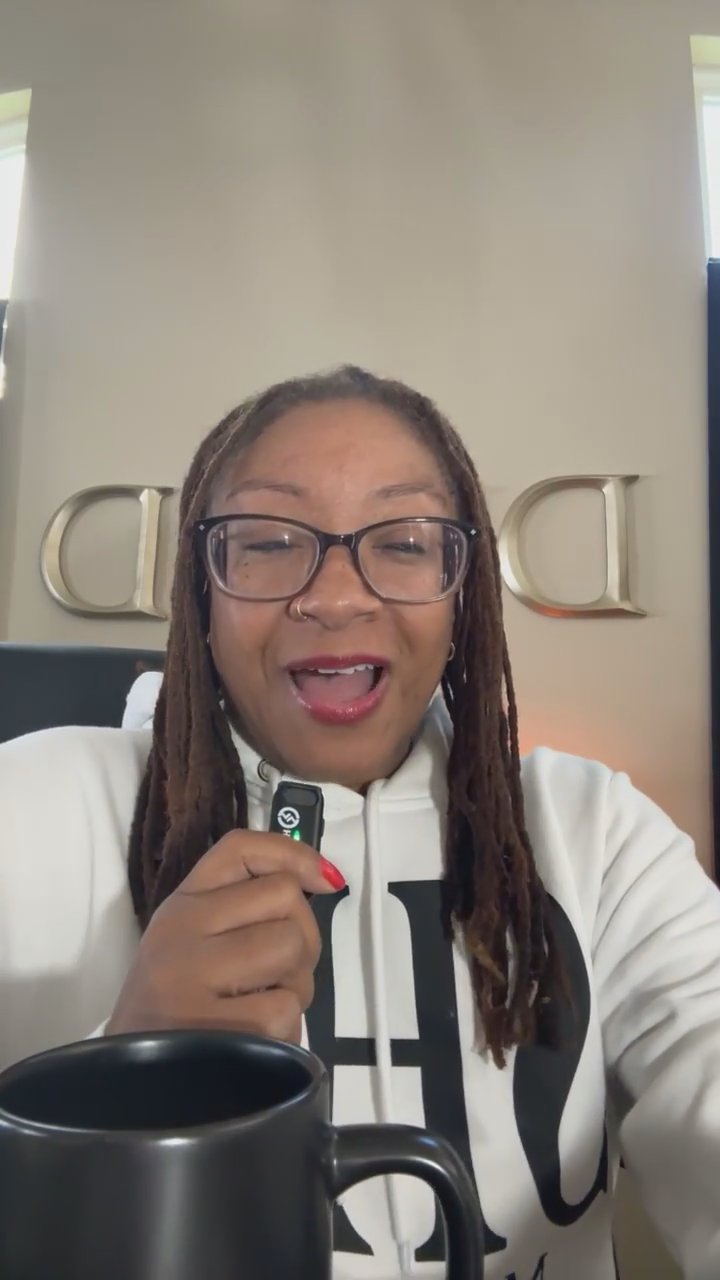
Dr. D explores everyday habits that create distance in relationships, like skipping shared meals, bringing phones to the table, not sharing pain, mismatched schedules, and different bedtimes.
Dr. D. has a different topic today. I saw a video recently, and I can't remember where it was. It was about a short clip of couples. For each thing they said yes to, they had to take a step forward or a number of steps. So that's what we're going to get into today.
I want to help us think about what gets between us. And this can apply to romantic relationships. But if you can, try to apply it to your friendships, too. One thing that creates distance and disconnection would be not having meals together. Another thing that can get between us is when we bring our phones to the table.
When we don't say what is hurting us to the person we're in connection with, that creates distance. Create connection by sharing your pain.
Our schedules can get in the way of connection. I want to encourage you to think about your regular schedule. Is there a moment of your day that you can be intentional about creating connection with the person that you love.
When we don't go to bed together at the same time, that creates disconnection. If you are in a romantic relationship, consider how you can readjust your schedule. There are things that we do that create disconnection with us and our kids.
Hey, Cadre, I think this thing is plugged up. If it's not, let me know how y' all doing. This is Dr. D. Welcome to my coffee chat. And I have a different topic today. I saw a video recently, and I can't remember where it was. I was probably scrolling on Instagram late at night because that's what I do. Don't tell nobody, but it was really good. It was about. It was like a short clip of couples. And they were put in the room. They were back to back so they couldn't see each other. And I don't know how long the couples have been together.
Some of them had been married for years. Some of them were newer couples, but they were told to stand back to back. Hi, Brittany. And what they did was they were asked different questions, and for each thing that they said yes to, they had to take a step forward or a number of steps, depending on what the question was about. So that's what we're going to get into today. I want to help us think about what gets between us. And this can apply to romantic relationships. And we'll talk about friendships, too.
But some of the questions that I have or just things that we do are more about romantic relationships. But if you can, try to apply it to your friendships, too. And so when we think about the things that get between us, you know, there are. There's so many things. There are things that we do, there are things that we say, there are things that we don't do and things that we don't say. And so I want you to consider if you are in a relationship right now. So one thing that does come between us that creates distance and disconnection would be not having meals together.
Now, when I was younger, I grew up single mom, household. It was just me and my mom. And I used to eat in my room all the time. Like, that was just a regular thing. My mom would make us dinner while she was cooking. I wasn't in the kitchen with her, and if I was, I was probably doing homework so she could see that I was doing my work. But we would get our meals and go to separate rooms, and I think there was more out of comfort. And she went to the living room to watch her shows, whatever she chose to watch.
And I went to my bedroom and I had a TV in there, and I watched what I wanted to watch. Hi, Speak Wonder. And I remember growing up, that was just normal. But I also remember as I got older and I had my son, that that was something I didn't want to do because I wanted to make sure that we stay connected and we had good conversation. And so if this is something that you do now with your spouse or your partner or even your child, think about how many meals are you having together during the week. And if you need to increase that, maybe make an intentional day of the week where it's family time, like that's just the time that you're going to have the meal together every single week and make it a thing.
Another thing that gets between us is when we bring our phones to the table. And I think there's been some research put out and I don't have the statistics, so don't ask me for that. But I have read some things in the past, I would say the last three years or so that talks about the influence of our cell phones just being in the room. And so there's research that talks about even just putting the cell phone on the table, even if it's face down, that signals to the other person that you're with that there's a disconnection there, even if you're not playing with it.
And I think that's so interesting because we all do it. I do it and I don't think anything of it. But now that I'm in this space where I want to be more intentional with connecting with others, I am paying attention to some non verbal cues that I'm giving that shows that I'm disconnected from the people in the room with me. And so consider if that's something you do on a regular basis. I know we do it all the times in meetings. You know, we bring our cell phones with us to the table. We might do that when we're out with friends.
You know, there's a lot of us, and I'm not gonna lie, me and Brittany. And Brittany's on here today. We love to capture the moment and so we will record ourselves together. But that is also something we do intentionally to connect with each other and to like capture those memories. But when we bring our phones to the table and it's just sitting there, it is a signal like, hey, I'm not really fully there with you. Right. And so that's something I want to start paying attention to. So I challenge you to do the same.
But another thing that is getting between us is not saying what hurts. And one of my new hot topics that I've been doing some digging into is silence in relationships. So when we don't say what is hurting us to the person we're in connection with, that creates A lot of distance. So if you think about those couples that stood back to back and they're asked these questions, this would be one of those questions of are you saying what hurts? And if you're not taking a step. And I think that would maybe cause us to take multiple steps forward, separating us from the person that we're in connection with when we don't say what hurts.
I think of it of that Romeo and Juliet syndrome that I like to say, where if we would have said the thing that we needed to say, that could have saved the relationship. And so what are you doing when you're hurting? Are you saying what hurts? Are you saying it immediately? Are you keeping it in for years and then all of a sudden you can't hold it anymore and just erupts, maybe during an argument. And so think of moments when you can, even if you don't say the whole thing, just at least say, hey, I'm hurting right now.
Even if you don't say why, but at least, you know, create connection. I almost said create space, but that's what we don't want to do. Create connection by sharing your pain. Okay, I have two more things for you. Another thing that is getting between us is our schedules. And we are all busy people. And I think as you evolve in your adulthood, and I'm surprised even for people who are in that retirement stage, they thought that they were going to have more time to themselves because I think that's the dream that were sold when you retire.
It's like, oh, I could do what I want. But what I'm learning from observing people in that stage of life is their schedules are just as busy as they were when they had a full time job. And so sometimes our schedules get in the way of connection. I know sometimes for myself, I have not been able to show up for my friends the way that I want to, or show up for my family for different events that they've invited me to because of my schedule. And it really, it hurts sometimes that I can't do that. But at the same time, I have responsibilities.
I have important things that I have to take care of. Not to say that they're not important to me, but I have things that I have to do to take care of my life. Right. And I think we prioritize ourselves sometimes, which is not bad, but our schedules can get in the way. It can get between us. And so I want to encourage you to think about your regular schedule. So not when you have events coming up, but your everyday routine. And is there A moment of your day that you can be intentional about creating connection with the person that you love.
Whether it's scheduling time to have a conversation, or maybe checking in with text messages throughout the day, or maybe you set aside time in the morning or at the end of your day to kind of recap or even like plan out your day and say, hey, this is what I have going on. And I think being intentional about putting someone on your schedule is so meaningful. And when someone does that for you, it feels really good. I've had that happen for me where I've known that someone is so busy and they took time, even if they had to move things around to put me on their schedule, it feels really good.
So try that. And the last thing, and this is more, again, for the people that are in maybe romantic relationships, but when we don't go to bed together at the same time, that creates disconnection. Why is that? Think about it. So people have different schedules. Personally, like, I'm a night owl, you know, my partner is a morning person. And it's important to have time to end your day at the same time. And I think about how that feels. If one partner is still awake and doing things, the other partner is knocked out sleep.
And I've heard this with the couples that I've worked with that this is a problem because the person who goes to bed earlier, they want to have that intimate time with their partner as they're falling asleep and their partner's just not ready to go to bed. And so they stay up and do their things and the partner is in the bed is alone, and they feel alone, you know, throughout the day. Maybe they didn't get to see their partner because they were both working and that that bedtime is their only time to have intimate conversations.
So if you are in a romantic relationship, consider how you can readjust your schedule. Even if you're the night owl that likes to stay up late, if you can at least, you know, try to spend time with your partner that's going to bed earlier until they fall asleep, and then maybe get up and do your things. But when we don't go to bed at the same time, that is getting between us. So if you all have some things that you want to share, drop them in the chat of what you've noticed is getting between you and the person you love, whether that's your romantic partner, Maybe it's a close friend, maybe it's a family member, maybe it's your child.
You know, there are things that we do that creates disconnection with us and our kids, and I think that's important that we address them, too. So I want to thank you all for joining me today for my coffee chat. And if I find a video, I'm going to scroll through Instagram again. If I happen to catch it, I will post it in the comments on my page here. But thanks for joining me and I will see you all next time. Bye.
Reactions and comments are for members. Joining is free and takes a minute.