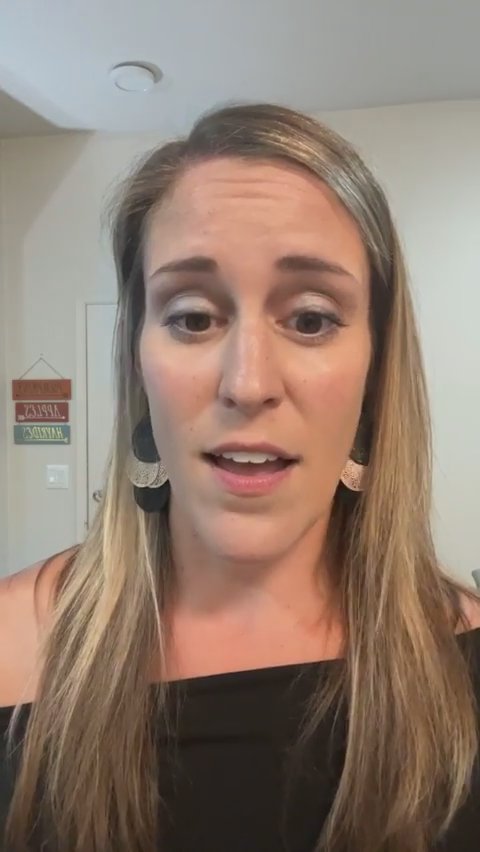
Ask Dr. Carrie questions about life, relationships, healing from trauma, ANYTHING! She’ll answer your questions live on this video.
Kerry Minke is your resident trauma life coach on Cadre and expert in anything trauma, anything relationships mindset. Ask any question right now that you want to know about me personally, about Cadre, about trauma relationships. I will answer any question as deep as possible.
Katie: What's the craziest thing you have seen in an ER? Katie: A guy came into the trauma bay with his leg literally cut off. Katie: I've also seen mass casualty drills, which are also really cool.
The biggest thing to recognize is to allow your body to do what it needs to do and honor your brain. Our brain wants to process the tragic event. Let your body and your brain take time to heal from that.
Risa: How do you keep calm under pressure? Katie: I like to do a self inventory of my body when I'm under pressure. Sometimes it's managing expectations with yourself or other people that are putting pressure on you.
The hardest ones to set are the ones with people that have you've had in your life a long time, like family. Risa, your follow up question. I love boundaries. There's so many things we can unpack with boundaries.
What are some of your best tips for setting and keeping healthy boundaries? Setting boundaries is not for other people. It's setting a limit on what you've decided you're going to do. To have that confidence, and I recommend trying it with people that are going to respect your boundaries.
Hey, Doctor Carey here on this live video today we are doing ask me anything. So I'm gonna wait for some people to join, and we're just gonna do an open q and a. I am doctor Kerry Minke, if you don't know me already, your resident trauma life coach on Cadre and expert in anything trauma, anything relationships mindset. So I'll be happy to answer any questions anybody has. And I would just love to hear from you guys and see what you're interested in learning about today. So this is an opportunity for you to just chime in and let's discuss some topics.
I see that we've got a couple people joining, so literally, feel free. Ask any question right now that you want to know about me personally, about Cadre, about trauma relationships, anything that you've just been dying to know. I will answer any question as deep as possible as you want me to go. So I'm just waiting for people to join and just ask some questions. Nice to see you on reset, Ethan. While I'm waiting for people to come on and pop questions on, I just wanted to share a little bit about the experience I just had talking to Evansler, podcast enthusiast on Cadre, and he's just an incredible human being.
And we had such a great discussion on chronic pain and my trauma experience. And just stay tuned because that podcast is going to be coming on to Cadre. And I'm really excited for you guys to hear just the deep dive we did into those topic. All right, a question from Sean. What's the craziest thing you have seen in an ER? Oh, I get this one a lot. I hope you're not eating right now, Sean, but the craziest thing I've ever seen was probably the coolest anatomy and physiology lesson I've ever had. A guy came into the trauma bay with his leg literally cut off.
He got it cut in a farming auger, which if you don't know what an auger is, it's something that's like a corkscrew, but it's very large. And his leg got stuck in that. And it was just fascinating because his bone was sticking out. He was lucid and talking to us. And I'm like, how is this guy alive right now? And I actually recorded a video on this because I thought it was just so fascinating that his may keep me alive, not, I've lost my leg. I don't know what happened to my great pair of jeans I was wearing, but, like, keep me alive.
And it was just the coolest thing to see a human being fighting for their life. And then also see, like, this, just these body parts just out in the open. It was fascinating. There was a lot of blood. It was very gory, and it was just super fun to see, like, literally what I learned about in school, like, right there in front of me. So that's the craziest thing I've seen in an ER. I've also seen mass casualty drills, which are also really cool, because you get to see how well you work as a team when you have mass casualty drills.
And some of these were real threats that we had. One time when I worked out in Philadelphia, we had. I think it was a bombing that happened, like, in New York City. And we were somewhat close as a hospital, and we thought we might be getting a ton of patients. So when you're for it, it's amazing how efficient everybody works and how they work well as a team. And it's just the coolest team dynamic, because you're all there with the same purpose and the same mindset, and it's just the coolest thing to see.
So that's another, like, one of my favorite memories. I'm saying horrific things happening, right. But just, like, to see how well we work together. Thanks for joining, Katie. Melanie, hope that a ping. What are some ways to ease your mind when you've gone through a tragic event? I could go deep into this one. Okay, so let's just say your tragic event is a car accident. It could be something way more traumatic, way less traumatic than that. I think the biggest thing to recognize is when you've been through something tragic is to allow your body to do what it needs to do and honor your brain.
I was just talking about this with Evan. Like, what do we do when our brain is traumatized or triggered? We often fight it, and that's not really what we need to do. Right. Our brain wants to process the tragic event. Let's say you went through a serious grief with this tragic event. Let your body and your brain take time to heal from that and be nice to yourself. I could tell you from personal experience, I have really high expectations for myself, and I often don't allow my brain to just do what it needs to do.
You know, like, you might need more rest. You might need to find a therapist or a coach to talk to. And so just really honoring the emotions that come up when you've been through a tragic event is the best thing you can do to let your mind heal. Because if you think about your brain just, like a muscle, you go run a marathon. And, like, you're going to need healing time. And your brain is the same way. It's going to need time to heal and you're just going to want to make sure that you do the best you can for it.
So I hope that answers your question. Ethan, if you have follow up on that or you want more specifics, feel free to comment again. Katie, I want to answer your question. How do you keep calm under pressure? That is a great question. And especially when you're, like, working in an ER, for example, and you're under a lot of pressure, like this is a life or death situation. I personally am very in tune with my body and I like to just kind of do a self inventory when I'm under pressure. When I'm under stress, especially if I'm like in a stressful situation, I do a quick scan from head to toe and go, okay, so what is my body experiencing right now?
I'm under a lot of stress. I'm under pressure. I maybe can't leave this situation. But let's do an inventory of maybe where I'm holding on to the stress. And I often find for me personally that I don't take deep breaths when I'm in a stressful situation. And that can do wonders to your physiological state if you just start to breathe deeper and really take those calming breaths and then also recognizing, okay, do I need to be in this stressful pressure exit? Is this unhealthy for me? Would be another thing I would ask you to do, like a self check on, because there are times when you do need to be in stressful situations.
But a lot of times, maybe it means I need to leave and I need to give myself a break. So I don't know if that answers your question, Katie, but I think the best answer I can come up with for that is just really what I do is the self inventory of your body. And to recognize, like, our bodies hold so much stress and they are made to do so many things, right? Like, they are made to function under extreme circumstances. And it's okay that your body might need a break, it's okay that you're tense, but, like, what can you do to really honor your body and your mind in that moment and just really do the best you you can do and, you know, like, maybe the pressure is coming from external.
Maybe it's coming from internal. I do that to myself a lot. I put a lot of pressure on myself and to recognize who's telling me I have to do this. Like, literally, who's telling me I have to meet this deadline. I came up with it myself. Why have I come up with this deadline for myself that I can't reach? So sometimes it's managing expectations with yourself or other people that are putting pressure on you might be another thing to consider boundaries would be another thing. Risa, you do that, too.
Okay. Yep. Got another one out there that's definitely, like, my own worst critic and my own worst, like, expector of these standards that I'm, like, who even came up with these things? But, yeah, that's what I struggle with. And I'm glad to know there's other ones out there that struggle with it, too. Thanks for making me feel better today, guys. Any other questions? I'll take a couple more. I love boundaries. Teresa. Oh, my gosh. Boundaries. I've actually done a few videos on that, on Cadre. Check them out.
And there's just. There's so many things we can unpack with boundaries and how to set boundaries for yourself, how to set boundaries with other people. The hardest ones to set are the ones with people that have you've had in your life a long time, like family. Risa, your follow up question. What are some of your best tips for setting and keeping healthy boundaries? That's such a good question. I think, from what I've learned over time, is we have these unrealistic expectations for how people should act.
That's where the root of, like, boundary setting comes. And a lot of times we think, well, why are they acting that way? Well, I'm expecting them act a certain way. And so it's really setting a boundary for yourself. Setting boundaries is not for other people. It's setting a limit on what you've decided you're going to do. And so for setting healthy boundaries is to recognize one, if you don't have healthy boundaries, which can look like a lot of codependency type things, people pleasing patterns.
And I definitely used to struggle with that a lot. And so to first recognize if you struggle with setting boundaries, and then to get the confidence you need to actually set the boundaries and be confident that you're actually doing this out of respect for someone else. So if you're saying, you know what, I'm sorry, I can't drive you to the airport, and the other person gets all bent out of shape about it because you literally drop everything you do every single time they ask you to do something.
It's having that internal confidence that, no, I'm actually asserting myself right now. And this is healthy for me and you because it's changing the dynamic of our relationship, but it's making our relationship healthier by saying, I'm going to set this boundary with myself right now and with you, and it's respecting who I am as a person. So people think sometimes that setting boundaries is bad or it's mean. It's their person. And so to have that confidence, and I recommend trying it with people that are going to respect your boundaries.
Like, don't start setting boundaries with someone that you've never set boundaries with before. And maybe it means you also need to start setting boundaries with yourself. Like, I need my phone because I don't like that behavior in myself, and it takes me away from what I'm working on. So, like, I need to set a boundary for myself with that. That's a really minor practice, setting boundaries in different situations, in different areas of your life. If you really struggle with the people pleasing part, because then you can start feeling more confident when you exercise those boundaries with other people and just recognize that we all struggle with boundaries.
Like, it's just. It's very normal in our culture. And especially if you've been in relationships with people that have had an unhealthy dynamic the first time you set boundaries, it's not going to go well. I promise you it's not. I have a lot of experience with this, with particular family members and just learning. Okay, so that didn't go very well, but I'm still happy that I did it and I still honored myself. And in the end, things really, really start to change and become better. So I hope that was, like, helpful a little bit.
Like I said, I could talk for probably an hour or more on boundary settings, so I hope that was helpful. I'm glad that was that you liked that advice, Risa. I would love to know how it works for you. Like, if you're like, oh, my gosh, there's this thing. I should probably start setting a boundary in. Check in with me, let me know how that works, and maybe I can give you a tip on how to continue doing that. Tweak it, whatever. I've had a lot of practice with setting boundaries because I didn't for a very long time.
And so I'm thankful I'm still learning how to exercise the confidence that I need when I set boundaries, too. So that's my tips on that. Well, thank you, guys. I really appreciate you tuning into the live. I will do this often. I love these. I love answering questions about anything that you want. And it sounds like boundaries might be another thing to talk about in some more videos, so I'll do more on that. I get that, Sean. It's hard to say no. I totally understand that. So thank you guys for tuning in with me today on the ask me anything live video.
I'm doctor Carrie. Take care.
Reactions and comments are for members. Joining is free and takes a minute.